
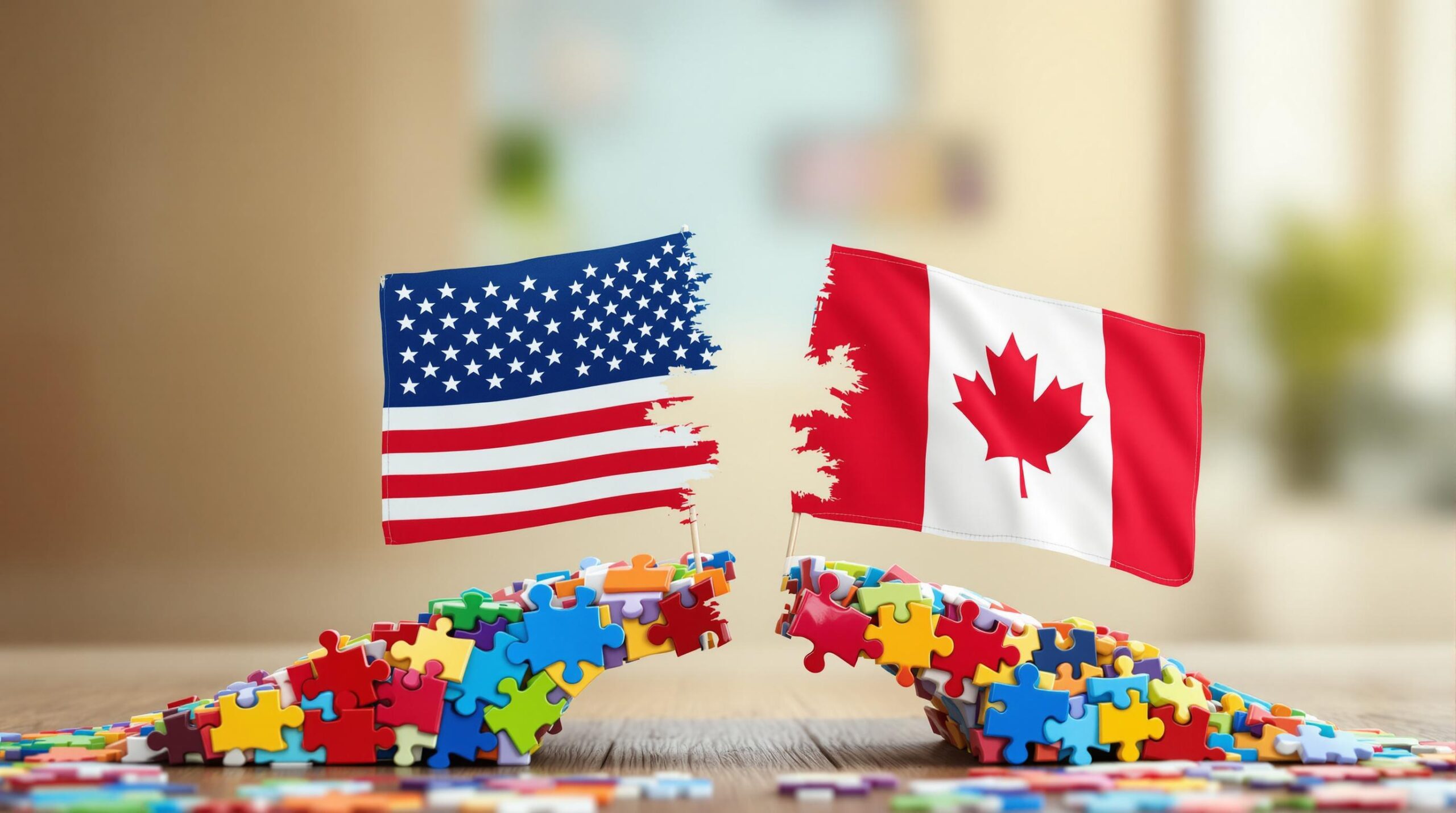
For decades, the United States and Canada shared what seemed an unbreakable tie—two nations bound by geography, commerce, and a deep sense of shared values. Yet, under the erratic leadership of President Donald Trump, this cherished alliance finds itself stretched thinner than ever.
A Troubling Shift in Perception
The relationship between America and Canada, often likened to siblings from the same North American family, is showing alarming signs of fracture. According to a recent AP-NORC poll, the percentage of Americans who consider Canada a “close ally” has dramatically fallen, from around six in ten to fewer than half. More pointedly, the number of Democrats who perceive Canada as a steadfast partner declined from seven in ten to just half, indicating how Trump’s confrontational approach is reshaping perceptions even among those traditionally supportive of international cooperation.
This stark shift in viewpoints reflects broader dissatisfaction with Trump’s aggressive approach to diplomacy. Americans like Lynn Huster, a lifelong Democrat, are open about their concerns. “He’s turning everybody against us,” Huster lamented, vocalizing fears that Trump’s policies could jeopardize long-standing diplomatic relationships that have been decades in the making.
Real People, Real Consequences
Navigating this foreign policy turbulence are ordinary citizens like Kathy Lepold. Over a decade ago, Lepold and her Canadian husband moved permanently north to Wolfville, Nova Scotia, attracted to Canada’s healthcare system. Now, amidst the escalating trade war triggered by Trump’s tariffs on aluminum, steel, and automobiles—Lepold is feeling an intensified sense of attachment toward her adopted homeland.
“The negative stuff that Trump’s doing just breaks my heart,” said Lepold, imparting an emotional truth that resonates deeply with countless others caught in the diplomatic crossfire. Her story encapsulates a broader trend—approximately one million U.S. citizens and dual nationals living in Canada who’ve found their loyalties shifting northward, as escalating tensions redefine the personal and political landscapes of their lives.
Canada’s Uneasy Response to Trump’s Aggression
Meanwhile in Ottawa, Prime Minister Mark Carney has adopted language unusually blunt for Canada’s traditionally cautious diplomacy, publicly stating that the old relationship with the United States “is over.” The former Governor of the Bank of England turned Prime Minister has emphasized the urgency of Canada charting a course independent of the whims prevalent in Washington, responding directly to Trump’s tariffs by preparing plans to dramatically reduce Canadian dependence on American imports.
Carney’s crucial pivot comes after Trump imposed permanent tariffs—most notably a 25 percent levy on vehicles and auto parts, measures Carney condemns as a “direct attack” on Canadian workers. The Prime Minister’s stark statements are not merely rhetorical; they reflect an emerging policy strategy to fortify economic ties with alternative global partners, signaling Canada’s fierce determination to safeguard its economic sovereignty and labor force.
“It is obvious that the United States is no longer a reliable partner,” Prime Minister Carney declared to stunned observers—a sentiment unprecedented in centuries of peaceful cross-border history.
Trump’s Dramatic—and Questionable—Pivot
Yet, surprisingly, Trump’s rhetoric underwent another characteristic twist recently after a phone conversation with Carney himself. In an assuredly unpredictable shift, Trump described dialogue with the Canadian leader as “extremely productive,” hinting at a warmer future for U.S.-Canada relations. This abrupt tonal shift came swiftly after Carney’s stark declaration and left many questioning the sincerity and stability of U.S. foreign policy.
Analysts argue Trump’s unpredictable swings in policy and rhetoric—from threats and punitive measures to conciliatory remarks—complicate diplomatic integrity and erode the fabric of trust essential for international cooperation. At best, his mixed messaging sows confusion; at worst, it permanently damages bilateral relations foundational to regional stability and prosperity.
Trump’s policy of arbitrary economic aggression—raising tariffs under vague justifications, threatening Canadian sovereignty, and proposing reciprocal “Liberation Day” taxes—has not only irritated Ottawa but also concerned other longstanding allies like the European Union. Experts warn that the antagonistic trade tactics risk long-term economic damage to both sides of the border, disproportionately hurting working-class communities and small businesses.
Looking Ahead: A Potential for Renewal?
Yet even amid mounting frustration, there’s cautious hope among more optimistic voices that U.S.-Canada bonds can withstand temporary strains. Historically robust connections still anchor both nations in mutual interests, cultural exchange, and familial ties—with bridges more deeply rooted than mere economics or temporary disagreements.
However, lasting damage is a real possibility if President Trump’s impulsive approach continues, fundamentally rewiring cross-border trust and camaraderie. The concern is not just academic or hypothetical—real lives stand affected, from the expatriate community in Wolfville to manufacturing towns on both sides of the border.
In the final analysis, the Trump era has undoubtedly remade U.S.-Canadian relations, challenging a once-inviolable friendship and compelling both nations to reconsider the shape and substance of their alliance. The story ahead remains unwritten, dependent greatly on how leaders—and the citizens they represent—choose to navigate a rapidly evolving geopolitical landscape. One truth, however, seems eminently clear: the nature of North America’s most amicable sibling rivalry has, for better or worse, irrevocably changed.
