
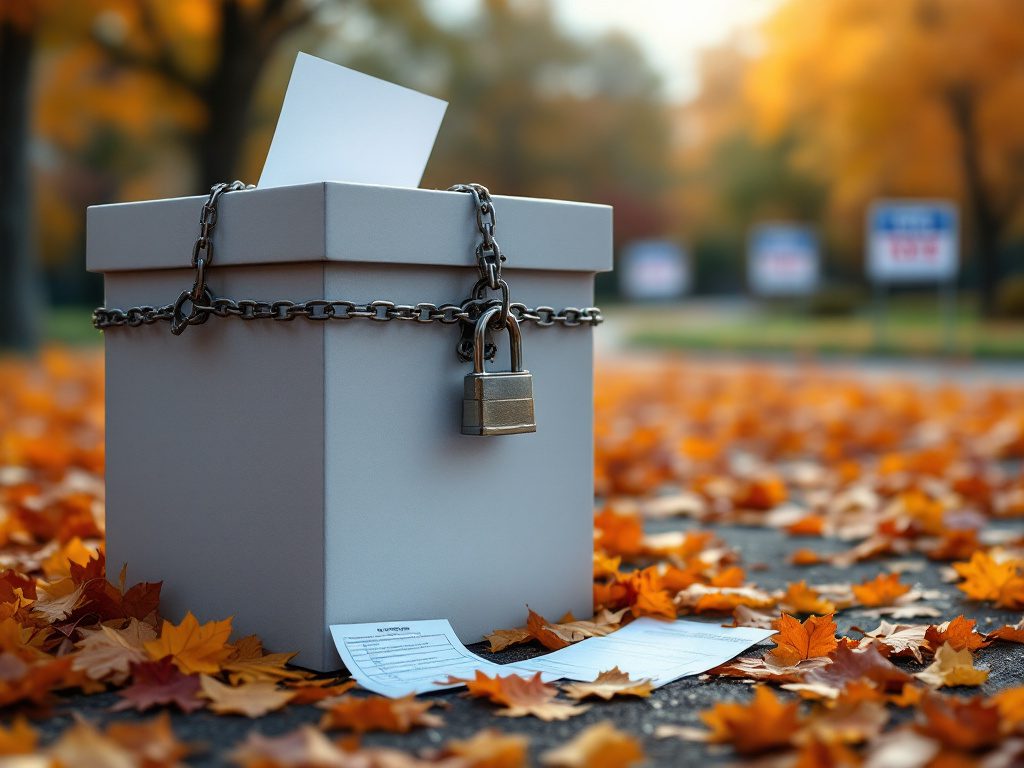
When the Michigan Secretary of State’s office completed its meticulous review of potential voter fraud from the 2024 presidential election, the results were clear: voter fraud in Michigan was exceedingly rare. Out of 5.7 million ballots cast, just 15 cases surfaced involving suspected non-U.S. citizen voters—a mere fraction (approximately 0.0003%) of Michigan’s participating electorate. But in today’s hyper-polarized political climate, even these few isolated incidents are enough to reignite fierce legislative battles about voter identification laws.
Rare Incidents Lead to Heated Debates
The discovery includes one notable case already making headlines: Haoxiang Gao, a University of Michigan student from China, now facing felony charges of perjury and unauthorized voter participation. Of the 15 flagged individuals, 13 are currently under investigation by Attorney General Dana Nessel. One voter previously identified has since died, and another individual faces scrutiny for additional suspicions of fraudulent activity.
A closer look reveals that the Michigan Department of State (MDOS) undertook a substantial and thorough effort. Cross-checking 7.9 million active driver’s license and state ID records against Michigan’s 7.2 million registered voters demonstrated a robust vetting process designed to uphold the integrity of elections. As Angela Benander, spokesperson for the Secretary of State’s office, underscores, “the government’s job is to verify voter citizenship,” a role they take seriously, aiming to enhance verification without suppressing legal voters.
Critics and Advocates Debate Citizenship Rules
These marginal findings have not settled Michigan Republicans who advocate for stricter regulations to control access to the polls. Choice quotes from legislators, such as Rep. Bryan Posthumus, underscore their concern over hidden violations, asserting “the truth is, we have no idea how many.” Using the recent confirmed cases, conservative lawmakers are pushing aggressively for constitutional amendments to move voter registration rules closer to what they term as fail-safe citizen verification.
This contentious proposal—currently under legislative consideration—would not simply affect new registrants but could require existing voters to periodically prove and reprove their citizenship status, fundamentally reshaping registration procedures statewide. Advocates argue these measures are necessary safeguards. However, critics emphasize the potential voter disenfranchisement risks inherent with increasingly complicated identification requirements and the bureaucratic hurdles disproportionately burdensome to marginalized communities.
“This debate isn’t about solving fraud—it’s about sowing doubt,” said election rights advocate Laura Martinez. “Fifteen cases out of millions is not an election integrity crisis, but turning voters away—even unintentionally—is a real threat.”
Election rights analysts echo Martinez’s caution, highlighting historical parallels where voter ID laws disproportionately impacted minority, elderly, college student, and low-income voters. Indeed, studies including long-term research by the Brennan Center for Justice have consistently found voter fraud to be exceedingly rare, with stricter identification rules more likely to impede legitimate voter access rather than deter significant illicit activity.
Protecting Democracy While Ensuring Integrity
Despite widespread acknowledgment among experts that large-scale fraud is effectively nonexistent, Republican narratives continue leveraging any evidence of voter irregularities, no matter how minimal, to justify stringent measures. These proposals are more than technical adjustments; they’re politically motivated instruments with real-world consequences for voter participation and civil rights.
This tension underscores a broader nationwide trend, connecting Michigan’s predicament to wider national dialogues on election security provisions and voting accessibility reforms. Numerous Republican-controlled states are implementing aggressive voter suppression measures under the guise of combating fraud. Meanwhile, Democratic-led states champion policies like automatic voter registration and early voting expansions.
Election integrity undeniably remains essential to a thriving democracy. Yet, Michigan’s recent audit highlights that stringent policies may address concerns that barely exist, potentially imposing substantial burdens on legitimate voters. Responsible systems should address any identified irregularities swiftly, yes, but primarily through strengthening election security technology and procedures rather than making ballot access more challenging.
Michigan Secretary of State Jocelyn Benson emphasizes precisely this point, cautioning legislators against reactionary policies. “Our findings demonstrate robust, effective detection and accountability,” Benson stated. “We must be cautious in moving forward, ensuring protective measures don’t become punitive barriers.”
It’s now up to Michigan’s lawmakers—and voters themselves—to determine whether potential disenfranchisement is a justifiable trade-off for nearly non-existent fraud. With strong passions and even higher stakes, the coming months will decide the fate of voting access legislation with repercussions stretching far beyond Michigan.
