
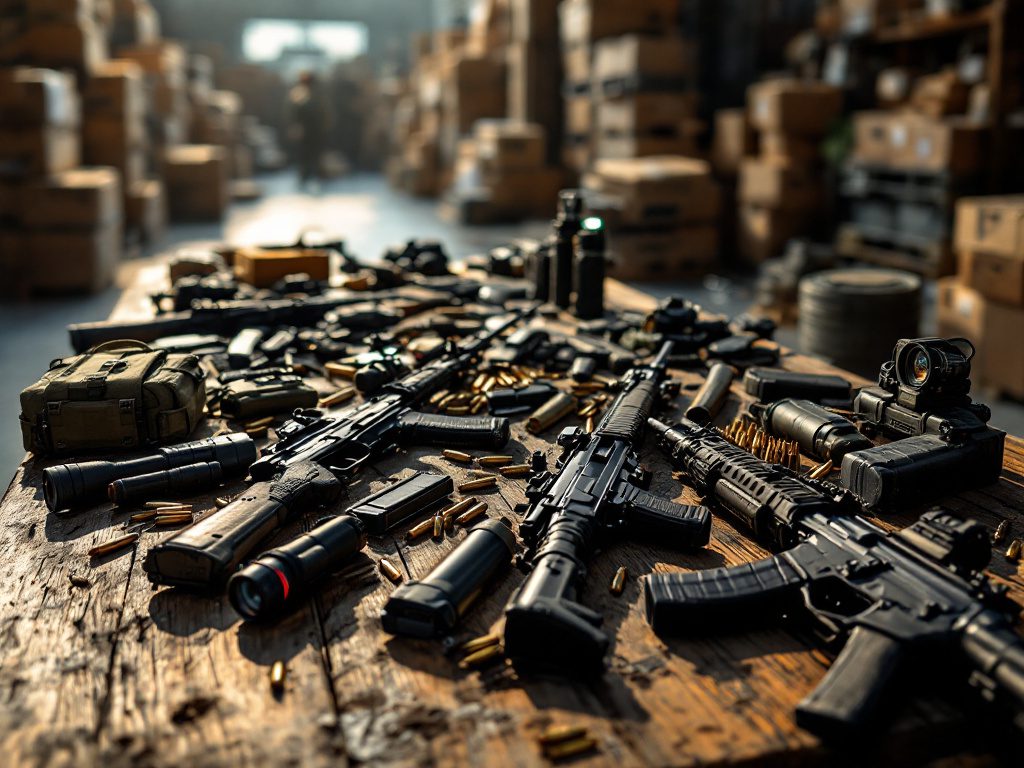
Homegrown Arsenal: Ukraine’s Rapid Defense Evolution
Just a few years ago, Ukraine’s military was notorious for relying on a patchwork of Soviet-era relics and inconsistent imports, facing a daunting adversary to the East. Now, President Volodymyr Zelensky declares a breakthrough: over 40% of the weapons currently in use by Ukraine’s front-line forces are manufactured domestically. This landmark achievement, announced during a national ceremony for defense industry workers, marks not just an economic milestone but a profound shift in the nation’s ability to chart its own security course amid prolonged, existential conflict.
Walking through the bustling warehouses of a Kyiv-based drone manufacturer, a visitor would now witness engineers soldering circuit boards and assembling airframes destined for Ukraine’s dynamic battlefield—a scene unimaginable before 2022. According to President Zelensky, “Our defense industry already produces more than a thousand types of weapons: from artillery shells to missiles and long-range weapons to our drones.” Such diversification has become both a badge of honor and a dire necessity as waves of Russian aggression have battered the nation’s borders and psyche alike.
The numbers underline Ukrainian resilience under fire. The country’s defense sector now employs roughly 300,000 people, an industrial mobilization unseen in Europe since the Cold War. In the face of increasing foreign arms delays—particularly amid wavering U.S. and European commitments—Kiev’s newfound manufacturing muscle is not just symbolic; it is essential for survival.
Budget Priorities and the Push for Endurance
Beyond that, Ukraine’s commitment to its defense sector speaks volumes through its 2025 budget, which allocates Hr 55 billion (about $1.3 billion) specifically for defense manufacturing. This substantial financial commitment isn’t merely a response to short-term threats. Instead, it reveals a long-term ambition: ensuring that foreign aid supplements, rather than underpins, the defense of Ukrainian sovereignty.
Still, even with an expanded arsenal of domestically produced drones, missiles, and shells, Ukraine’s ability to defend itself remains threatened by gaps in advanced weaponry—especially air defense. Zelensky has bluntly warned that “delays or cuts, particularly from the U.S., could severely weaken Ukraine’s ability to hold the frontline”. That vulnerability drove his extraordinary $15 billion proposal for the United States to purchase ten more Patriot air defense systems. Without such cutting-edge equipment, Ukraine’s industrial strategy risks, in the words of Harvard’s Dr. Emily Werner, “winning tactical battles but losing at the strategic level.”
International partnerships have provided crucial lifelines. Denmark, for instance, recently became the first country to pledge arms for Ukraine through direct purchases from Ukrainian arms manufacturers. This innovative model both fills budgetary gaps and exemplifies how allies can do more than simply transfer surplus Western equipment. According to Ukrainian defense officials, such arrangements could help global supporters bypass supply chain logjams while bolstering Ukraine’s own industrial autonomy.
“Every month that Ukraine’s factories keep turning out shells, drones, and rockets without waiting for outside permission or political horse-trading, the country’s survival odds go up—and so, too, does its negotiating power.”
A New Model for Security: Lessons and Looming Challenges
What lessons do Ukraine’s recent successes—and persistent shortfalls—offer for the future of European and global security? A closer look reveals that while Ukraine’s arms revolution is laudable, it cannot substitute for international solidarity. The country’s industrial resurgence is still hamstrung by shortages in specialized components, vulnerability to cyberattacks, and the omnipresent risk of Russian missile strikes on factories and power grids.
What happens if Western aid dries up? The timeline is sobering. Despite producing 40% of their own weaponry, the other 60%—including tanks, armored vehicles, and anti-air systems—remains dependent on foreign aid. This reliance exposes a fragile dependency, one that political brinkmanship in Washington or Berlin could swiftly turn into a national emergency for Ukrainians on the ground. Zelensky’s government navigates this uncertain landscape by both courting extended Western support and expanding its domestic agenda—balancing between “self-reliance bravado” and the harsh arithmetic of modern war.
April’s somber Day of the Defense and Industrial Complex Employee, marked by a minute of silence for the fallen and recognition for industry workers, underscored the human cost of both innovation and conflict. As Ukraine extends martial law and keeps its workforce deployed, there’s little sign of a return to normalcy on the horizon.
History offers poignant reminders here. The Soviet war economy, the Allied arsenal in World War II, even Cold War-era mobilizations—all were ultimately contingent on the strength of alliances and shared purpose. Today’s Ukraine echoes those lessons, reminding the world that “arsenals of democracy” are only as durable as the values and partnerships that sustain them.
For progressives in the U.S. and Europe, Ukraine’s experience argues for policies that emphasize sustainability, technological innovation, and unwavering solidarity with democratic partners under siege. The struggle is not just for territory, but for the credibility of a system that prizes human dignity, resilience, and shared security over authoritarian aggression and isolationism.
