
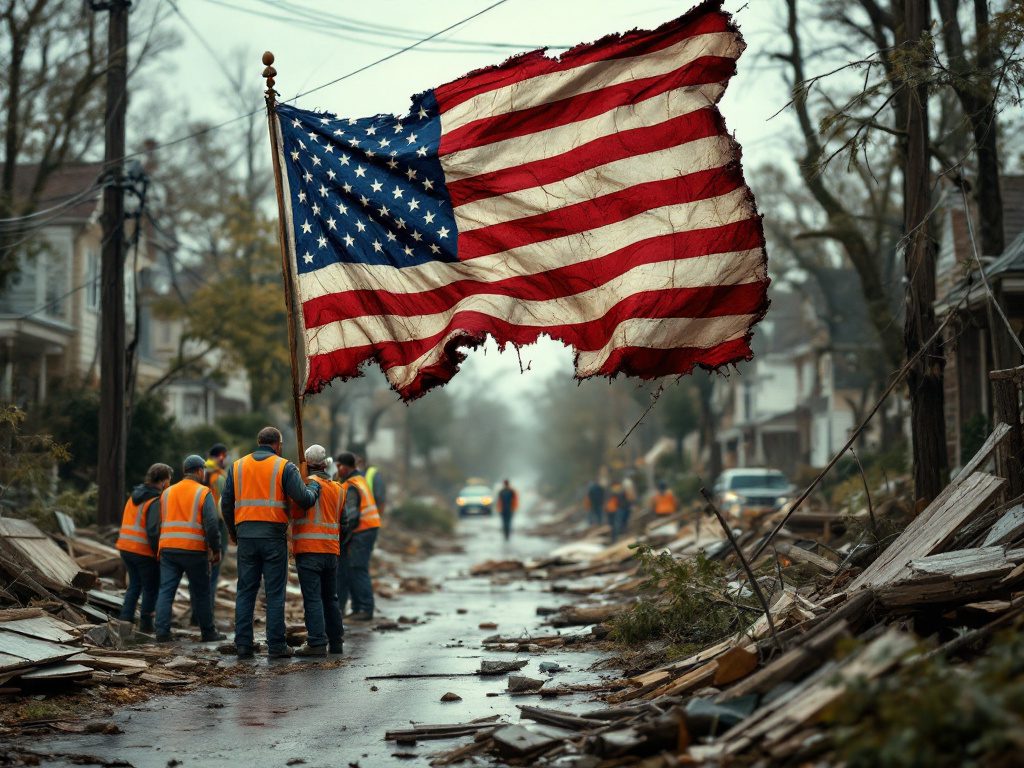
An Unceremonious End to Service: Volunteers Sent Home Amid Budget Slashing
Picture this: Teams of college-aged volunteers wearing navy blue uniforms wheel sandbags through neighborhoods still scarred from last year’s hurricanes. They move debris, comfort the shaken, and help non-profits rebuild communities—only to be sent packing overnight with a cold, dry email. That’s the stark reality AmeriCorps National Civilian Community Corps (NCCC) members faced this week as the Department of Government Efficiency (DOGE), operating under the banner of federal cost-cutting, abruptly terminated a vital “first line of defense” for disaster-hit Americans. Volunteers who were, quite literally, mid-project in flood zones, urban gardens, or rural food banks have now gone home—leaving vulnerable communities in the lurch.
This is not some esoteric bureaucratic tightening. The NCCC program, established in 1993 through the National and Community Service Trust Act under President Bill Clinton, has placed thousands of young Americans on the frontlines of disaster relief for over thirty years. From clearing hurricane wreckage in New Orleans to supporting the Forest Service in wildfire mitigation, AmeriCorps NCCC has been woven into the fabric of national emergency response—a role that goes well beyond slogans or government press releases.
According to AmeriCorps’ own figures, its NCCC teams have contributed over 8 million service hours across nearly 3,400 disaster projects since 1999. These are not abstract statistics; they are the backbone of hurricane recovery, wildfire management, and pandemic logistics. Take Hurricane Katrina: NCCC volunteers worked side-by-side with FEMA well before the National Guard could arrive in force. Local activist and former corps member Mark J. Lindquist described the decision to axe NCCC mid-year as “ripping out the country’s safety net by its seams.”
What’s Driving the Cuts? Ideology, Ambition, and the Cost of Efficiency
So, who made this decision and why? The sudden firings trace directly to the Department of Government Efficiency (DOGE)—a newly empowered body fashioned by the Trump administration, reportedly helmed by tech titan Elon Musk, according to statements by President Donald Trump himself. DOGE’s mission: shrink the federal government, slash programs deemed inefficient, and cut spending, regardless of their on-the-ground impact.
The numbers paint a sobering picture. The NCCC’s budget, which stood at $37.7 million for fiscal year 2024 and was scheduled to jump to $42.7 million, now lies gutted. Critics might ask: In a government spending trillions, does shaving a few million from AmeriCorps move the fiscal needle? The answer comes less from accountants and more from ideologues who see any form of collective action—or government-managed service—as inherently bloated or suspect.
A closer look reveals an approach focused on austerity rather than evidence. Harvard sociologist Jennifer Lee notes, “Programs like AmeriCorps function quietly and effectively in the background—they’re rarely the source of waste, but often the first targets in a political crusade for smaller government.” The direct consequences of that crusade are felt statewide, as volunteers in Iowa, Louisiana, and wildfire-prone California have already been yanked off projects with no transition, support, or warning.
“Yanking AmeriCorps out mid-disaster response is like firing firefighters while the building is still burning.”
It’s not just about discarded uniforms, either. Many volunteers, lured by the promise of federal awards to pay off student loans, now find those commitments in limbo—a broken promise that will haunt young public servants for years. With the program’s closure, there is no assurance whether past service will be honored, or if volunteers tossed aside will shoulder those debts alone.
Disaster Response, Democracy, and the American Ideal at Risk
Behind the budgetary coldness lies a much deeper question: Who will stand up for our most vulnerable when governments shrink away from responsibility? By peeling away the NCCC’s reach, DOGE hasn’t just made a spreadsheet entry—it’s left shelters unstaffed, food banks under-resourced, and communities exposed to the growing risks of climate-fueled disasters.
Historically, moments of crisis have shown that a robust, community-driven response saves both lives and dignity. After Superstorm Sandy, for example, NCCC volunteers worked alongside unions and faith groups to restore housing and deliver urgent supplies. Those partnerships were not just heartwarming stories for the evening news; they bridged divides, rebuilt trust in government, and proved that our democracy is strongest when ordinary people serve one another in times of need.
This American ideal is now collateral damage in a larger rollback of public institutions. Progressive lawmakers and public interest groups argue that what DOGE calls “efficiency,” many see as a retreat from public responsibility—one that compounds inequality and erodes bonds of civic solidarity. While some federal employment reductions have been challenged in courts—and at times reversed—AmeriCorps’ future remains uncertain. If we expect resilient communities ready to weather the next flood, fire, or pandemic, why abandon the very infrastructure designed to respond?
As climate-linked disasters escalate, it’s not hyperbole to say these cuts are dangerous. “We’re entering peak hurricane season,” said disaster preparedness expert Dr. Will Tran of Tulane University. “This is when you need all hands on deck—not less.” The lesson? America needs an engaged, empowered service corps—now more than ever.
