
When Danger Struck: Leadership in the Face of Chaos
At 2:00 a.m. on a recent Sunday, the echo of breaking glass jolted awake the Governor’s Mansion in Harrisburg, Pennsylvania. Two beer bottles, filled with gasoline straight from a lawnmower, shattered against the historic residence—an attempted arson that, by all rights, could have become front-page tragedy. Instead, it became a moment that galvanized a public official, a family, and an entire city to reflect on the meaning of courage and public service.
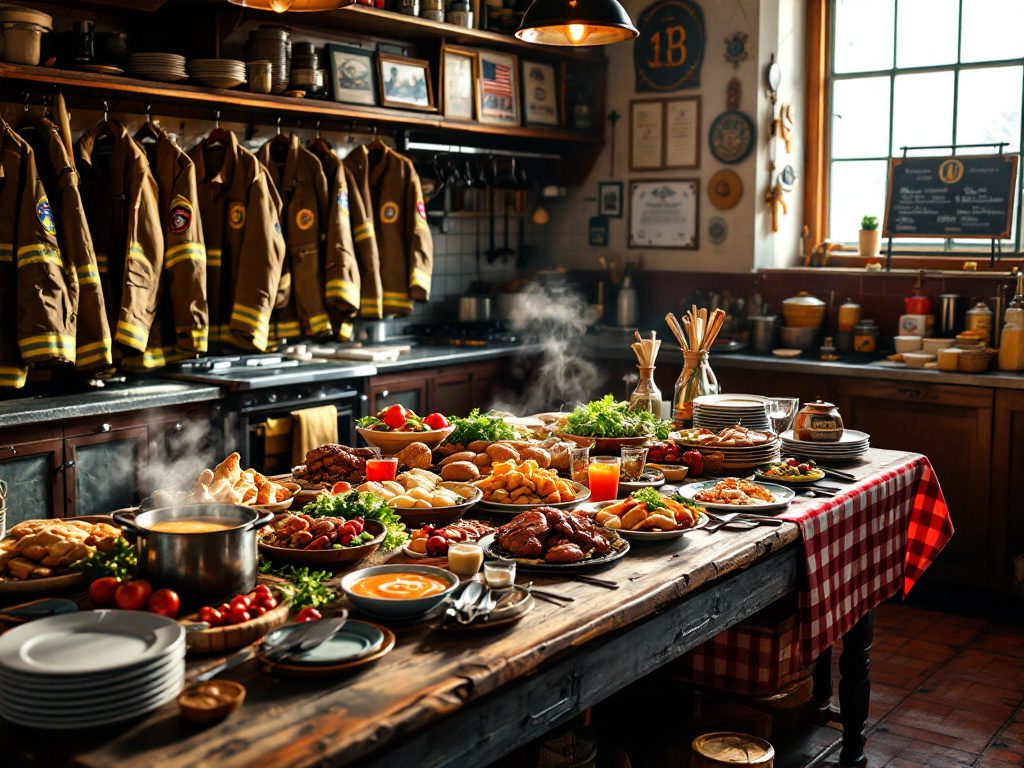
Gov. Josh Shapiro’s response to the attack on his own home offers more than a personal anecdote—it reveals the ethos of progressive leadership under fire. While some politicians might have retreated into tightened security or partisan posturing, Shapiro and his family took a different path. Days after the suspect, Cody A. Balmer, was arrested and charged with arson and attempted murder, Shapiro—joined by First Lady Lori Shapiro, their children, and celebrity chef Robert Irvine—walked through the doors of Harrisburg Bureau of Fire Station No. 1 carrying thanks, lunch, and a message of solidarity.
Is such a gesture merely symbolic? Or does it carry a deeper resonance in an age when public trust in government often feels precarious? For the firefighters who ran toward burning uncertainty that night, the answer felt unambiguous: leadership is measured by what you do, not only what you say once the flames have been doused.
The Value of First Responders: More Than Token Appreciation
Firefighters across Pennsylvania, both volunteer and professional, face resource gaps and mounting risks—realities that became all too tangible for the Shapiro family last week. As Governor Shapiro pointedly reminded reporters during the firehouse lunch, “You ran toward danger.” The gratitude in his voice echoed the sentiments of communities statewide, but Shapiro’s advocacy did not stop at simple words or a single meal.
“It is not lost on me, or my family, that but for the courage, training, and commitment of our first responders, we might be grieving instead of gathering here.”
His proposed $30 million boost to firefighter grants in the 2025 budget draws a sharp distinction from years of neglect and austerity too often embraced by conservative lawmakers. According to a recent Pew Charitable Trusts report, Pennsylvania’s volunteer fire companies have faced declining ranks and funding shortfalls for more than a decade, with rural and low-income areas suffering most. While Republican-led legislatures have favored tax cuts for the wealthy and erosion of public spending, frontline responders must contend with outdated equipment, crumbling stations, and volunteer burnout.
Harvard public policy expert Laura Eisenstein underscores this point, arguing that “Investments in first responders aren’t just about readiness in moments of crisis—they’re about economic stability, rural resilience, and the fabric of community trust.” When public officials treat these critical services as budget line items to be slashed, the consequences ripple far beyond city firehouses.
A closer look reveals how even moments of personal crisis can be transformed into policy opportunities—if leadership is present. Conservatives may bristle at what they deem “big government spending,” but the truth is, the price of underfunded emergency services isn’t measured in tax rates, but in lives and irreplaceable history lost to preventable disaster.
Community, Commitment, and Progressive Principles
Lunch at Station No. 1 was about more than sandwiches and platitudes. The choice to enlist Robert Irvine—a chef known for philanthropy and communal dinners—reaffirmed a progressive ideal: good governance isn’t transactional, but relational. You build stronger communities not just by legislating from a distance, but by showing up, breaking bread, and forging real human connections.
Contrast this with the performative gestures often recycled by the political right, who are quick to praise “heroes” in the abstract, yet slow to translate those praises into reliable wages, mental health support, or modernized equipment. Progressive leadership, at its best, rises above pageantry. Direct support for those on the frontlines—backed by real funding, visible appreciation, and accountability—reflects a value system where collective well-being eclipses narrow self-interest.
Previous collaborations between the Shapiro family and Robert Irvine—including a 2023 lunch for veterans—highlight a sustained engagement with marginalized communities. This is in keeping with the legacy of Pennsylvania’s Democratic governors, who have traditionally recognized that the strength of our institutions is found not in marble walls, but in the valor and empathy of those who serve.
Beyond that, Shapiro’s commitment to firefighters signals an ongoing debate about the “social contract” at the heart of American governance. Will we continue down the path of austerity and privatization, leaving our protectors to scramble for scraps? Or, will we invest—robustly, unapologetically—in the men and women who literally run toward danger?
Events like last week’s firehouse lunch remind us that democracy thrives when leaders embrace accountability, empathy, and a willingness to invest in the common good. If the right seeks to deride this as “soft governance,” let them. The evidence, history, and gratitude of a grateful family—and state—point to the contrary.
