
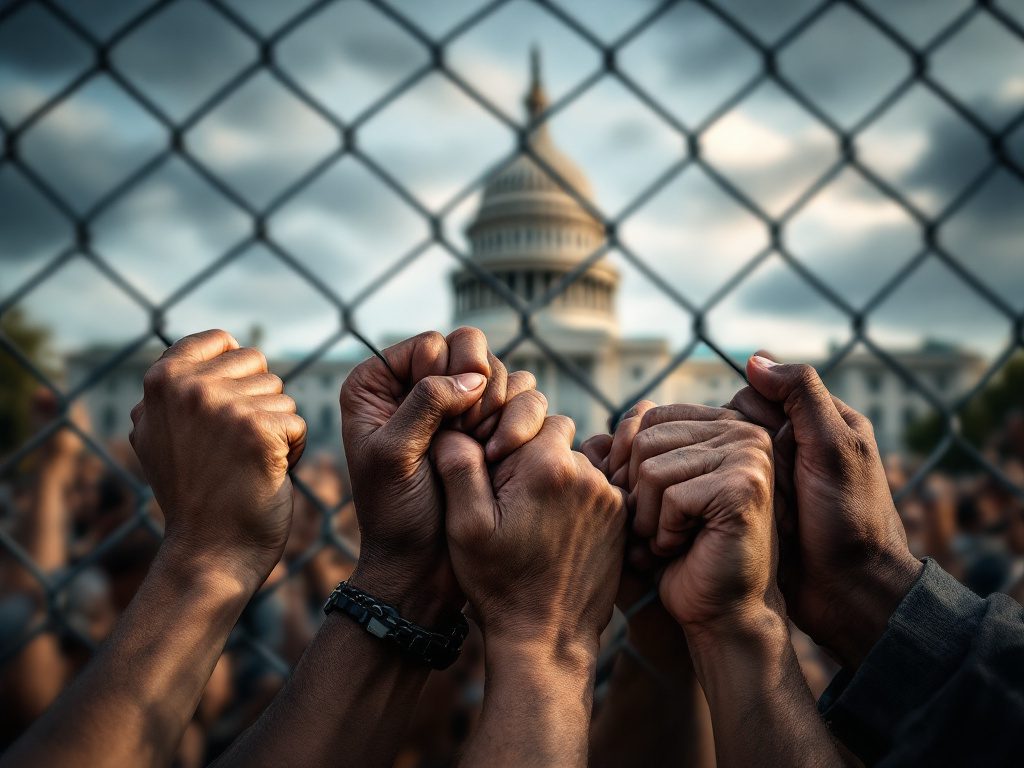
The Quiet Reality Behind Alabama’s Immigrant Population
Minutes after the Alabama House of Representatives passed what is being called the Laken Riley Act, a ripple of applause broke out in the stately chamber—a scene that belied the quiet realities outside its walls. The law’s passage marks a new chapter for Alabama: if enacted, state and local law enforcement agencies will have expanded authority to enforce federal immigration laws, arrest individuals based solely on immigration status, and transfer them into federal custody. Supporters argue this crackdown is a necessary response to a national border crisis and high-profile violent crimes involving non-citizens. Yet a closer look reveals a state far removed from the migrant flashpoints so often spotlighted on cable news.
Alabama, by every metric, hosts a modest immigrant community. According to the Migration Policy Institute, just under 4% of Alabama’s population is foreign-born—less than half the national average. Even so, the rhetoric swirling in Montgomery conjures visions of chaos along the Rio Grande. During debate, Rep. Phillip Ensler, D-Montgomery, reminded his colleagues: “We are legislating in response to a national panic, not a local threat.” Gov. Kay Ivey has already signaled support for the legislation, though she maintains Alabama’s immigration issues do not mirror those of border states. Fear, rather than data, shapes these legislative choices.
The Real-World Costs of Red State Immigration Policy
Beyond that, the implications of this sweeping bill are anything but hypothetical. The legislation lets local police and even non-law enforcement state employees maintain and share information about a person’s immigration status—a dramatic expansion compared to most states. Immigration advocates and some law enforcement professionals warn this approach could backfire spectacularly.
“Laws like this do little to make communities safer. Instead, they sow distrust and create fear, especially in communities that already feel marginalized,” said Juan Martinez, policy director at the Southern Poverty Law Center.
Alabama has seen this play before. In 2011, the state enacted HB 56, hailed by sponsors as “the toughest immigration law in the country.” The aftermath was immediate and chaotic: crop harvests failed for lack of workers, and families pulled children out of schools over fears of racial profiling. According to a 2012 University of Alabama study, the law cost the state nearly $11 billion in economic productivity in its first year. Even conservative local business leaders now quietly acknowledge the folly of such policies. Instead of a safer state, Alabama saw divided communities—families torn apart, businesses disrupted, and public trust in law enforcement at a low ebb.
Why revisit that dark chapter? House Speaker Nathaniel Ledbetter maintains that “people who enter this country illegally and commit violent crimes have zero place in our society,” tying his support of the bill to the tragic case of Laken Riley in Georgia. Yet, U.S. Sentencing Commission data repeatedly confirms immigrants, regardless of status, commit crimes at lower rates than native-born Americans. This simple fact is too rarely voiced in legislative chambers.
Escalation or Progress? Rights, Representation and the Larger Picture
Immigration debates rarely unfold in a vacuum. Each legislative session in Alabama has also seen attempts by Democratic lawmakers to elevate stories of inclusion, most notably by proposing to make Juneteenth a permanent state holiday. That bill, which commemorates the emancipation of enslaved Black Americans, passed easily with bipartisan support this year. The differing fates of these two measures—one centered on celebration, the other on criminalization—say much about the crossroads facing Alabama’s identity.
Nationally, the Supreme Court has sent mixed signals about the extent to which states can enforce federal immigration law. In Arizona v. United States (2012), the Court struck down key provisions of similar legislation, affirming that immigration enforcement is primarily a federal responsibility. “There’s a real risk that Alabama is inviting protracted lawsuits and constitutional headaches by pursuing this route,” said Harvard law professor Jacob Kim during a recent legal roundtable.
If history is any guide, bills like the Laken Riley Act will not vanish quietly into law but will instead foster suspicion, erode the relationship between police and immigrant communities, and cost Alabama dearly in court battles and lost human potential. Studies by the Pew Research Center consistently show that aggressive local enforcement of immigration laws reduces crime reporting among immigrants—making all residents less safe. Public safety is only as strong as the trust between police and the people they serve.
Ask yourself: What actually makes a community secure and prosperous? The answer, proven time and again, is inclusion—when neighbors, regardless of birthplace, cooperate with confidence that their rights are respected. At its core, the rejection of nativist hysteria is a progressive value—and a pragmatic one. Alabama legislators can choose to inflame old fears or invest in the future by celebrating diversity, commemorating hard-fought freedoms like those echoed by Juneteenth, and ensuring that policy is driven by data, not fear.
