
The Symbolism Behind the Stone: A Presidential Note at a Sacred Site
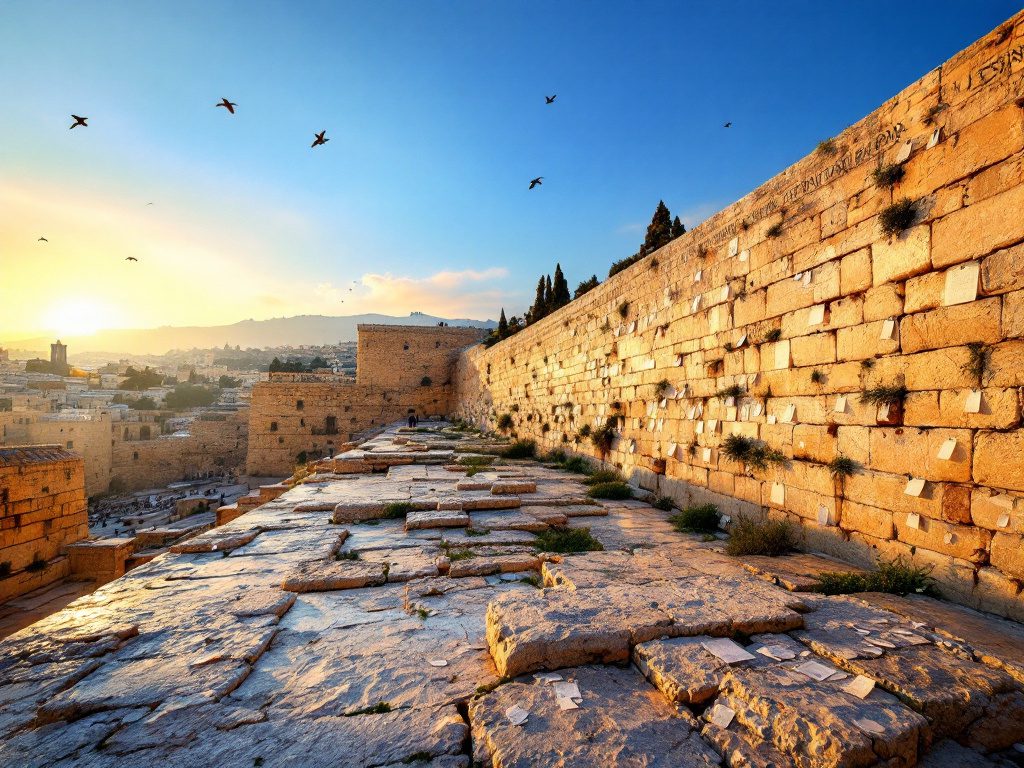
Older Jerusalemites may recall when foreign dignitaries arrived at the Western Wall with quiet humility, often careful not to tip diplomatic scales. This week shattered that tradition in dramatic fashion: Mike Huckabee, brand new U.S. ambassador and former Arkansas governor, stepped up to Judaism’s most revered site—Western Wall Plaza—bearing a handwritten note from former President Donald Trump. Huckabee was flanked by Rabbi Shmuel Rabinovitch, keeper of the Wall, as he slid Trump’s message into the cracks of ancient stone, observed by cameras and a mixture of solemn onlookers and skeptical critics.
The deliberate choreography of this moment was unmistakable. Huckabee revealed that Trump personally wrote the prayer the previous Thursday at the White House, urging him to pray for the safe return of hostages—American and Israeli—held in Gaza and elsewhere. The rabbi recited ‘Shir Lama’alot,’ prayers echoed across centuries, yet the tone was modern: resolutely political, deeply entwined with the priorities of a Republican administration known for confronting international norms and pandering to its Evangelical base. Huckabee declared, “This prayer is for peace in Jerusalem and for all those held in captivity.” But beyond the platitudes resided a carefully engineered message about who holds sway in the Holy City.
How should one interpret an American political figure delivering a missive from a former president at this fraught place, and at such a charged moment? For many liberals and even some moderate Israelis, it conjures vivid memories of Trump’s 2017 decision to recognize Jerusalem as Israel’s capital—a move that isolated the U.S. diplomatically and raised fears of renewed violence. According to a 2019 Pew Research study, 63% of Americans expressed concern that such policies risked further destabilizing a delicate status quo in the Middle East.
Tensions Escalate: Religious Holidays and a Fractured City
A closer look reveals that Huckabee’s visit did not occur in a vacuum. As he made his way to the Wall, just a few hundred yards east, the Al-Aqsa Mosque compound was the site of intensified confrontations. For the third consecutive day, Israeli security and settler groups entered under heavy police protection, escalating Palestinian anxieties during Ramadan, Passover, and preparations for Christian Holy Week.
These tensions go far beyond symbolic gestures. While the ambassador presented the visit as a benign act—one of “solidarity” and “prayer”—his presence aligned with ongoing U.S. policies: unwavering support for Israeli interests, limited regard for Palestinian claims, and a clear disregard for nuanced peacemaking. Amnesty International and United Nations officials have repeatedly warned that heightened visits and state-backed activities at contested religious sites add fuel to a combustible mix, especially during sacred periods. The reality, as noted by Harvard political scientist Sara Roy, is that “overt gestures during religious holidays are rarely neutral acts—they are invitations to escalation, often at the expense of the most vulnerable.”
“In a city already on edge, even a prayer note can spark flames—especially when it comes wrapped in the flag of a foreign power.”
History offers sobering precedent. The 2000 visit of Ariel Sharon to the Temple Mount—ostensibly a personal pilgrimage, in reality a calculated political act—lit the match that set off the Second Intifada. Diplomats and peacebuilders know that in Jerusalem, the line between faith and provocation is razor-thin. Huckabee’s act, timed with media fanfare, carried clear echoes of this dynamic.
Faith or Foreign Policy? The Conservative Calculation at Play
Is Huckabee’s posture simply personal devotion or a strategic chess move by American conservatives? For years, right-wing Evangelicals have viewed Israeli sovereignty as both fulfillment of biblical prophecy and a linchpin of domestic politics. The Trump administration’s close alliance with Israeli hardliners—culminating in the embassy move—solidified this bond. Now, as Huckabee steps into his new role, he brings that agenda with him, but with a diplomatic twist: “I’ll implement the administration’s policies,” he told reporters, distancing himself from more strident personal statements of the past, yet unmistakably championing a singular side of a complex conflict.
The limitations of this one-sided approach have been felt keenly on the ground. Palestinian officials decried the Western Wall visit as ignoring their own historical attachments and present grievances. Ongoing Israeli airstrikes in Gaza, resulting in at least 20 civilian casualties as reported by Reuters, serve to heighten the sense of injustice and futility among local populations. The optics of an American ambassador reciting Trump’s words at a contested religious site, with bloodshed unfolding just miles away, do nothing to advance peace or security for Israelis or Palestinians.
Beyond that, U.S. foreign policy risks losing moral stature. Long the global advocate for negotiated settlements, America’s recent trajectory under conservative stewardship eschews balance for bold gestures. This pattern alienates allies in Europe and the Middle East, undermines prospects for a genuine two-state solution, and fuels cynicism among younger Americans—nearly 60% of whom, according to the Brookings Institution, now sympathize with both Israeli and Palestinian aspirations, not merely one side’s narrative.
What alternatives would progressive diplomacy offer? First, a commitment to respecting—rather than exploiting—the sacred nature of Jerusalem’s holy sites. Second, an honest reckoning with Palestinian suffering and a willingness to foster multilateral talks. Above all, a renewed vision that prizes dignity, justice, and coexistence over political theater.
