
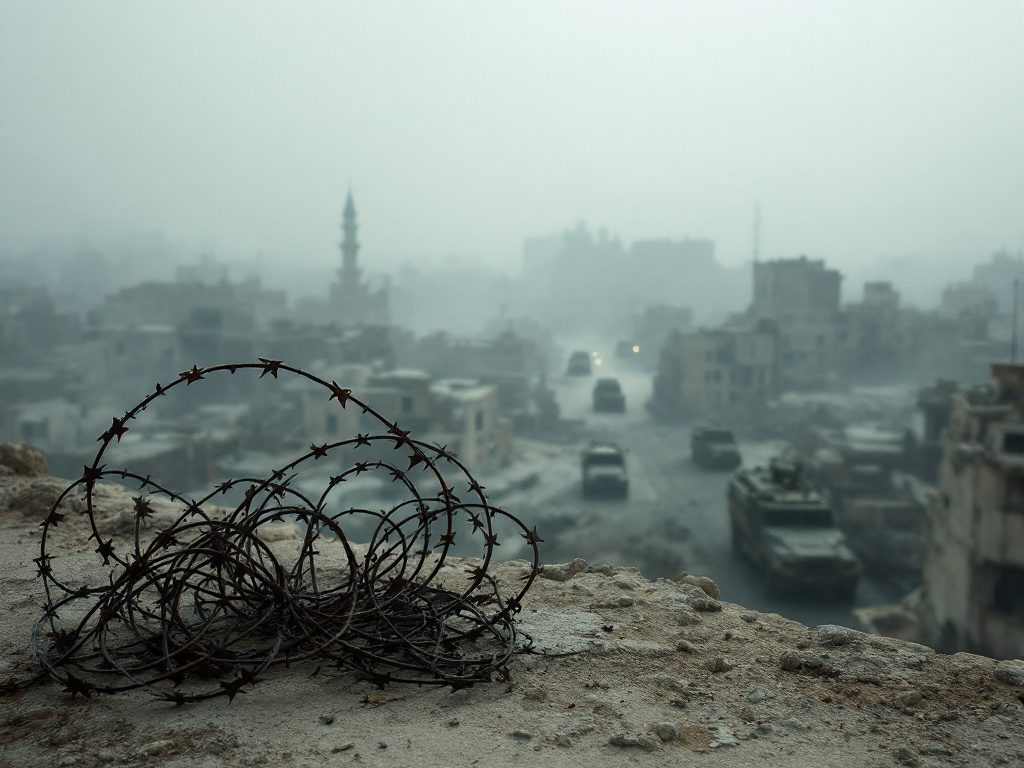
Uncertainty Amid the Rubble: Edan Alexander and the Gaza Crossfire
The desperate uncertainty facing families of hostages caught in Gaza’s crossfire can seem almost unthinkable to anyone watching safely from afar. Israeli-American soldier Edan Alexander, believed to be the last living American captive in Hamas’s hands, has become a tragic symbol of the conflict’s human cost. Now, a fresh wave of anxiety grips policymakers and relatives alike as Hamas says Alexander’s fate is unknown, lost amid the chaos of Israeli airstrikes and the clandestine struggle for survival below the Gaza skyline.
Hamas’s armed wing, al-Qassam, announced Saturday that it had “lost contact” with the militants guarding Alexander. The guard reportedly perished in an Israeli bombardment—a claim that illustrates just how murky the cost of this war has become. Hamas spokesperson Abu Obaida fanned the flames of blame, insisting that Israeli attacks are directly responsible for imperiling hostages. The Israeli military, for its part, declined to comment on what some see as a crisis of accountability and strategy that threatens to unravel the last threads of hope for any remaining hostages.
Families and governments, particularly the United States—whose officials have declared Alexander’s release a top priority—are left grasping for answers. Beyond that, the situation highlights the excruciating paradox of hostage diplomacy in an active war zone: negotiations for lives unfold as both sides pursue military imperatives that undermine any fragile trust or communication needed for a breakthrough.
The Anatomy of Hostage Negotiations: Deals, Deadlocks, and Propaganda
What powers and perils shape the fate of captives like Alexander? A closer look reveals a bitter calculus, as deals are floated and dashed in the contested terrain between Hamas’s demands and Israel’s steadfast conditions. Senior Hamas official Khalil Al-Hayya recently stated the group is willing to swap all remaining captives—some 59 people, by their count—for all Palestinian prisoners held by Israel. But this offer comes with strict nonstarters: no releases, Hamas insists, unless the war ends and Gaza’s reconstruction is guaranteed. Renouncing violence, or surrendering their arsenal? For Hamas, those are impossible conditions, made more so by full-scale military operations continuing around them.
Both sides level grave accusations of bad faith and reckless endangerment, their words weaponized for international audiences. Hamas’s Abu Obaida rejected allegations of mistreating prisoners, alleging that Israel spreads “false testimonies” to smear the resistance—while Israeli officials routinely accuse Hamas of using civilians and captives as human shields amid Gaza’s densely crowded neighborhoods. The resulting exchange is less an honest debate and more a symphony of propaganda notes, played for global sympathies even as lives hang in the balance.
Harvard psychologist Steven Pinker observes that hostage crises force societies to “confront the limits of empathy when tribal conflict is at its hottest.” Here in Gaza, tragedy is compounded by a seeming inability—or unwillingness—to break the vicious cycle.
“When every negotiation happens under artillery fire, every deal risks unraveling faster than it can even be proposed.”
The fate of Edan Alexander—much like that of dozens of others—remains a barometer for just how far diplomacy has sunk into darkness, overshadowed by the thunder of weaponry and uncompromising rhetoric.
Human Lives in the Crosshairs: The Liberal Imperative for Accountability and Peace
While those on the American right frequently champion uncompromising military action and denounce “negotiating with terrorists,” reality is far less binary. No amount of firepower will restore the dignity and safety of lost hostages—nor will collective punishment pave a path to lasting security for either Israelis or Palestinians. Progressive voices, rooted in the values of equality, justice, and shared humanity, urge a recalibration: centering diplomacy, humanitarian considerations, and accountability over reflexive escalation.
Consider the raw numbers that ground these appeals for restraint. According to the United Nations, more than 51,000 Palestinians have been killed since hostilities resumed, while the loss of even a single hostage—like Alexander—reverberates across continents. Reports from Human Rights Watch and the Red Cross consistently emphasize the impossibility of ensuring the safety of civilian captives amid relentless attacks. This is not just a moral dilemma; it’s a practical one. Harvard Kennedy School policy analyst Michael Singh noted recently that, “Every failed hostage negotiation only sets the stage for further cycles of violence and revenge, ever more remote from the original issue.”
Moments like this, fraught with tragedy and unanswered questions, expose the limitations of the binary approach so often touted by hardliners. The liberal argument is clear: lasting security and the return of hostages like Edan Alexander will never spring from military solutions alone. Robust, principled diplomacy—grounded in human rights and international law—offers the only chance for resolution, even if that path is messier and slower than hawkish voices want to admit.
Gaza’s hostages, Palestinian civilians, Israeli families—all are casualties of a system that privileges military victory over human life. The fog of war, as illustrated by Alexander’s tragic and uncertain fate, only deepens as each side refuses to see the other as fully human. As calls for a negotiated ceasefire intensify in Washington and Tel Aviv, the world is left to ask: how many more lives will be trapped—physically or emotionally—before leaders choose accountability, empathy, and peace over endless escalation?
