
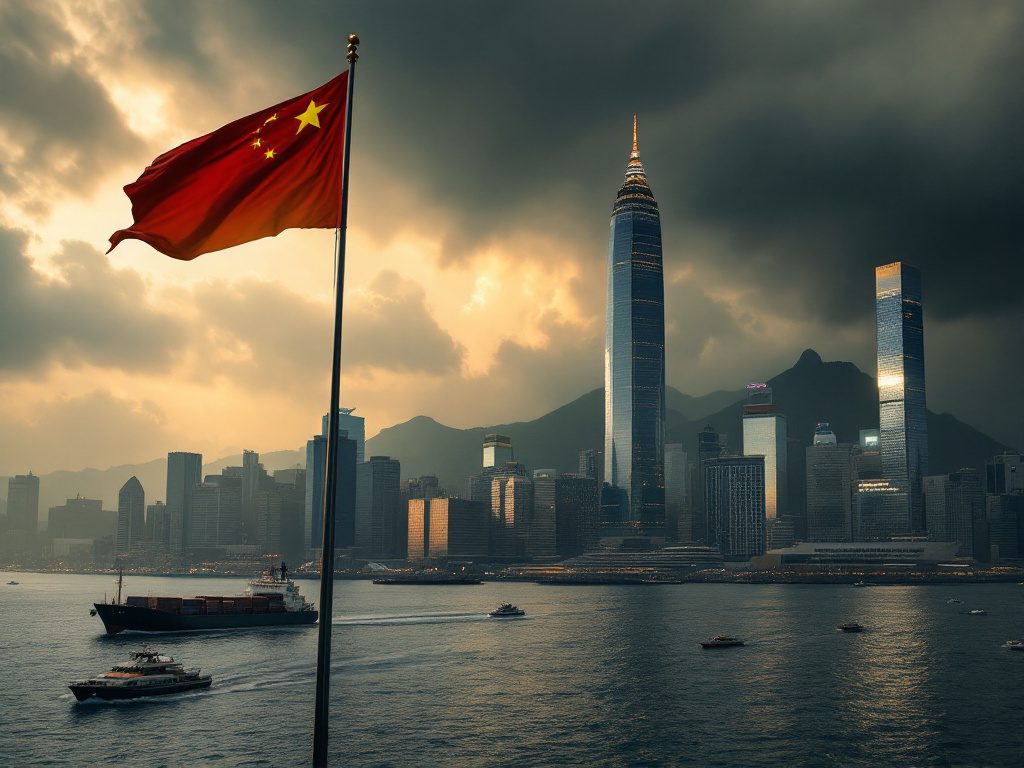
Retaliation and Rhetoric: The Spiraling Sanctions over Hong Kong
This week, China imposed sweeping new sanctions targeting U.S. lawmakers, officials, and leaders of major NGOs, marking another alarming escalation in the long-running diplomatic feud between Beijing and Washington. Ostensibly, this move mirrors a set of recent U.S. actions: Last month, the Biden administration authorized measures against six Chinese and Hong Kong officials accused of suppressing democratic freedoms under the controversial National Security Law. In response, the Chinese Ministry of Foreign Affairs condemned what it called “egregious behaviour” by U.S. actors and explicitly cited the American sanctions as justification for its own.
China has not yet publicly named the individuals on its blacklist, but its intent is clear. By targeting prominent American policymakers and civil society advocates, Beijing is sending a message: foreign criticism or attempts to intervene in Hong Kong’s governance will be met with swift, assertive reprisal. Spokesperson Guo Jiakun put it bluntly, claiming that such actions violate both “principles of international law” and “fundamental norms of international relations.” This rhetorical framing, while classic diplomatic boilerplate, belies a profound standoff over the future of Hong Kong and, by extension, the global balance of democratic and authoritarian influence.
Beyond the diplomatic chessboard, U.S. officials and many Western governments regard these latest moves as part of China’s broader crackdown since the 2020 imposition of the National Security Law in Hong Kong. The law, widely criticized as the death knell for the “one country, two systems” promise, criminalized dissent and forced the shuttering of independent media and advocacy networks. Citing the U.S. State Department’s March 31 “Hong Kong Policy Act” report—which Beijing dismissed as “filled with lies and fallacies”—Chinese authorities argue the West is meddling in purely internal matters. But what does “internal” mean when transnational repression and the curtailment of freedoms pierce international borders?
Sanctioning Dissent: Who Wins and Who Pays?
As the details trickle out, the human stakes become clearer. While both China and the U.S. cast their sanctions as defensive, the real-world impact often falls hardest on everyday citizens, activists, and professionals caught at the political crossfire. The tit-for-tat cycle threatens to undermine not only international norms, but also the lives and prospects of Hong Kongers who once looked to the world for support as they advocated for open society values. According to Human Rights Watch, over 10,000 demonstrators have faced arrest under Hong Kong’s national security regime since 2020, with new waves of exiles seeking asylum in Europe and North America—a vivid, human testament to the churn of geopolitics.
A closer look reveals how sanctions often become as much spectacle as strategy. Washington’s initial moves targeted Chinese officials by freezing any U.S.-based assets and restricting financial access, while China’s new blacklist is designed to block travel, business dealings, and potentially retaliate against affiliated organizations. Yet, as Harvard historian Elizabeth Perry explains, “These symbolic measures are rarely effective in shifting entrenched policy—what they underscore is the deepening impasse, and the loss of hope for meaningful engagement over human rights.” The real casualty here, Perry argues, is not just bilateral relations, but Asia’s fragile pro-democracy movement.
“Sanctions make for dramatic headlines, but they do little to guarantee the safety or freedom of activists on the ground. The danger is that we mistake gestures for progress.” — Hong Kong social advocate, D. Lee
And what about the so-called “chilling effect”? Despite threats, international advocacy continues—though with ever-greater caution. The stakes could hardly be higher. Last week, the Ministry of Commerce in Beijing warned allies not to enter trade agreements with the U.S. that would “harm Chinese interests”, signaling that even global economic integration is now being shaped by the authoritarian-libertarian divide. As the U.S. dangles tariff exemptions to some partners, the message is unmistakable: choose your side.
The Broader Fault Lines: Democracy, Sovereignty, and Global Order
How did we arrive at this standoff—and can anything break the cycle? Since 1997’s handover, Hong Kong was supposed to be the living symbol of coexistence between autocracy and democracy, an economic dynamo that thrived on pluralism. That delicate balance has tipped well past equilibrium. With each new wave of sanctions, both Washington and Beijing dig in, using legal tools as a substitute for the listening and compromise that diplomacy requires.
Some argue there’s nothing novel in this posturing. The Trump administration’s own sanctions set the stage for today’s mutual recriminations, and liberal democracies have long used targeted measures to pressure regimes that suppress dissent. Still, the sheer scale and visibility of this U.S.-China spat signals a world where zero-sum logic reigns. There’s little room for the collective well-being of ordinary citizens when statecraft turns personal.
Expert consensus holds that a sustainable future for Hong Kong requires international solidarity, not theatrical point-scoring. Georgetown political scientist Victoria Tin-bor Hui notes, “Without persistent, coordinated advocacy, Beijing faces few incentives to recalibrate its crackdown policy. What’s critical is clarity, unity, and support for authentic civil society voices, not just diplomats trading barbs across the Pacific.” For progressives invested in social justice and transnational solidarity, the lesson is clear: moral outrage must translate to concrete backing for vulnerable communities, rather than settling for empty gestures.
History warns us what can happen when sanctions harden into permanent rifts. During the Cold War, economic and travel bans created walls across continents, impoverishing citizens and calcifying suspicion. Are we doomed to repeat those patterns, or can we reimagine the tools of foreign policy in service of equality and democratic inclusion?
Where Do We Go from Here?
Navigating this turbulent new era demands more than reflexive tit-for-tat. Diplomacy must reckon with the human cost of policy and strive for engagement over escalation. That means building support networks for Hong Kongers seeking refuge, investing in credible international monitoring, and securing democratic institutions in the region so they cannot be so easily dismantled.
For those in the U.S. and beyond who value social justice, now is no time for complacency. The global contest over Hong Kong’s fate is not some distant power game—it’s an urgent reminder that democracy, when left unguarded, is all too fragile. The challenge before us: How can democratic nations uplift the cause of freedom without slipping into the cycle of retaliatory brinkmanship? The answer, as ever, lies in solidarity that persists after the headlines fade.
