
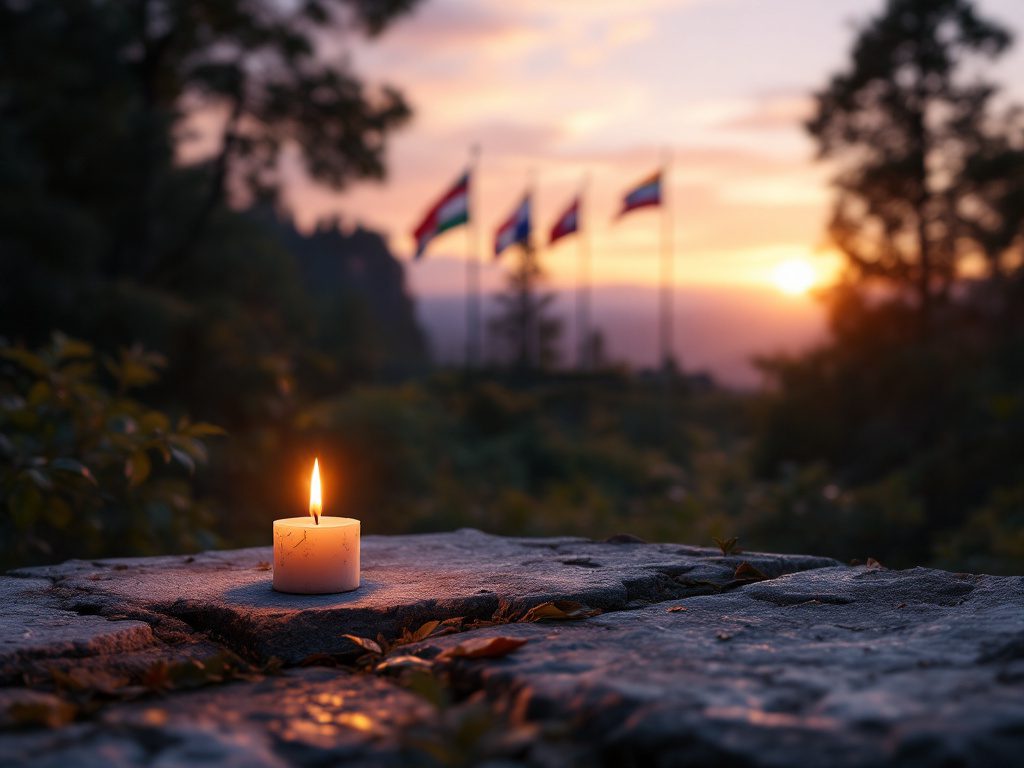
The Passing of a Papal Reformer: World Mourns, Flags Lowered
A pre-dawn silence settled across Vatican City as the world received news—Pope Francis had died at 88, ending a transformative era in the Catholic Church. As bells tolled across Rome and communities from Buenos Aires to Belfast gathered in somber prayer, flags around the globe were lowered to half-staff. In the United States, President Trump signed an executive order instructing all federal and state flags to be flown at half-mast—a gesture mirrored in royal residences across the United Kingdom. The symbolism was not lost on millions: lowering the flag for Pope Francis marked the passing of a spiritual figure equally revered and controversial, a man whose papacy redefined what leadership could mean for a faith of over a billion worldwide.
Born Jorge Mario Bergoglio in Buenos Aires, Francis’ story traces a remarkable arc from nightclub bouncer to the Vatican’s throne. The son of Italian immigrants, he once swept floors and worked as a chemist before joining the Jesuits in 1958. This trajectory—so grounded and unorthodox—would come to define his papacy. Detractors within the Catholic hierarchy accused him of moving too quickly, while others, especially among the world’s marginalized, saw in Francis something radically new: a willingness to speak with, not just to, those most in need.
Hours after the announcement from Cardinal Kevin Farrell, the official camerlengo, tributes poured in. The King and Queen of the United Kingdom released a rare joint statement recalling Francis’s “tireless commitment to the common causes of all people of faith” and his conviction that “care for Creation is an existential expression of faith in God.” Scotland’s royal residences and parliament lowered their Union flags in solidarity—evidence that this papacy’s reach extended far beyond the boundaries of Catholicism.
Pope Francis and the Moral Conscience of the Modern Era
Beyond stately gestures and official proclamations, Pope Francis leaves behind a progressive and often controversial legacy—one rooted in compassion and a willingness to challenge power, both within and outside the Church. Francis persistently called global attention to issues too often marginalized by governments and even by his own bishops: poverty, climate change, migration, and LGBTQ+ rights. Colorado Governor Jared Polis reflected on Francis’s “commitment to an inclusive and welcoming gospel” and his “support for environmental protection and the planet.”
Francis’ stance on migration thrust him into longtime public conflict with conservative leaders, particularly in the United States. He sharply criticized the Trump Administration’s immigration policies, denouncing the morality of mass deportations and urging lawmakers to safeguard the vulnerable rather than demonize them. According to the Center for Migration Studies, Francis’s rhetoric and visits bolstered sanctuary initiatives, inspiring many faith-based groups to offer direct assistance to migrants—a powerful countercurrent to the rise of nativist politics worldwide. He drew on the Church’s tradition of hospitality, but infused it with a distinctly new urgency.
“He brought the Church closer to those who suffer, to the planet we share, and spoke truth to those who use their faith as a weapon. His was a papacy of courage, humility, and profound empathy.” — Abbott Brendan Thomas, Belmont Abbey, reflecting on the passing of Francis.
Francis elevated the urgency of climate action to a spiritual imperative. His encyclical “Laudato Si’” challenged not only his flock but the entire global community to confront the existential threat of climate change. This was not just papal rhetoric—his interventions shaped the moral arguments underpinning the Paris Climate Agreement, lending weighty support to those advocating for bold environmental policy. Harvard ethicist Dr. Cornel West recently stated, “Francis did what too few are willing to do: he made caring for Creation not only a question of policy, but a matter of the soul.”
The Struggle for Inclusion: Francis’s Critics and His Enduring Impact
A closer look reveals a papacy in constant tension—unwavering in vision, yet dogged by the entrenched conservatism of the institution he led. Francis’s public support for civil unions for same-sex couples, for example, provoked backlash from within the Vatican and from right-wing Catholic groups. Yet, his advocacy stood as a landmark in modern Church history, giving hope to LGBTQ+ Catholics long marginalized by doctrine and inertia. According to Pew Research, the share of American Catholics who believe the Church should be more accepting of LGBTQ+ people rose by over 10 percentage points during Francis’s tenure.
His insider critics accused him of diluting tradition, even sowing confusion. Yet these contestations reveal much about the forces arrayed against progressive change—forces still alive and well in religious, social, and political institutions. The reality: it is precisely because Francis refused to toe a reactionary line, instead centering dignity and justice, that his death leaves such a palpable void.
Special masses from Rome’s basilicas to Herefordshire’s Belmont Abbey now call the faithful to mourn, but also to organize and redouble their pursuit of inclusion, unity, and justice. Francis’ humility and radical openness remain vivid—a guiding example for those unwilling to accept the status quo.
In the end, the global outpouring of grief—flags lowered, prayers whispered, tributes rendered in city halls and village chapels—amounts to more than ceremonial protocol. It speaks to the power and potential of leadership rooted in empathy and the common good over dogma and division. The challenge now passes to those who remain: to build not only on the programs Francis championed, but on the spirit he embodied. If the world so instantly recognized his passing, perhaps it is because for a moment, at least, he reminded us what moral courage looks like—public and proud, yet persistently kind.
