
Wave of Federal Cuts Brings Food Insecurity to the Fore
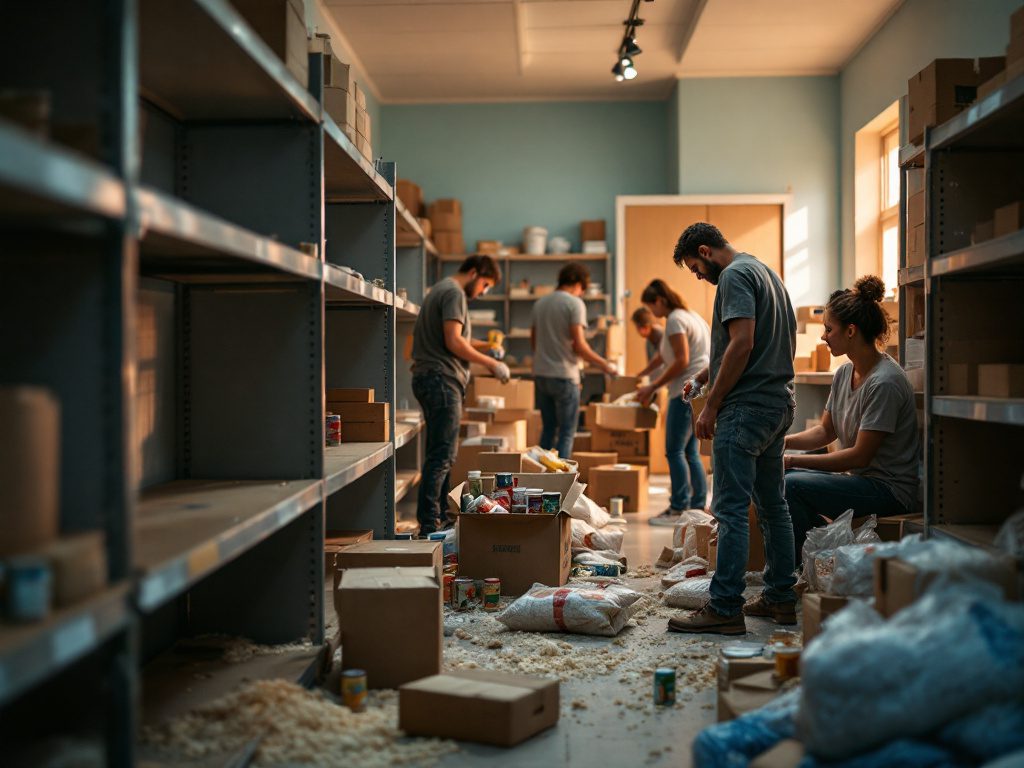
Walk into a food pantry these days and you’ll feel the tension in the air—rows of shelves meant for bread, canned goods, and produce now sparsely filled, if not altogether empty. Communities from Memphis to Philadelphia, from Yakima to San Antonio, are witnessing an unsettling surge in demand as America’s food banks struggle to adapt to unprecedented federal funding cuts. For families on the brink of food insecurity, these are not just numbers on government spreadsheets—they are meals missed and lives upended.
This crisis was set in motion by dramatic reductions to the U.S. Department of Agriculture’s food assistance programs—a move championed by former President Donald Trump’s administration and justified by his Department of Government Efficiency (DOGE), with billionaires like Elon Musk floating the banner of cost-cutting. According to the U.S. Department of Agriculture, over $1 billion has evaporated from food programs in 2024 alone, including $660 million ripped from school food initiatives and half a billion from The Emergency Food Assistance Program (TEFAP).
In the words of Thomas Reynolds, CEO of Washington’s Northwest Harvest, the severity is hard to overstate: “If a complete cut would occur, every food bank would have to quadruple what it was doing to meet the gap.” For his organization, which touches 1,300 Yakima households and some 400 partner agencies, every lost federal dollar means less ability to support both vulnerable families and local farmers counting on contracts for surplus produce.
Communities Mourning Lost Support: Real Stories, Real Impact
San Antonio, Texas—home to one of America’s largest food bank operations—has already felt the brunt. Eric Cooper, CEO of the San Antonio Food Bank, told local press that over 30 truckloads of food have been canceled due to the federal pullback, with direct and immediate impacts on hungry families throughout Central and South Texas. The reverberations are not theoretical. What does it mean to have thirty trucks of food vanish from a supply chain serving thousands?
The answer lies in the lived reality inside places like First Congregational Church’s food pantry in Memphis. In early spring, volunteers were forced to reduce the number of items clients could select from 10 down to 7. Meat, once a fixture in their offerings, hasn’t been on the shelves for over a month. Recipients now rely almost entirely on canned goods, with fresh produce becoming a luxury. According to Memphis-based hunger relief workers, TEFAP and similar USDA programs once comprised the backbone of local operations; freezing $500 million in federal support—as happened this year— threatens to collapse that scaffold entirely.
Food banks have long functioned as a vital safety net, but their capacity isn’t infinite. Fatigue is mounting, and ground-level volunteers report seeing a steady ebb of hope. Still, as local food banks stretch resources with ingenuity and resolve, they urge the public to see beyond the stereotypes about who needs food assistance.
“Hunger doesn’t ask who you voted for or what side of the aisle you sit on. It finds the gaps in our system and exposes our values as a society.”
— Eric Cooper, CEO, San Antonio Food Bank
Impact radiates beyond food pantries themselves. Local farms, once buoyed by contracts with food banks that stabilized their revenues, now face instability as purchasing programs wither. In Pennsylvania, Share Food Program projects a $1.5 million cut for the Philadelphia region alone, with implications rippling outward—affecting not just families in need, but also local agricultural economies that need reliable buyers.
The Politics and Priorities Behind Empty Shelves
What’s behind these cuts? The stated rationale from the previous administration was fiscal discipline—an effort to trim spending and streamline government. Yet, history offers sobering lessons when social safety nets are slashed during economic or public health crises. As historian Michael Katz, author of “The Undeserving Poor,” has shown, past reductions in nutrition assistance have rarely ended hunger—they just push the problem out of sight, into ER waiting rooms, school backpacks, and underpaid workplaces.
Changes to the Community Credit Corporation (CCC) are particularly damaging. Once a nimble lifeline, allowing the USDA to acquire extra food from domestic farmers for TEFAP during downturns, the CCC’s emergency support has now been axed. That means in years of sudden need—think hurricanes, wildfires, or pandemic supply shocks—food banks and farm families alike are left to fend for themselves. When the federal government retreats from partnership, communities are forced to shoulder the burden with fewer tools than ever before.
Reality on the ground reveals a truth policymakers sometimes ignore: food insecurity is not an urban or rural problem, not red or blue, but an American problem. And while food banks ramp up appeals to private donors and scramble to forge new partnerships, experts doubt it will be enough. According to a recent Pew Research Center report, nearly one in eight Americans reported experiencing food insecurity in the past year. Children and seniors—often the least visible victims—bear a disproportionate share of the hardship.
You might ask: Why, in a country of staggering agricultural abundance, should anyone go hungry? Basic fairness and human dignity demand a better answer. As progressive advocates have long argued, social justice is not achieved through charity alone, but through robust, equitable public policy—one that recognizes food, like education or shelter, is not a privilege but a right.
Coping With Crisis—and the Path Forward
Food bank leaders aren’t waiting for Washington to reverse course. They’re shoring up local networks, devising creative fundraising campaigns, and calling on state and city governments to prevent the worst outcomes. Grassroots volunteers, many of them seniors or young parents themselves, exemplify civic solidarity as they stand in the breach against hunger. Still, the scale of the challenge looms large; the magnitude of USDA cuts means local hustle will never fully compensate.
Polling shows widespread public support for federal nutrition programs. According to Feeding America, the nation’s largest hunger-relief organization, every dollar invested in food banks and school meal services pays dividends far beyond immediate relief—boosting long-term health, academic achievement, and even local economic stability. Inaction, on the other hand, compounds costs in the form of preventable illness, missed workdays, and diminished futures.
The question facing voters and their representatives this election year is stark: Will they demand meaningful investments in anti-hunger initiatives, or accept a patchwork of diminished pantry shelves and lost potential?
Our civic character is measured not by how we treat the privileged, but by how we protect the vulnerable and provide for the common good. The stakes today are as plain as an empty plate—will we fill it, or will we look away?
