
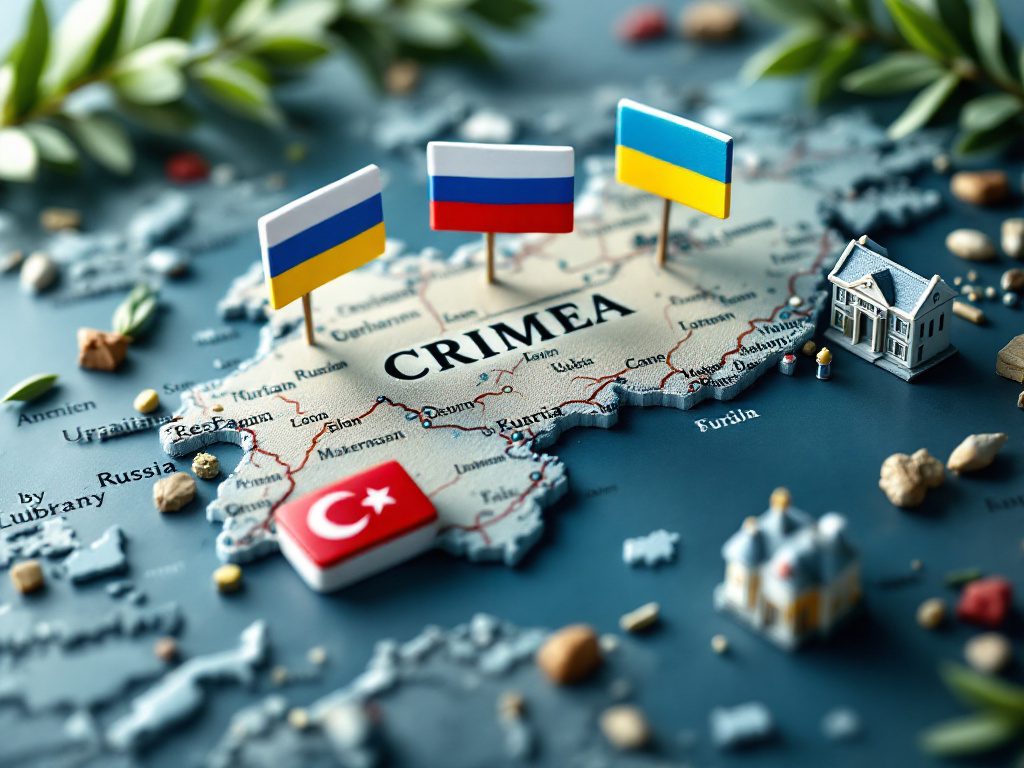
Diplomacy at a Crossroads: The Pressure Mounts on Ukraine
The specter of compromise is once again looming over Ukraine’s ongoing struggle for sovereignty. News out of Washington and European capitals suggests the United States is seriously considering a controversial diplomatic proposal: to recognize Russia’s illegal annexation of Crimea and freeze battle lines as they stand—potentially trading territory for a ceasefire. This move, first revealed by The Washington Post and confirmed by multiple European officials, has unleashed a storm of concern not just in Kyiv, but among America’s closest allies. Several Western diplomats described the U.S. pressure on Ukraine to accept this deal as “astounding,” exposing key rifts in the Western alliance’s public display of unity.
Why now? According to sources familiar with internal discussions, frustration inside the Biden administration—and among some Trump-era policy holdovers—has been building over the slow march of diplomatic progress and Ukraine’s military stalemate. Washington’s apparent eagerness for a breakthrough comes at a delicate time. Not only could this proposal reshape the future of Eastern Europe, it risks undermining the core principles of democratic sovereignty and international law that America claims to champion.
European Union leaders, particularly Estonia’s Prime Minister Kaja Kallas, have been vocal in their warnings. “Recognizing Crimea as Russian would be a mistake,” Kallas stressed, asserting the EU’s unwavering position: Crimea is Ukraine, and diplomatic expedience cannot come at the price of territorial integrity. These aren’t just rhetorical flourishes. They reflect deep-seated anxieties among European allies that America’s new willingness to cut a deal signals retreat—one that could embolden aggression elsewhere on the continent.
The High Cost of Compromise: Crimea’s Precedent and Its Political Flaws
History is littered with examples of “peace at any price” diplomacy coming back to haunt those who chose the easy way out. Allowing Moscow to keep Crimea—no matter the diplomatic packaging—would reward unprovoked aggression and erode the post-WWII order painstakingly built to avoid exactly these scenarios. When Moscow first invaded and illegally annexed Crimea in 2014, the international community—America included—responded with swift condemnation and far-reaching sanctions. Eight years on, it begs the question: What has changed, besides exhaustion and expedience?
Harvard political scientist Serhii Plokhy, an expert on Eastern Europe, bluntly cautions that “recognition of territorial conquest sets a dangerous global precedent.” If the world’s most powerful democracy can grant legitimacy after-the-fact, what’s to stop other authoritarian regimes from following suit? NATO’s entire security architecture is built on the promise that borders cannot simply be redrawn by force.
A closer look reveals Kyiv did not even engage on these territorial questions when last consulted in Paris. President Volodymyr Zelenskyy clarified that ceasefire and humanitarian issues were on the table—not the fate of Crimea. That Washington would float such a fundamental shift through backchannels, reportedly without full buy-in from its primary partner, highlights a troubling disconnect between Western capitals and those on the front lines.
“What message does it send if democratic nations, in the face of armed aggression, start rewarding land theft under the guise of peace?” asks Kaja Kallas. “For Ukraine—and for all countries facing pressure from larger neighbors—this is an existential moment.”
Fear among European officials is palpable. The swift annexation of Crimea in 2014 was only possible because the international community failed to deter Moscow’s initial moves in Georgia in 2008. Now, with the world’s attention divided by crises from the Middle East to Asia, a new compromise over Ukraine may set the tone for responses to future territorial aggression elsewhere. “Peace” on paper rarely solves the root issue—it can simply postpone conflict and invite greater stakes.
Values on Trial: American Credibility and the Future of Democratic Order
The Biden administration finds itself at a wrenching crossroads: the understandable urge for a diplomatic breakthrough is clashing with its own avowed support for democratic sovereignty and international law. Critics among progressives and centrists alike ask: Can America truly be the world’s advocate for freedom if it begins selling pieces of one country to mollify another?
Ukraine’s allies in London and Paris are scrambling to shore up Kyiv’s negotiating hand. French, British, and German diplomats have signaled they will push for robust security guarantees and postwar reconstruction assistance, partly funded by seized Russian state assets. Their hope: that any ceasefire, if reached, does not end up being a de facto pause before renewed hostilities, with Ukraine left more vulnerable than ever.
Ukraine’s future—and by extension, the credibility of Western alliances—hangs in the balance as talks proceed in London. Analysts warn that freezing the front lines now would effectively legitimize Moscow’s violent land grab and tie the hands of future Ukrainian governments from seeking justice or redress. At a moment when democracy itself appears under siege around the globe, ceding Crimea could have ripple effects far beyond the Black Sea.
What’s at stake isn’t just one peninsula, or even security for one embattled nation. It’s the rules-based order that has, imperfectly but persistently, kept large-scale conflict from engulfing Europe for generations. As Harvard’s Anne Applebaum warns, “Every time democracy blinks, autocracy pushes.”
Will America remain steadfast on principle, or yield under the lure of short-term convenience? The world is watching. For those who value social justice, sovereignty, and a future built on rule of law, the answer cannot simply be one of expedience. It must be one of integrity.
