
A Billion-Dollar Deal Amid Tensions
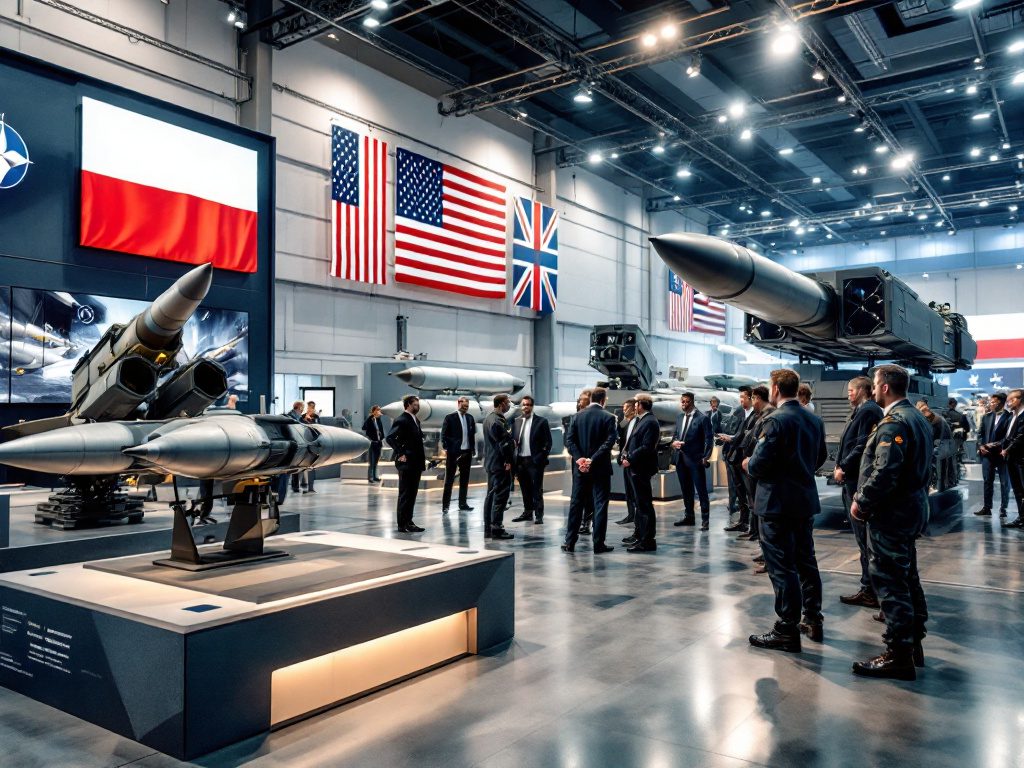
An eye-watering $1.33 billion—enough to fund thousands of teachers’ salaries, universal preschool, or a small-city hospital—will soon be spent by Poland on 400 cutting-edge AIM-120D-3 AMRAAM air-to-air missiles. The U.S. Department of State’s greenlight on this sale, which includes training, logistics, and maintenance support, is as much a barometer of Eastern Europe’s mounting anxieties as it is a business transaction. These missiles, known for their extraordinary range and precision, are destined for deployment on Poland’s Lockheed Martin F-16 and upcoming F-35 fighter jets.
Beyond the dollar signs, what’s truly being bought is a sense of security—a precious commodity for Poland. Russia’s war in Ukraine has not only shifted the mood across NATO’s eastern flank but has fast-tracked military spending and modernization like never before. Last year, Poland signed a separate deal for AIM-120C-8 missiles, set for delivery several years from now, revealing a clear, steady pattern of militarization. Yet, the enthusiasm for bigger arsenals often comes without an honest reckoning of what’s being traded away at home.
President Joe Biden’s administration touts the sale as a pillar of collective self-defense. But is it more than just a business opportunity for U.S. defense contractors like RTX Corp? And what consequences might emerge for central Europe’s long-term welfare and stability?
Security at What Cost?
According to the U.S. Defense Security Cooperation Agency, the missile sale is “vital to the national security of the United States.” The reasoning: A more heavily armed Poland means a stronger NATO and a more resilient bulwark against Russian aggression. Poland’s request for U.S. nuclear weapons on its territory—though controversial among NATO leaders—further underscores the legitimacy of these security fears in Warsaw.
But security doesn’t exist in a vacuum. Harvard security analyst Fiona Hill, who has served under both Republican and Democratic presidents, reminds us, “When deterrence becomes an arms race, everyone loses something—money, trust, and the space for civil society to flourish.” As Poland moves to ramp up its defense spending to an unprecedented five percent of GDP—the highest within NATO—the scale of resources redirected from education, healthcare, and climate adaptation programs leaves progressives asking: How do we truly define strength in a democracy?
“You can arm a nation to the teeth, but if you neglect its schools, its environment, its health, those weapons end up defending a society that’s crumbling inside.”
A closer look reveals more than just numbers on defense budgets or missile ranges. According to a 2023 Pew Research Center poll, nearly half of Poles expressed concerns that escalating military spending may undermine social investments vital to the country’s younger generation. While the shadow of Russia looms large over Eastern Europe, it’s worth recalling historian Tony Judt’s warning: democracy was always strongest when it refrained from letting fear dictate all policymaking.
Arms Sales and the Future of Collective Security
The U.S. approach to arms deals rarely generates waves at home, chalked up instead as smart foreign policy and economic stimulus for domestic industries. Yet, complex questions hover over these transactions, especially with Poland now positioned as the European Union’s emerging military heavyweight. At stake is not only Poland’s path, but NATO’s identity: Are we drifting toward a “Fortress Europe,” or something more integrated, accountable, and peaceful?
John Herbst, former U.S. ambassador to Ukraine, believes arms transfers are “a necessary evil, so long as they’re matched with clear commitments to shared values and human rights.” The danger, he insists, “is when deterrence calcifies into division or arms spending replaces real diplomacy.” Recent debates within the European Parliament echo that anxiety, with Green Party lawmakers questioning whether the surging defense budgets are overshadowing climate investment and migration solutions that arguably do more for real, lasting security.
The sale of AIM-120D-3 missiles is part of a broader trend: over $60 billion in U.S. military aid and arms transfers across NATO’s eastern frontier in just the past two years. Poland’s newly acquired missiles indeed offer a formidable leap in power projection—their >150km range far surpasses what most regional adversaries can muster. But history reminds us that capability alone is never a guarantee against tragedy, miscalculation, or even the slow erosion of the social fabric. After the Cold War, Germany and Sweden channeled “peace dividends” from demilitarization into some of the world’s best universal welfare systems. Where will Poland and its allies channel their resources when the next crisis ends?
As this deal awaits its final Congressional stamp, the real test lies not in how many missiles launch from the wings of an F-35, but in whether democratic societies can balance vigilance with vision—recognizing that the most sustainable security is built as much on equity and investment in people as on deterrence and firepower.
