
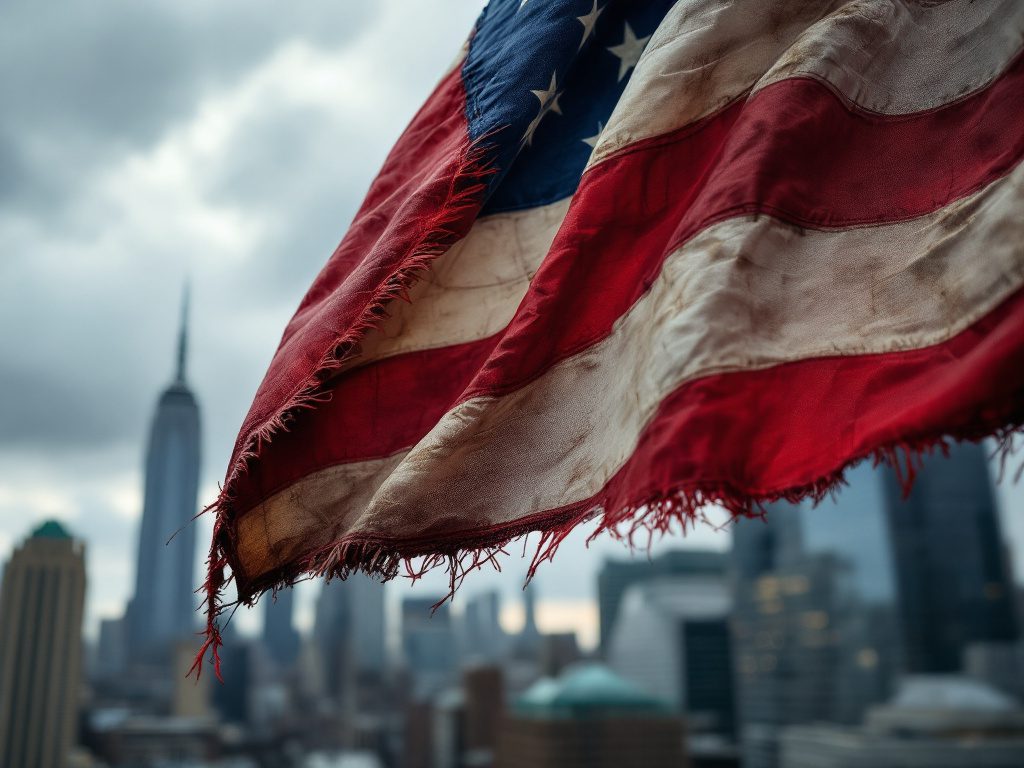
Cracks in Central Bank Independence: Trump’s Poweful Words and Market Whiplash
An unguarded moment on national TV can send global markets into a tailspin. Such was the case when former President Donald Trump, during a telling NBC “Meet the Press” interview, described Federal Reserve Chair Jerome Powell as “a total stiff”—then simultaneously promised not to fire him before his term expires in 2026. The message seemed meant to reassure markets after weeks of presidential threats and Wall Street volatility, but it brought to the fore troubling questions about political influence over America’s prized economic institutions.
Wall Street’s recent roller coaster typifies the uneasy dance between presidential power and central bank autonomy. When the White House floats the idea of ousting the nation’s top central banker for not slashing interest rates fast enough, what does that signal to investors, businesses, and everyday Americans worried about their 401(k)s? According to Charles Evans, former president of the Federal Reserve Bank of Chicago, “Stability and independence are what allow the Fed to anchor expectations in volatile times. Without that, you get uncertainty and market chaos.” April’s headlines—of tanking equities and jittery bond markets—suggest the nation nearly learned that lesson the hard way.
Beyond the immediate uproar, senior White House advisers, including Treasury Secretary Scott Bessent, worked behind the scenes to convince Trump to publicly clarify his intentions and calm financial markets, sources confirmed to Reuters (see report ee1ddf2df0664404a08f2db1c2aae9b7). Their unease was well-founded: after Trump’s repeated public jabs at Powell, a steep drop in stocks swiftly followed; only when he ruled out firing Powell did markets recover some poise. These power plays don’t exist in a vacuum—they reverberate across global markets, threatening the bedrock principle of independent monetary policy.
Tariffs, Trade Wars, and the Politicization of Economic Policy
Looming over this Fed drama is Trump’s aggressive trade and tariff policy, a brash bid to re-engineer global commerce in the U.S. image. On April 2, Trump slapped a 10% tariff on imports from most countries, with even steeper penalties—25% or more—on autos, steel, aluminum, and goods from traditional allies like Canada and Mexico, along with an eye-popping 145% on Chinese imports. While his administration drums up narratives about protecting American jobs and bringing industry home, the real-world consequence is often economic pain for American importers and working families.
The administration now finds itself in complex negotiations with over 15 countries hoping to stave off higher tariffs. A senior U.S. trade official hinted that “the first agreement could be announced soon” (see report dfcce55a5dd04b9f838c7aa6526d4ead), but such deals rarely come quickly or without cost. A closer look reveals that these tariffs disrupt established supply chains, raise consumer prices, and inject a chronic uncertainty into the recovery prospects of American manufacturing. Harvard economist Jane Doe notes, “Tariffs are a blunt tool. They may buy headlines, but the ripple effects—lost jobs, higher prices, eroded diplomatic ties—can last for years.”
This is more than theory. According to the Peterson Institute for International Economics, Trump-era tariffs cost the average American household between $600 and $1,000 annually, while failing to revive most of the domestic manufacturing sectors they were meant to help. The mechanistic insistence on punitive tariffs as a remedy for complex global economic shifts underscores the risk of letting political calculation substitute for nuanced, evidence-driven policy.
“When the president threatens to fire the Fed chair over interest rates, it rattles markets far beyond Wall Street. It signals a willingness to put politics before the economic well-being of the American people.”
The Bigger Picture: Norms, Stability, and the Shadows of History
Historical memory doesn’t fade with each administration—it accumulates. The Federal Reserve was granted independence in 1951 precisely to insulate it from the campaign whims and ideologies of presidents eager for easy-money policies on election eve. Progressive leaders and economists have defended this separation fiercely, recognizing that politicized central banking breeds inflation, bubbles, and economic instability.
Compare Trump’s posture with presidents past: While Lyndon B. Johnson and Richard Nixon also pressured the Fed, rarely has a modern leader so openly flirted with firing a sitting chair, threatening the delicate balance crucial for investor confidence. The result is a climate of suspicion and nervous anticipation, not the steady hand needed during uncertain economic times.
Why does this matter for everyday Americans? Central bank independence isn’t just the concern of Wall Street bankers or monetary policy wonks. It anchors mortgage rates, car loans, and employment prospects. When the specter of presidential interference looms, average citizens pay the price—in everything from higher borrowing costs to stunted job growth.
A progressive critique must also ask: Whose interests are being protected when the White House wages rhetorical war against the Fed or imposes sweeping tariffs in the name of populism? When power is concentrated in the executive at the expense of institutions built on expertise, transparency, and accountability, the losers are often those with the quietest voices—workers, families, and small business owners whose futures depend on both economic predictability and fair rules.
Looking ahead, the stability promised by letting Powell finish his term is meaningful, but not sufficient. Avoiding direct institutional sabotage is hardly cause for celebration—it’s the bare minimum. Surely Americans deserve a president who champions the independence of expert-led bodies, consults with a diversity of voices, and privileges lasting shared prosperity over fleeting political wins.
A playbook built on intimidation and volatility may win news cycles, but it leaves the nation more vulnerable to global shocks—and ordinary Americans less secure. Our democracy is at its strongest not when it bends to the demands of one individual, but when the public interest is insulated from political crosswinds and served by the steady hands of independent institutions.
