
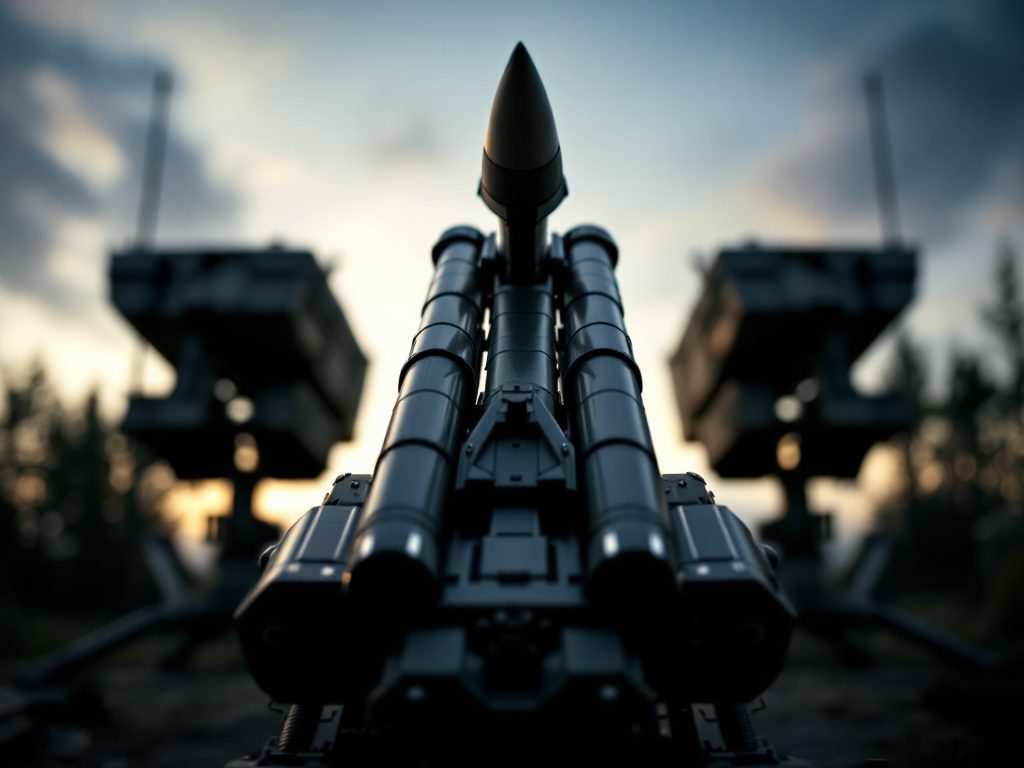
Patriot Missiles and the Politics of Defense
Imagine the scene: a series of air raid sirens blare over Kyiv as missiles streak across the sky. Ukrainian civilians scramble for cover while air defense crews tense at radar screens, bracing for the next deadly barrage. In moments like these, the Patriot missile defense—long seen as a symbol of high-tech military might and Western commitment—means the difference between devastation and survival. Ukraine’s urgent plea for more advanced air defenses has become a defining demand of the ongoing war. Yet Western support has arrived only in fits and starts, filtered through logistical bottlenecks, cumbersome politics, and diverging narratives on both sides of the Atlantic.
Now, as Russian missile and drone attacks multiply, Ukraine is set to receive another refurbished Patriot system—this time from Israel. According to The New York Times and corroborated by U.S. officials who spoke on condition of anonymity, the system is an older model, stationed for years in Israel, and will require major repairs before arrival. Ukraine’s current arsenal counts eight operational Patriots, with two under maintenance. The Ukrainian government, led by President Volodymyr Zelensky, has been adamant in its call to procure at least ten more systems, even pledging, in a recent CBS News interview, to purchase them for $15 billion: “We will find the money and pay for everything.” That drive—to not just request, but to buy the protection Ukraine desperately needs—sits in sharp contrast to the tepid and sometimes contradictory rhetoric emerging from parts of Washington.
Global Arsenal, Political Gridlock
A closer look reveals the larger dynamics constraining Western military aid. There are about 186 Patriot systems deployed globally, roughly a third in U.S. hands, the rest scattered from the Middle East to Asia to European capitals. These multimillion-dollar platforms, each costing at least $1 billion and requiring a highly trained crew, are not sitting idle—many U.S. units are stationed across forward positions in Europe, Israel, and the Indo-Pacific. Germany and Greece collectively hold around 15, becoming focal points for alliances’ new push to bolster Ukraine’s air defenses. Western governments have talked about sending more, but the transfer process is laborious and shrouded in secrecy. As NATO states wrangle over who can spare which systems without jeopardizing their own territories, allies trade accusations of slow-walking deliveries or prioritizing national defense over collective security.
Conservative critics have long maintained that shipping major weaponry abroad weakens U.S. readiness. This argument, favored by segments of the right and echoed by former President Trump, who recently downplayed Ukraine’s need and accused it of “always looking to purchase missiles,” twists the logic of alliance in the post-Cold War era. National Defense University scholar Dr. Lisa Feldman notes, “There’s a persistent reluctance among some policymakers to recognize that shoring up Ukraine’s defenses ultimately safeguards the broader European security architecture. The price of slow escalation may be paid far beyond Eastern Europe’s borders.”
Despite Zelensky’s overtures—he’s not asking for charity, but offering to pay—the Trump wing of the Republican Party routinely frames Ukraine’s plight as a distraction or, worse, a boondoggle. Rather than stand with democratic allies against autocracy, they peddle the fiction that Ukraine invited this war, ignoring the stark asymmetry of Russian aggression, a point debunked by independent observers and major historians.
The Cost of Hesitation—and the Burden of Hope
Beyond that, the logistical challenges can’t be dismissed. The high price tag—minimum $1 billion per system—and the months-long training pipeline for operators are real obstacles, compounded by bureaucratic inertia. Yet history offers ample warning against waiting too long. The delayed and piecemeal arming of Ukraine echoes past Western missteps, from Srebrenica to Aleppo, where hand-wringing led to tragedy. Columbia University’s Dr. Michael Urban writes, “Every week of indecision is a week where Ukrainian lives are on the line.”
“The truth is, when missile sirens wail and lives hang in the balance, hesitation is complicity. Every day Ukraine waits for defenses is a day when democracy bleeds in the mud outside Kyiv.”
It’s easy, from the comfort of Capitol Hill or a Brussels conference room, to imagine that delays in providing air defenses are a matter of spreadsheets and procurement orders. Try telling that to the family left homeless by a Russian drone, or the students cramming for finals under the threat of hypersonic attack. The moral imperative is clear: the world cannot afford to let democratic Ukraine stand alone when the entire fabric of European security is at risk.
Recent months have sparked some movement, with NATO allies, especially Germany, signaling willingness to redeploy some Patriots. The U.S.’s decision to refurbish and send the Israeli-based system marks a step in the right direction, though it’s still only a down payment on Zelensky’s larger ask. Most experts agree that so long as Russia escalates its aerial assaults, piecemeal aid will never match the magnitude of Ukraine’s need.
Where Do We Go From Here?
What’s at stake is more than the immediate survival of Ukrainian cities. Donald Trump’s indifference—and the broader conservative reluctance to aid Ukraine—underscores a dangerous myopia, one that mistakes transactional economics for strategic vision. Harvard defense analyst Joanna Brooks warns, “Backing away from Ukraine cedes ground not only to Russia, but to authoritarianism everywhere.” In times like these, national interests and values align: strengthening Ukraine means fortifying democracy’s front lines. Anything less is an abdication—and history will judge accordingly.
For liberals committed to justice, equality, and an international order based on rule of law, the message is simple. Solidarity isn’t about slogans or aid delayed by debates in distant halls of power. It’s about acting, boldly and decisively, before another siren wails and another city is left in ruins.
