
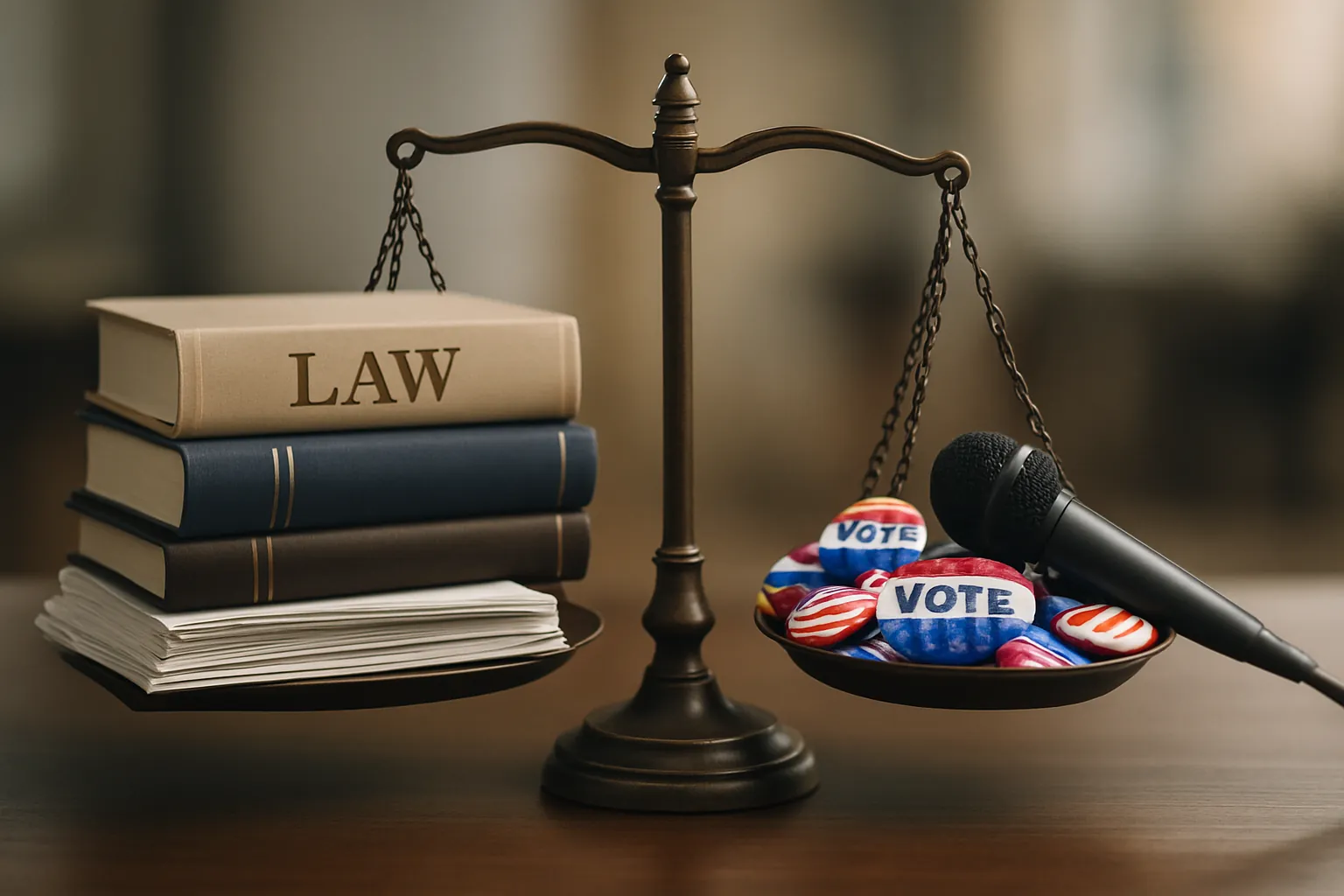
Beyond the Courtroom: A Battle Over Constitutional Principles
Beneath the surface of the usual legal wrangling, the clash between Susman Godfrey and former President Donald Trump signals something far deeper: a battle for the very soul of American constitutional democracy. The stakes extend well beyond an individual law firm’s access to government contracts or federal buildings. What’s at issue is the core principle that no president should wield power to punish legal advocates for championing clients’ rights—especially when those clients stand in opposition to a president’s political agenda.
The executive order in question, issued during Trump’s turbulent post-2020 election period, directs federal agencies to strip lawyers’ security clearances, restrict access to federal buildings, and slash contracts for Susman Godfrey and its clients. The trigger? Susman Godfrey’s high-profile defense of Dominion Voting Systems, which found itself in the crosshairs of election conspiracy theorists—many emboldened by Trump’s false claims of a stolen election. Trump’s administration justified these sweeping actions by citing supposed “unlawful discrimination,” yet provided no concrete examples, leaving critics to call the measure a thinly veiled act of political revenge for the firm’s advocacy on behalf of the truth.
During a recent hearing, U.S. District Judge Loren AliKhan openly questioned the government’s rationale, pondering whether the order was a legitimate exercise of executive discretion or thinly disguised “viewpoint discrimination.” Judge AliKhan’s skepticism aligns with a broader trend: other Trump-era orders targeting law firms such as Perkins Coie and WilmerHale have met the same judicial scrutiny, with several being blocked or overturned. According to Harvard constitutional law professor Lawrence Tribe, “this string of executive overreaches threatens not only due process but the structural separation of powers that safeguards our democracy.”
Intimidation by Executive Order: A Chilling Effect on Legal Advocacy?
Peeling back the legal argument, a more troubling ambition emerges—the use of executive authority to send a message of intimidation. The executive order didn’t exist in a vacuum. It arrived as part of a series of presidential maneuvers aimed at law firms representing Trump’s political adversaries. Susman Godfrey, led by their counsel, former U.S. Solicitor General Donald Verrilli, has been blunt: The order’s true purpose is to scare legal advocates away from defending unpopular clients, undermining their constitutional duty to ensure robust representation and independent counsel.
Why does this matter for the future of American justice? Picture the chilling effect if lawyers, pressed by the threat of losing government business or facing bureaucratic harassment, weigh the costs of taking a controversial case. Not every firm has the means or fortitude to challenge a vindictive White House—indeed, nine prominent law firms, including industry giants Paul Weiss and Skadden Arps, have avoided similar action only by agreeing to costly concessions: nearly $1 billion in pro bono services and other penalties. If unchecked, these tactics amount to the weaponization of executive authority to shape the legal battlefield itself.
“If presidential power can be wielded to intimidate or punish law firms for representing the politically disfavored, then the promise of due process and equal justice under law becomes an illusion.” — Donald Verrilli, Counsel for Susman Godfrey
A closer look reveals a recent pattern of settlements, not victories. Faced with the risk of government retaliation, many top-tier firms have chosen to settle or make significant concessions rather than risk protracted warfare with an administration willing to bend the rules. Veteran legal journalist Zoe Tillman notes in Bloomberg Law that “the message to smaller firms—less able to absorb the financial or reputational cost—could be devastating.”
Checks and Balances Tested: Executive Power, the Courts, and Our Democracy
American legal tradition has always rested on a delicate balance—powerful enough to prevent tyranny, but restrained enough to protect the rights of individuals and institutions, particularly those in opposition to prevailing government narratives. The Susman Godfrey case emerges as a vital litmus test for whether the judicial branch is prepared to rein in abuses of executive discretion when constitutional rights are at stake.
Some context is instructive. Throughout history, presidents from both parties have stretched executive authority, sometimes for expediency, sometimes in response to crisis. Franklin Roosevelt’s infamous Executive Order 9066, which interned Japanese-Americans during World War II, was justified as necessity at the time but is now roundly condemned. The lesson? Executive power, unchecked, poses real danger to minorities, dissenters, and the legal advocates who defend them.
Recent judicial pushback—as seen when judges blocked several Trump-era orders against other law firms—offers some hope that constitutional guardrails remain intact. Yet the fact that any administration would pursue legal professionals simply for defending an unpopular client sends dangerous signals about where partisan overreach begins and the rule of law ends. Democracy, as constitutional scholar Erwin Chemerinsky reminds us, “depends not just on written protections, but on a lived commitment to pluralism, dissent, and legal equality.”
Beyond that, it prompts us to ask: If this playbook is normalized, will future administrations—Democratic or Republican—feel emboldened to target other institutions that inconvenience them? If courts don’t act decisively, who will be left to defend the independence of the legal profession, and, by extension, American democracy itself?
Where Do We Go From Here?
With Judge AliKhan’s ruling pending, the broader legal community and defenders of constitutional rights are watching closely. The immediate dispute may focus on one firm’s contracts and clearances, but the principle at stake will echo well beyond the D.C. courtrooms. Public trust in the impartiality of the justice system depends on whether the courts fortify the bulwark against executive overreach and protect the sacred promise of equal justice.
This is, after all, about choosing the kind of country we want to be: One in which power is answerable to principle, where lawyers are free to defend the unpopular, and the machinery of government is not a cudgel for silencing dissent. In the end, what is on trial is not just an executive order, but the enduring strength of American democracy.
