
Ceasefire on Paper, Chaos in Practice
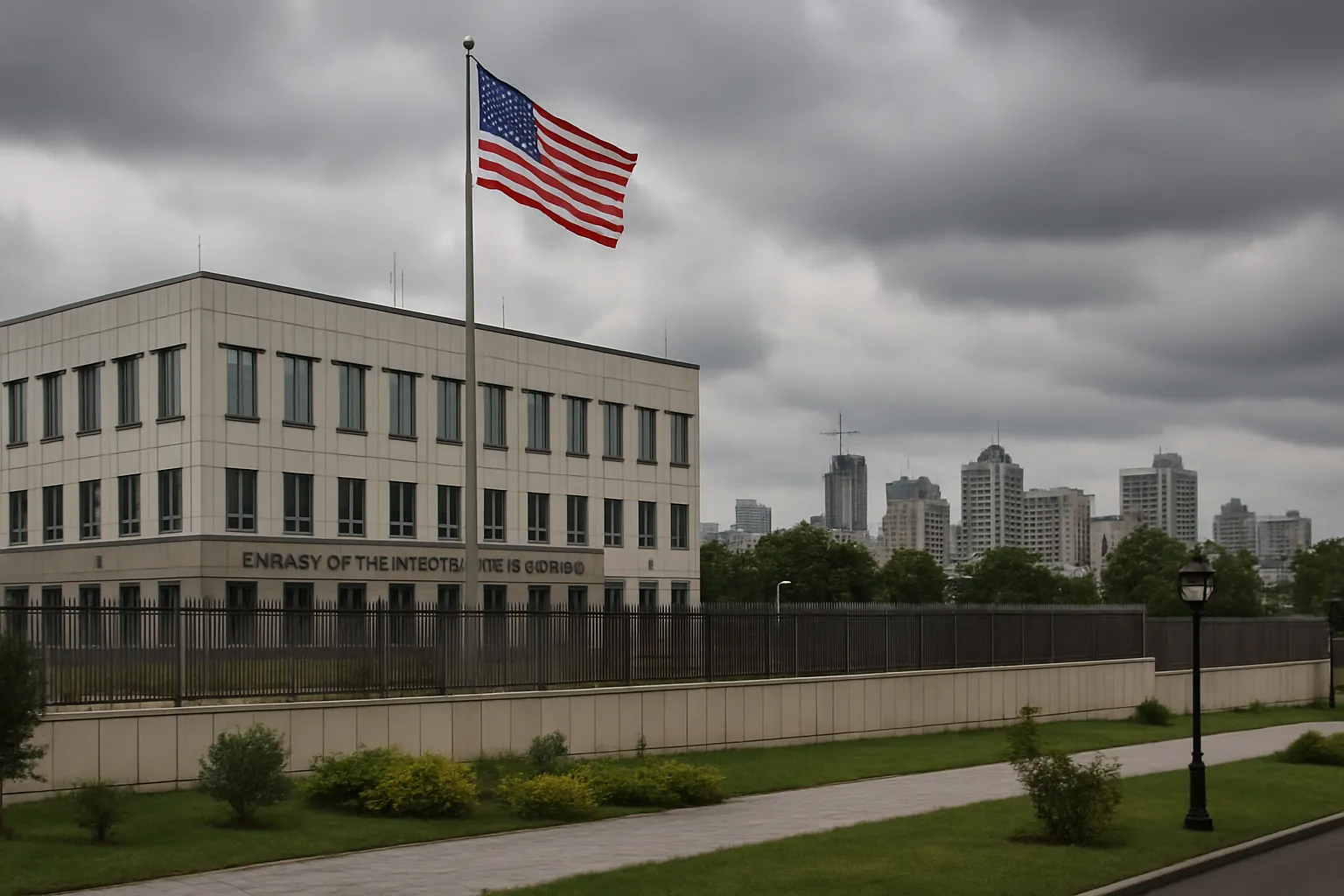
Sirens wailed across Kyiv’s cityscape as the U.S. Embassy launched a rare security alert warning of a potentially significant Russian air assault. The May 9th advisory did more than urge Americans in Ukraine to keep their heads on a swivel. It cut through the white noise of political posturing and struck a chord of real worry: is the world standing by as Ukraine faces another grisly escalation?
Recent patterns reveal a concerning trend. Moscow continues to disregard the olive branch of ceasefires—Easter, the so-called “Victory Day truce”—opting instead for relentless bombardment. Dr. Olga Tokariuk, Ukrainian political analyst, noted on X (formerly Twitter): “Putin’s declarations mean little on the front lines; attacks only grow more brazen.” That reality is palpable in the southern cities like Nikopol, where drone, artillery, and mortar fire rain down near the imperiled Zaporizhzhia Nuclear Power Plant.
What motivates the U.S. Embassy to break its usual reserve and sound the alarm directly to its nationals? According to military expert Ivan Stupak, such warnings have coincided with Russia’s use of formidable weaponry—most notoriously the Oreshnik munitions, which can shatter civilian resilience with a single strike. A closer look reveals this isn’t about routine caution; it’s a direct reaction to specific threat intelligence, signaling imminent risk. The Embassy’s urgent guidance: get enrolled in the Smart Traveller Enrollment Program (STEP), know your shelters, pack supplies, and stay informed. It’s an implicit acknowledgment that Washington expects not just scattered rockets, but a concentrated onslaught.
Diplomacy Diminished—Why Are Truces Evaporating?
Few moments have been as disheartening as recent failed ceasefire attempts. Despite efforts by the U.S. and European partners to broker a 30-day pause in fighting, Russia has shown little willingness to trade aggression for negotiation. The American and European ceasefire proposal was meant to halt the bloodshed, but Moscow’s hollow gestures are undermined by escalatory violence on the ground. The situation recalls the broken Minsk agreements of 2014-2015—a tragic history lesson in why adversaries emboldened by the international community’s hesitation rarely choose peace on their own terms.
Sanctions may be looming if Russia ignores these diplomatic overtures, yet the history of punitive measures offers mixed results. Sanctions are often slow burns—necessary, yes, but far from sufficient by themselves. Professor Fiona Hill, former U.S. National Security Council official, emphasized in a recent Council on Foreign Relations forum, “Sanctions must be coupled with unity, resolve, and clear communication to even begin to alter Moscow’s calculus.” Unfortunately, civilians in Ukraine cannot afford to wait for the arc of sanctions to finally bend toward justice. They live with the immediacy of attack, not the long shadow of economic penalties.
“Putin’s declarations mean little on the front lines; attacks only grow more brazen.”
— Olga Tokariuk, Ukrainian political analyst
Empathy, not mere strategy, must inform the West’s response. It’s not just a question of what message is sent to the Kremlin, but whose courage we are willing to honor: the everyday Ukrainians, braving air raid sirens and uncertainty, demanding global solidarity. Writing in The Atlantic, Anne Applebaum challenges readers: “If Ukraine falls, what message does that send to aggressors worldwide?” That’s not a hypothetical for Kyiv’s residents—it’s the context of their every waking moment.
Grappling with Escalation on the Home Front
Beyond the tumultuous headlines, real people scramble to safeguard their families whenever drones buzz overhead or shelling resumes. The U.S. Embassy’s warning didn’t simply populate inboxes; it catalyzed anxiety in a city already habituated to the spasms of war. As air raid apps spike in downloads and hastily stocked pantries become lifelines, the ugly truth is hard to ignore: this is daily life in Putin’s shadow.
Why does this emboldened aggression continue to target civilian infrastructure—sometimes, chillingly close to critical sites like the Zaporizhzhia nuclear facility? International watchdogs, including the IAEA, have sounded repeated alarms that such reckless bombardments risk triggering disasters with cross-border consequences. This is more than Ukraine’s war—it’s Europe’s, even the world’s, in all but name. The West’s tepid reaction to earlier escapes, like the Syrian chemical red lines or Crimea’s annexation, exposed the price for ambiguous commitments: rising authoritarian boldness.
The time for ambiguous signals has passed. If America and Europe truly stand for democracy and international law, their response must transcend words and slow-moving sanctions. That starts with honoring the lived experience of those under threat, providing not just rhetoric but real resources: advanced air defenses, humanitarian aid, and unwavering diplomatic pressure.
Kyiv’s latest air attack alert isn’t just a grim sign of conflict’s escalation. It is a litmus test—one the liberal world cannot afford to fail. Our principles, our credibility, and our conscience hang in the balance. The question is not just what Ukraine will withstand, but what kind of world we want to claim as our own.
