
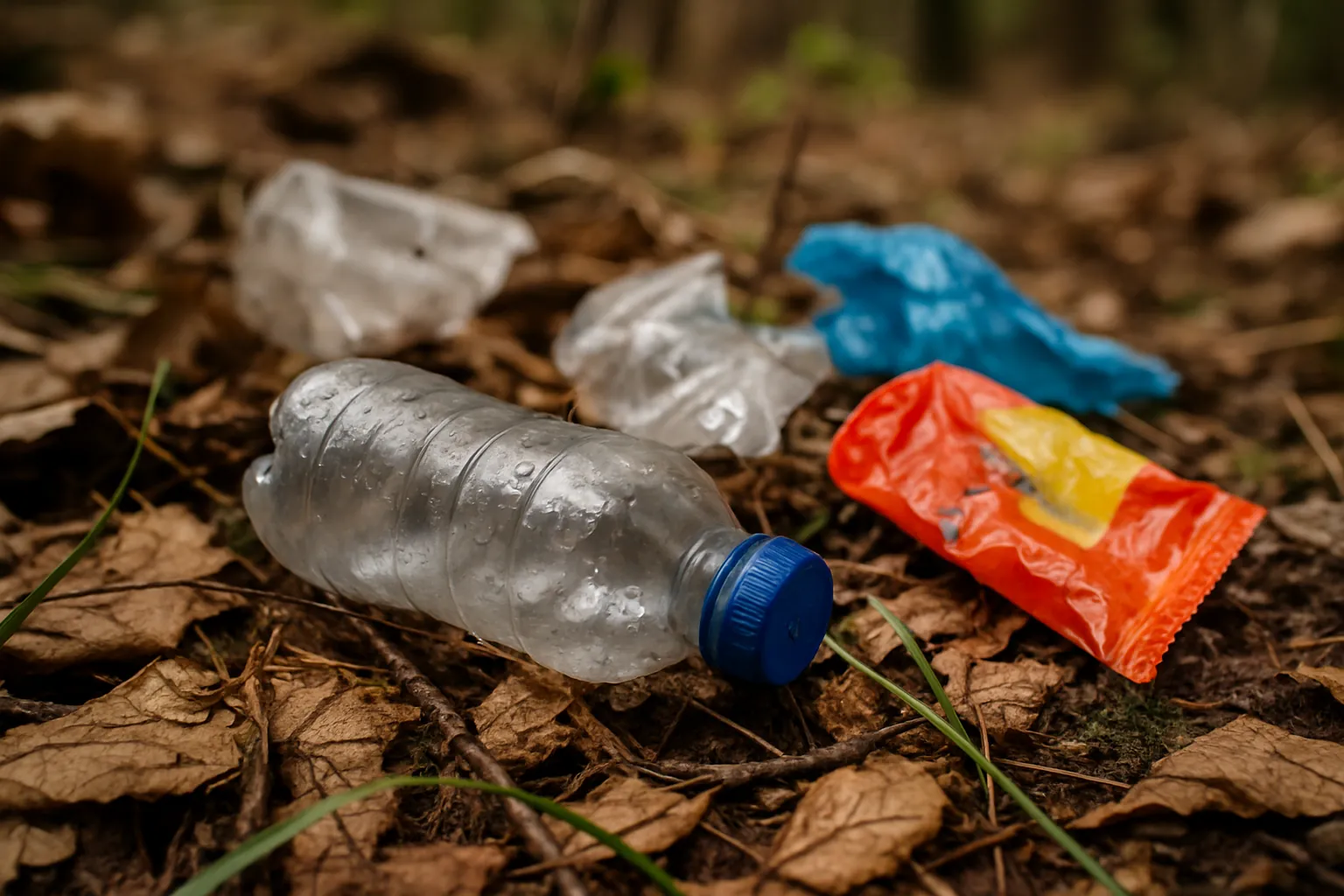
The Invisible Stress Within: How Plastic Manufacturing Pollutes Our Lives
Picture yourself pouring water from a supposedly pristine plastic bottle into your glass, trusting that it’s as safe for your family as the advertising leads you to believe. But Trinity College Dublin’s AMBER Centre shatters that illusion: beneath the glossy surface of our everyday plastics lurks a peril almost invisible to the naked eye. Unnoticed by consumers and too often overlooked by industry, the relentless pace of high-speed, low-cost plastic manufacturing has a dark side: “frozen-in” stress that births pollution at a microscopic level.
The research—meticulously conducted and peer-reviewed—reveals that when polyethylene and polypropylene, the world’s most common plastics, are molded and rapidly cooled, they trap intense internal pressure. This internal strain, an almost inevitable by-product of supercharged modern manufacturing, doesn’t merely threaten the long-term integrity of our water pipes or food containers. It does something far more insidious: it creates microscopic blisters, especially in highly stressed areas like bottle necks or caps. Eventually, these blisters rupture, scattering tiny plastic particles and chemical residues—micropollutants—straight into our food and environment.
Global plastic production now exceeds 400 million tonnes annually. The terrifying scale of this pollution is hard to grasp until you realize that, according to Trinity College Dublin’s findings, over 20 million tonnes of plastics leak out to contaminate the environment every year. That means, right now, an estimated 170 trillion plastic particles are already drifting in our oceans, quietly accumulating in marine life and, ultimately, our bodies. The pace of production and lax oversight—with so much riding on economic convenience and industrial speed—have normalized a crisis few consumers can see, but everyone will eventually feel.
Regulatory Gaps: Food Safety and the Ocean-Bound Plastic Dilemma
A closer look reveals that not all plastics—or their sources—are created equally. In recent years, pressure has mounted for companies to repurpose abandoned plastics, especially those retrieved from the open environment or near-ocean areas. From a surface-level environmental standpoint, it sounds like a win-win for everyone: recycling waste and keeping beaches clean. However, Britain’s Food Standards Agency (FSA) and Food Standards Scotland (FSS) recently sounded a clear and much-needed alarm. They’ve advised against the use of ‘ocean-bound’ plastics for food-contact packaging, warning there’s simply not enough conclusive evidence that such materials are safe for consumers.
Dr. James Cooper, the FSA’s Deputy Director of Food Policy, publicly acknowledged the environmental upside to recycling these materials but stopped short of endorsing them for direct food contact. He reaffirmed a critical truth: some products offer environmental benefit precisely because they avoid endangering public health. Plastics scooped up from chaotic, uncontrolled environments carry residues and contaminants that cannot always be washed away or neutralized by present-day manufacturing processes. There is also, more disturbingly, no regulatory oversight currently authorized to enforce strict limits on such recycled plastic in food packaging. The experts at the FSA recommend instead relying on plastics collected via controlled supply chains—like kerbside recycling—where every step from collection to repurposing can be supervised and verified.
“We must not substitute one ecological crisis for another, risking consumer health in the name of environmental progress. The science simply isn’t there to guarantee the safety of open-environment plastics in food packaging.”
—Dr. James Cooper, Food Standards Agency
The regulatory void here is alarming. Critics point out that, without enforceable standards, the surge of ‘eco-friendly’ packaging on grocery shelves may disguise new dangers beneath the marketing. Harvard public health expert Dr. Lisa Allard warns that, “a lack of rigorous oversight for recycled plastics, especially from uncontrolled sources, opens the door to chronic low-dose exposures with effects we don’t fully understand—particularly among children and vulnerable populations.” Incentives for quick fixes threaten to undermine decades of hard-fought public health gains, underscoring the need for scientific rigor in environmental solutions.
Beyond Recycling: Rethinking Our Relationship With Plastics
Every day, food manufacturers and packaging companies are forced to navigate an increasingly complex landscape—one where economic efficiency clashes with environmental and public health responsibilities. Should the bottom line always trump the public good? Evidence now suggests the answer must be no.
The hidden legacy of plastic stress has implications that reach far beyond today’s “urgent” needs for recycling and cost-cutting. Polyethylene and polypropylene bottles, celebrated for cheap manufacturing and logistical convenience, have become the unsung villains in a drama of global pollution. Their domination—71% of plastics found polluting ecosystems worldwide—tells us all we need to know about the consequences of unchecked innovation fueled by profit.
There’s a lesson here, especially for progressive advocates of environmental and food safety reform: Bigger problems require smarter solutions. Recycling alone, without systemic change in how we produce and certify plastics for food and household use, is not enough. Investments into safer, slower manufacturing processes, and a bold regulatory vision that mandates robust testing and transparent supply chains, are desperately needed. As the Trinity College Dublin study made vividly clear, industry’s addiction to high throughput comes at everyone’s expense—often quite literally, down to the food we eat.
Climate activists, public health advocates, and food safety experts agree that reform can’t just be about cleaning up after damage is done. Cambridge University’s Centre for Industrial Sustainability found that incremental tweaking of the recycling process delivers diminishing returns when upstream manufacturing decisions remain unchanged. A real fix demands rethinking our social contract with plastics. We must confront not just waste, but also the fundamental stresses engineered into our products—stresses designed for speed and savings, not for health and longevity.
We stand at a crossroads: double down on the status quo, or demand that regulators and manufacturers put holistic well-being before profits and greenwashing. The answer, as public awareness and science now show, will set the course of our food safety and environmental health for generations. For progressives, the path forward has never been clearer or more urgent.
