
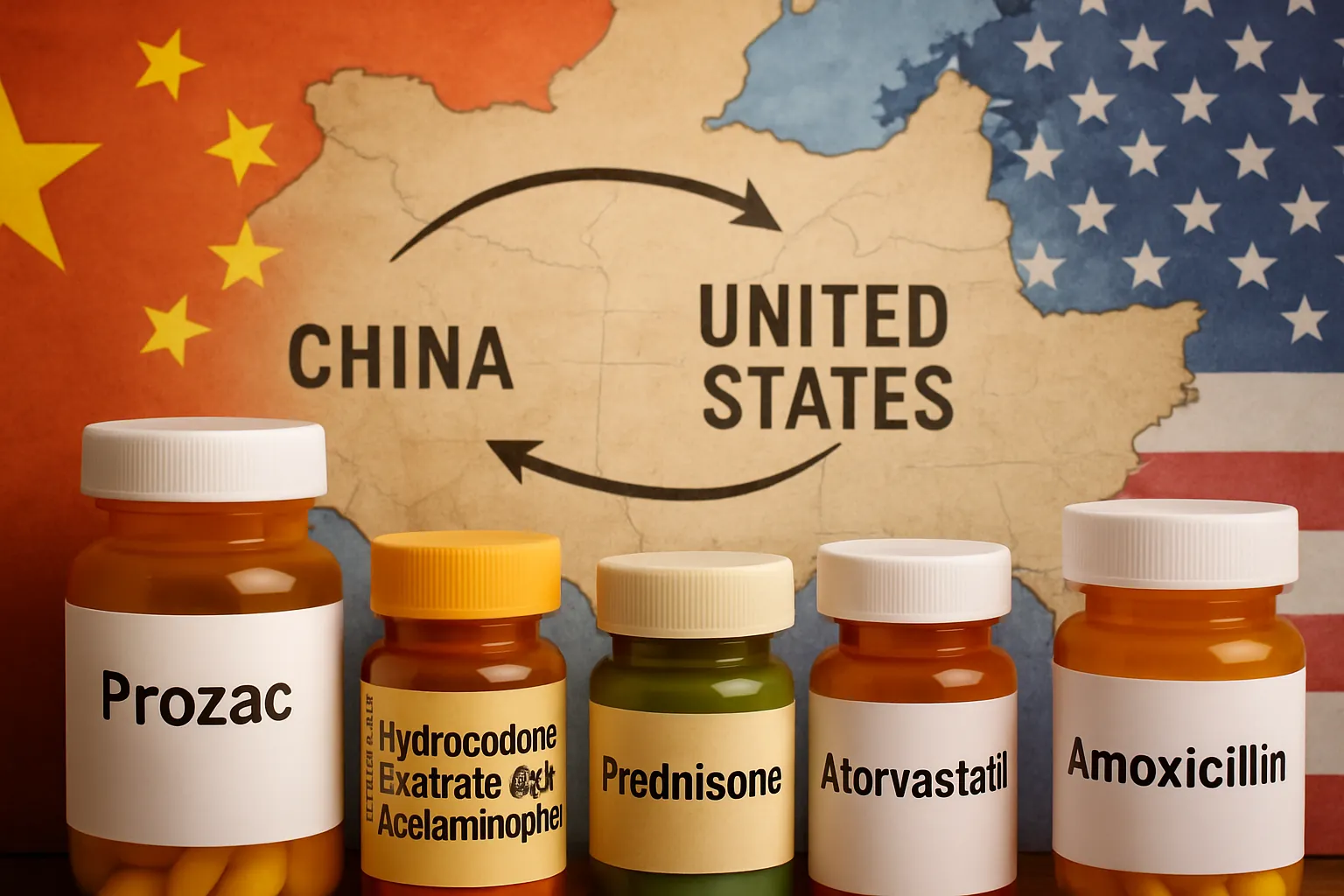
Stalemate on the World Stage: Trading Blame Amid a Deadly Crisis
Fentanyl, a synthetic opioid responsible for a surge in U.S. overdose deaths, has become both a public health emergency and a diplomatic flashpoint. In a vivid illustration of how international crises morph into geopolitical standoffs, Chinese President Xi Jinping and the Chinese Foreign Ministry are publicly rejecting U.S. blame for the crisis, even as Washington maintains tough tariffs allegedly linked to Beijing’s role in fentanyl exports. The outcome is a tangled diplomatic impasse that risks lives and stymies global cooperation, all while the death toll continues to climb on American soil.
President Xi didn’t mince words recently when addressing top officials from Latin America and the Caribbean. He warned that the accelerating changes unseen in a century put a premium on unity and respect—not “bullying” and “hegemonism.” America’s approach to the fentanyl crisis, he suggested, has been both, and it’s driving a wedge between two economic giants just when their cooperation is most desperately needed.
For progressive observers, this standoff begs a pressing question: How did a mutual problem—one that transcends borders and interests—become a contest of visibility, blame, and tariffs instead of targeted solutions?
Tariffs, Trade Wars, and the Human Cost
Snapback tariffs—up to 20 percent against Chinese imports over fentanyl—remain in force despite a temporary 90-day truce dialing down broader U.S.-China trade tensions. According to China’s Foreign Ministry spokesperson Lin Jian, those penalties are “unreasonable” and have seriously broken down what little counternarcotics collaboration existed between Beijing and Washington. The message is unmistakable: if the U.S. wants serious progress on the opioid crisis, stop using it as a cudgel in trade wars.
Under the Trump administration’s global tariff blitz, U.S.-China relations nosedived. Harvard economist Linda Bilmes notes that these punitive economic measures rarely achieve complex policy goals in isolation. “Tariffs intended as leverage often backfire,” Bilmes points out. “You see supply chains adapt, but diplomatic trust is much harder to repair.” The fentanyl dispute exemplifies these perils. Rather than knocking loose a Chinese concession, tariffs have helped spur nationalist resistance and impaired the very cooperation that could throttle drug networks.
For families in Ohio, Pennsylvania, or West Virginia—where fatal overdoses now outpace car accidents—the abstract tug-of-war over blame is cold comfort. Federal data from the CDC show fentanyl now accounts for more than two-thirds of all U.S. overdose deaths. Though much of the precursor chemicals originate in China, the lack of coordinated supervision, regulatory crackdowns, and intelligence-sharing means illicit suppliers always hunt for the next loophole, wherever it may be. The cycle of blame only intensifies this deadly whack-a-mole.
“If the U.S. is truly sincere about working with China, it should stop smearing and shifting blame onto Beijing. Dialogue, not finger-pointing, is what saves lives.”
China insists it’s gone beyond its obligations, designating all known fentanyl analogs as controlled substances since 2019. Yet U.S. officials remain unconvinced, citing persistent ambiguity in Chinese implementation and a lack of transparency. Both governments cling to sets of facts supporting their narrative but fail to synchronize regulatory or law enforcement priorities.
Why Transnational Problems Demand Transnational Solutions
Beyond that, an underlying theme emerges: When powerful nations brand shared crises as “someone else’s fault,” collective accountability collapses. International experts warn that the fentanyl epidemic, like climate change or pandemic preparedness, is quintessentially transnational—the solutions must be, too.
“This isn’t the first time we’ve seen leaders squabble over response—think of the HIV/AIDS global crisis in the 1980s,” recalls Professor Margaret Liu, global public health expert at Johns Hopkins. Rival nations spent years dodging responsibility, which, she argues, set back treatment options and cost thousands of preventable lives. The lesson, says Liu, is blunt: “History shows us finger-pointing leaves a humanitarian vacuum.”
And yet, at the core of Chinese and American exchanges lies another, deeper schism—a contest about values and worldviews. Xi Jinping urges Washington to participate in dialogue anchored in respect and equality, not accusations. Meanwhile, many in the U.S.—especially conservative hawks—see China’s stance as stonewalling, and reach for unilateral sanctions rather than nuanced engagement. This approach has ripple effects reaching far beyond fentanyl. It sets a precedent for how democracies and autocracies interact when the stakes are life and death.
For progressives, these patterns are troubling. Tariffs and tough talk serve well for campaign rallies, but do nothing for the mother in Cincinnati whose child is lost to an overdose, or the communities starved of support while politicians score rhetorical points. We can’t solve a crisis in isolation. Pragmatic compassion, transparent partnership, and robust public health strategies are not just moral imperatives—they’re winning strategies proven time and again.
The path forward demands American policymakers embrace honesty about domestic shortcomings—overprescription, underfunded addiction services, border loopholes—while still calling for real, verifiable international support from nations like China. Only then can dialogue outpace discord.
