
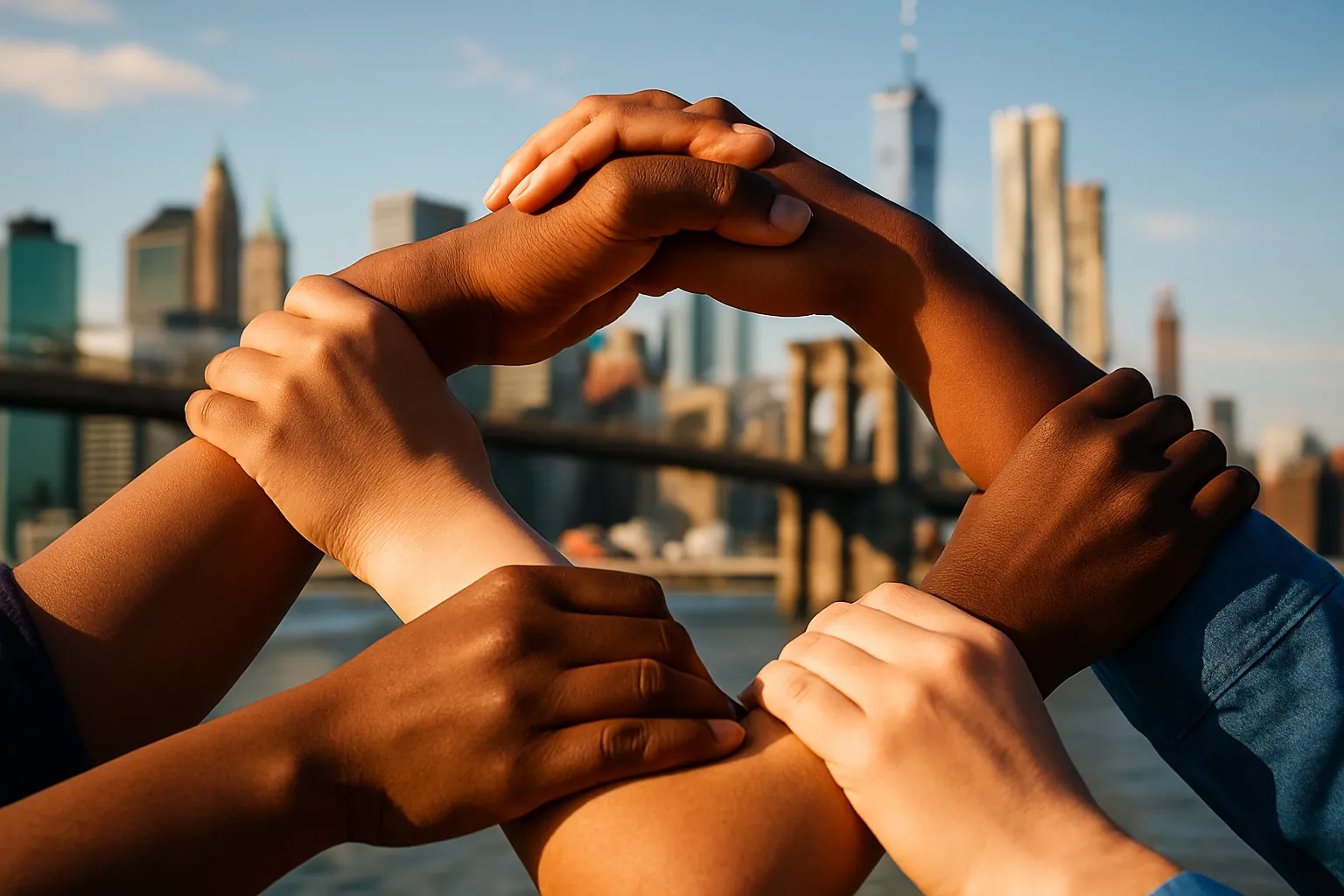
The Shocking Surge: Why NYC Needed a Bold Move
Imagine walking down the streets of the most diverse city in America and fearing for your safety simply because of your faith. For countless Jewish New Yorkers, this isn’t an abstract scenario—it’s an escalating reality. More than 60% of all hate crimes reported in early 2025 targeted Jewish residents, a jarring statistic when you consider that only about 10% of the population identifies as Jewish, according to NYPD data. This disproportionate targeting—an urgent crisis affecting the city’s social fabric—has forced New York to take unprecedented action.
The alarming rise in antisemitic incidents isn’t happening in a vacuum. The October 7, 2023, terrorist attacks by Hamas on Israel, which triggered renewed conflict in Gaza, set off cascading aftershocks that reverberated on campuses and streets far from the Middle East. According to the Anti-Defamation League, New York City saw a spike in hate crimes shortly after these events. Tensions have grown not just in synagogues and schools, but in workplaces and neighborhoods once thought to be safe havens. And when acts of violence and harassment go unanswered, trust erodes—not just among Jewish residents, but across minority communities who suddenly wonder who might be next.
It would be naïve to assume this crisis would resolve itself with time or platitudes. History warns us otherwise. The memory of the 2018 Pittsburgh synagogue shooting, the Charlottesville marchers chanting hate, and the resurfacing of conspiracy theories—these are not distant echoes, but recurring alarms. New York’s response, announced this week by Mayor Eric Adams, marks the first executive-level mayoral office in a major U.S. city devoted exclusively to combating antisemitism. It’s a move both reactive and proactive—born of necessity, but aiming for a future where such urgency is no longer needed.
Inside the Office: A “Sledgehammer Approach” to Hate
Moshe Davis, a veteran community advocate and Adams’ Jewish liaison, will serve as the inaugural executive director. His mission is as clear as it is daunting—a “coordinated, unapologetic, and immediate” campaign against antisemitism that pulls no punches. Davis insists on a sledgehammer approach, refusing piecemeal or symbolic gestures in favor of comprehensive action. A central component of his plan: convening a new commission of Jewish leaders from across the five boroughs, with the authority and voice to hold City Hall accountable.
The new Mayor’s Office to Combat Antisemitism is no bureaucratic fig leaf. Its scope is intentionally broad, integrating an interagency taskforce comprised of city agencies, police, district attorneys, social services, and community organizations. Tasks include issuing legislative recommendations, monitoring hate crime prosecutions, and advising the city’s Law Department on complex legal cases—ensuring no case slips through legal loopholes or bureaucratic delays. The mandate makes clear: this office is not just about collecting statistics, but shaping outcomes and policy that will tangibly improve Jewish New Yorkers’ security and dignity.
“We’re not here to be polite or symbolic—we’re here to end the era where hate goes unchallenged in New York,” Moshe Davis told a packed press conference. “Our community deserves—and demands—real safety, real justice, and real results.”
Support for the new initiative has been resounding among city leaders and advocates. Bronx Borough President Vanessa L. Gibson emphasized that hate crimes against any group threaten the cohesion and promise of the entire city. First Deputy Mayor Randy Mastro cited the office as a model for other cities grappling with resurgent hate movements. District attorneys from the Bronx, Brooklyn, Queens, and Staten Island have all pledged to collaborate closely, offering up specialized legal resources and outreach programs. If this works, it could set a national precedent.
Politics, Progress, and the Limits of Conservative Talk
Peeling back the layers, political observers see another factor driving urgency: Mayor Adams is up for reelection in 2025, and he’s betting his political future on the stakes of this crisis. By launching the office and framing his campaign around independent ballot lines like #EndAntisemitism and Safe&Affordable, Adams is challenging not just the city—but the nation—to stop treating hate as an intractable inevitability.
What of the opposition? Critics on the right have frequently minimized hate crimes as mere “law and order” problems or asserted that crackdowns on antisemitism risk stifling free speech. Yet history refutes this oversimplification. As documented by Pew Research and civil rights experts, permitting hate to fester unchecked emboldens extremists and erodes democratic norms. Just as post-9/11 Islamophobia corroded trust among Muslim Americans, the unchecked rise in antisemitism today undermines the aspirational pluralism that built New York City into a global beacon.
Progressive responses demand courage and imagination, sometimes risking backlash from those clinging to a nostalgic, exclusionary vision of the city. Harvard sociologist Michèle Lamont underscores that “combating group-based hate requires both top-down policies and grassroots coalitions—it takes both leadership and solidarity.” The benefits do not stop at the Jewish community. Every effort that establishes clear civic boundaries—where hate is not tolerated, where justice is pursued aggressively—uplifts the safety and confidence of every minority ({even you, the reader, wherever you come from}).
What are the real stakes? If the Mayor’s Office succeeds, it could redefine how cities tackle hate—forging a model that pairs urgent government action with grassroots clarity and courage. If it fails or stalls, the risk is not merely political loss for one mayor, but a broader retreat from pluralism and equality. It’s a bellwether moment: Will America’s liberal metropolises step up to protect their most vulnerable, or yield to the deafening chorus of “not my problem”?
What New York does next matters well beyond its borders. The city’s new office is both a product of pain and a blueprint for hope. In a climate where hate is all too easily amplified and normalized, a coordinated, unapologetic fight for justice is not just necessary, it is urgent.
