
A Battle at the Crossroads of Science and Ethics
Chants echoed through the marble corridors of Oregon’s Capitol as animal rights activists and concerned citizens galvanized around a singular demand: end the suffering of monkeys at the Oregon National Primate Research Center (ONPRC). For decades, this sprawling facility has loomed as both a locus of biomedical innovation and a flashpoint for controversy over animal welfare. Now, an amendment to Senate Bill 181, originally designed to curtail painful state-funded research on dogs and cats, could tip the scales—forever altering the future of primate experimentation in Oregon.
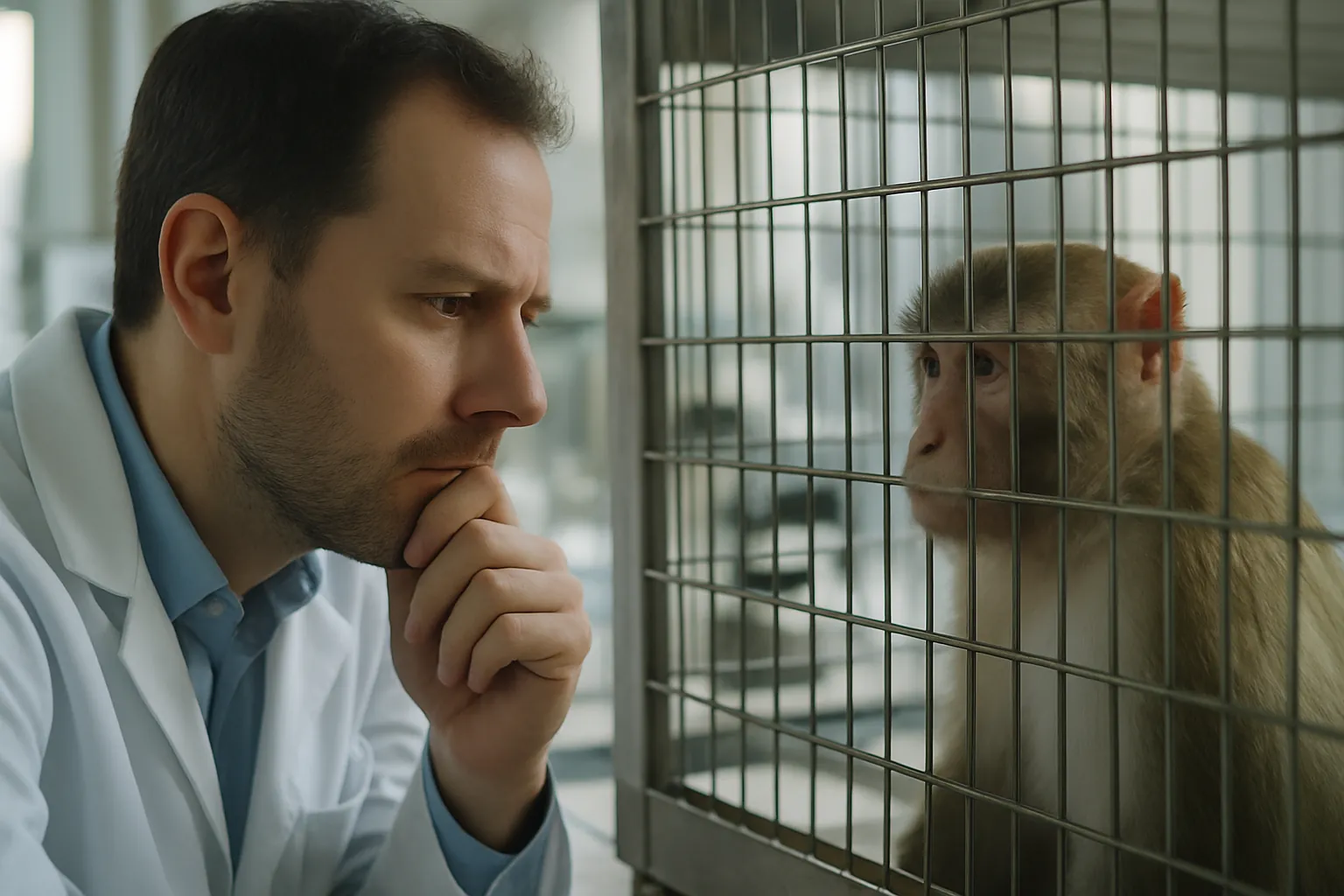
You might imagine research facilities as orderly hives of scientific progress, but testimony inside the House Committee painted a stark, troubling portrait. Former primate technician Matt Rossell described walking past row upon row of tiny steel cages, each holding a solitary, intelligent creature bereft of social contact—the kind of isolation recognized by primatologists as psychological torture. Many monkeys, Rossell testified, self-mutilated or displayed deranged behaviors as a result. Such images have now become rallying cries for those demanding swift action from lawmakers.
Beyond that, the claims of abuse are not simply anecdotal. According to PETA and federal inspection reports, monkeys have been crushed, strangled, and even scalded to death in high-temperature cage washes. Others have been dosed with incorrect compounds—mistakes that speak to a broader absence of oversight. PETA Senior Vice President Kathy Guillermo minced no words in her statement: these incidents are not isolated and underscore a systemic problem.
Money, Medicine, and Moral Reckoning
Supporters of primate research insist such facilities provide vital insights, arguing that many of the medical advances we now take for granted—vaccines, treatments for neurological disorders, even some cancer therapies—were developed in part through animal studies. Nathanial Guard, a 17-year ONPRC employee, testified that staff members “are proud of this work” and that the animals “receive excellent care, including pain relief during necessary procedures.” From this vantage, the grave responsibility of animal research is balanced by the promise of life-saving breakthroughs.
This defense, however, is increasingly met with skepticism. Critics highlight the nearly $63 million annual operations budget for ONPRC, the vast majority of which is supplied by the National Institutes of Health. As Rep. David Gomberg, chief sponsor of the amendment, notes, shifting federal priorities and looming budget cuts make the facility a “potential liability” for Oregon—a state that could soon be left holding the operational bag as Washington turns away from controversial animal research.
Public concern is clearly reaching a tipping point. More than 1,600 Oregonians have submitted written testimony, and thousands have signed petitions demanding ONPRC’s closure by 2029. The images of nearly 5,000 nonhuman primates, many confined in isolation, subjected to experiments with substances like alcohol, nicotine, and junk food, have ignited a fierce debate about what—if any—role such research should have in our present era of scientific advancement.
“If our moral progress is measured by how we treat the least protected among us, then these monkeys are test cases for our collective conscience.”
Oregon is not alone in grappling with these questions. According to Dr. Aysha Akhtar, neurologist and bioethicist, a growing body of research shows that animal testing, particularly on primates, often fails to translate into meaningful clinical results for humans. She points to recent studies published in Nature and PLOS ONE that detail “critical gaps in predictive validity” in animal-to-human testing. Technology now offers promising alternatives, including advanced computer modeling, organ-on-a-chip systems, and human cell cultures—tools that can offer more accurate and humane results.
The National Context and a Path Forward
This debate is not only about Oregon’s priorities, but about how the United States navigates the complex intersection of science, ethics, and public policy. Seven federally funded national primate research centers remain across the country, but each is under intensified scrutiny. According to a Pew Research Center study, nearly half of Americans now oppose animal testing, a dramatic shift from attitudes only a generation ago.
History offers some instructive parallels. The infamous Tuskegee Syphilis Study and the Willowbrook hepatitis experiments remind us of the profound harm done when scientific curiosity takes precedence over ethical constraint. Today’s fight for primate welfare fits squarely within this tradition of moral reckoning. As Harvard animal ethics professor Lisa Moses reminds us, “We cannot ethically justify suffering simply because we have grown accustomed to its utility.”
What would it mean for Oregon to lead the way? Closing ONPRC would not be a simple task. Transitioning to more humane research methods demands upfront investments, strategic planning, and a comprehensive blueprint for staff retraining and facility repurposing. Yet the state could set a powerful example—embracing modern science while affirming the dignity of all sentient beings.
State legislators now face a pivotal choice: continue funding a facility that, according to mounting evidence, inflicts avoidable suffering, or forge a new path rooted in innovation, compassion, and scientific responsibility. As the hearing rooms in Salem fill with passionate testimony on both sides, the eyes of a nation—and the flickering hope for a more just society—rest upon Oregon’s next move.
