
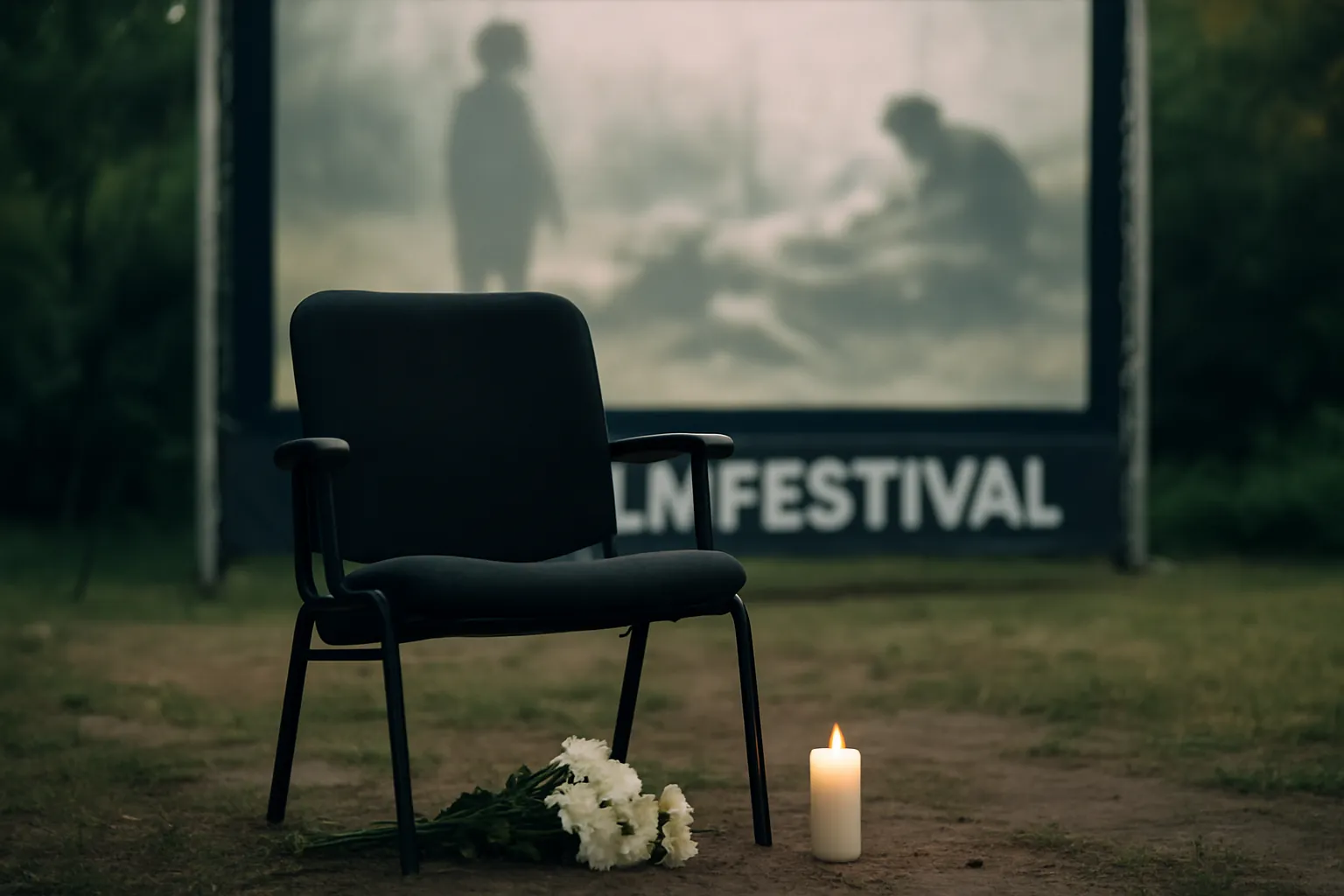
A Life Cut Short: Fatima Hassouna’s Legacy Echoes at Cannes
The glitz and glamour of Cannes Film Festival took on a somber tone this year as the story of Fatima Hassouna—a 25-year-old Gaza photojournalist killed just days before her documentary premiered—sent ripples of grief and outrage through the world of art, politics, and humanitarian advocacy. The premiere of “Put Your Soul on Your Hand and Walk” should have marked a career milestone for both Hassouna and Tehran-born director Sepideh Farsi. Instead, it became a memorial.
As news outlets revisited Hassouna’s final days, a sequence of tragic ironies surfaced. She learned her story would reach Cannes—a beacon for global artists—just hours before an Israeli missile obliterated her home in northern Gaza. The explosion extinguished the lives of Hassouna and ten family members. Her mother survived but lost six children and her husband in a single, hellish night.
Beyond the statistics, Farsi’s work offered a rare window into ordinary lives in Gaza—lives too often smothered beneath the headlines of geopolitics and war. Video calls became the director’s only lifeline to her protagonist after Israel barred foreign correspondents from entering the besieged territory. “Fatima was not a fighter. Her family was not part of any militia. They were ordinary people—a taxi driver, a painter, a 10-year-old brother,” Farsi insisted to journalists at Cannes. The authenticity of such testimonies powerfully disrupts the narrative often used to justify civilian deaths.
The Human Cost of Political Calculus
Is it any wonder that the Cannes red carpet became not just a stage for cinematic celebration, but also a site of political expression and conscience? Hollywood luminaries like Ralph Fiennes and Richard Gere joined over 380 prominent voices in condemning official silence over Gaza—a silence that, for many, echoes complicity in the suffering. Throughout the festival, actors adorned themselves with Palestinian flags and yellow ribbons in remembrance of Israeli hostages still held in Gaza, a visual tableau that captured the complex duality of grief: both the mourning for innocents killed by Israeli strikes, and concern for those imperiled by Hamas.
The brutal calculus of collective punishment creates tragedy after tragedy in Gaza. Israel’s official line—that air strikes target Hamas militants—collides with the lived reality of civilian families, like the Hassounas, obliterated without apparent warning or recourse. According to an April 2024 Human Rights Watch report, evidence continues to mount that indiscriminate Israeli strikes constitute a breach of international law, as humanitarian agencies document entire families wiped from civil records.
“Fatima was not a fighter. Her family was not part of any militia. They were ordinary people—a taxi driver, a painter, a 10-year-old brother.” — Sepideh Farsi, director of ‘Put Your Soul on Your Hand and Walk’
The war’s toll grows starker with every passing day: Recent reports from the United Nations Relief and Works Agency (UNRWA) estimate tens of thousands dead in Gaza since the renewed violence following Hamas’s October 7th attack. The majority are civilians, their stories seldom told beyond casualty lists, their dreams rendered moot by the logic of siege and retaliation. Aid blockades have pushed the region to the brink of famine, and—while international leaders debate parameters for a ceasefire—those with the least power remain in the crossfire.
Cultural Resistance Amidst Despair
Artistic expression persists, even flourishes, where political solutions falter. The presence of two Gaza-born, now-exiled siblings—Arab and Tarzan Nasser—with their film “Once Upon a Time in Gaza” at Cannes drives this home. Their movie, set in 2007 as Hamas consolidated its rule, resonates with a defiant sense of identity and memory, offering glimpses of Gaza’s past joys and present wounds. These films rebuff the erasure that war seeks to impose: They insist that Palestinian stories matter, cannot be bombed or blockaded into silence.
Cannes is a far cry from the rubble-strewn alleys of northern Gaza, but its audience—filmmakers, actors, critics, and politicians—holds real power to raise awareness, challenge policy inertia, and forge global solidarity. As Harvard historian Sara Roy observes, “When policymakers treat Gaza merely as a security question, they erase the lived reality of millions whose only crime is existence.” This willful myopia sustains cycles of violence and leaves both Palestinians and Israelis bleeding from wounds that policy alone cannot heal.
At this year’s festival, the explicit support for Gaza’s artists and the outcry over Fatima Hassouna’s death are not simply acts of political defiance, but vital testaments to shared humanity—a quality all too easily sacrificed at the altar of national security. The Cannes crowd is not alone in this moral reckoning: Public protests in Paris, New York, and London have erupted around Gaza’s devastation, signaling growing disillusionment with Western governments’ timid response.
Where Do We Go From Here?
Policy experts and human rights advocates see a familiar gap between high-minded rhetoric and life-saving action. “Global attention is crucial, but without pressure for an immediate ceasefire and robust humanitarian corridors, solidarity can feel performative,” stresses Amnesty International’s Middle East director, Heba Morayef. The call at Cannes and beyond is clear: Stop the killing. Let in the journalists. End the siege.
The film reel cannot rewind Hassouna’s life, nor can standing ovations resurrect her loved ones. What it can do is force us to reckon with the real stakes: that every civilian death is an indictment—not only of those who pull triggers or launch missiles, but of an international order that tolerates mass suffering behind the veil of “legitimate security concerns.”
If Cannes has any lesson for the world this year, it is that grief and resistance can—and must—exist side by side. Hassouna’s images and story endure, a rallying cry in a festival riven by politics but bound, at least for a moment, by shared conscience. For the living, the path forward demands more than mourning. It demands justice.
