
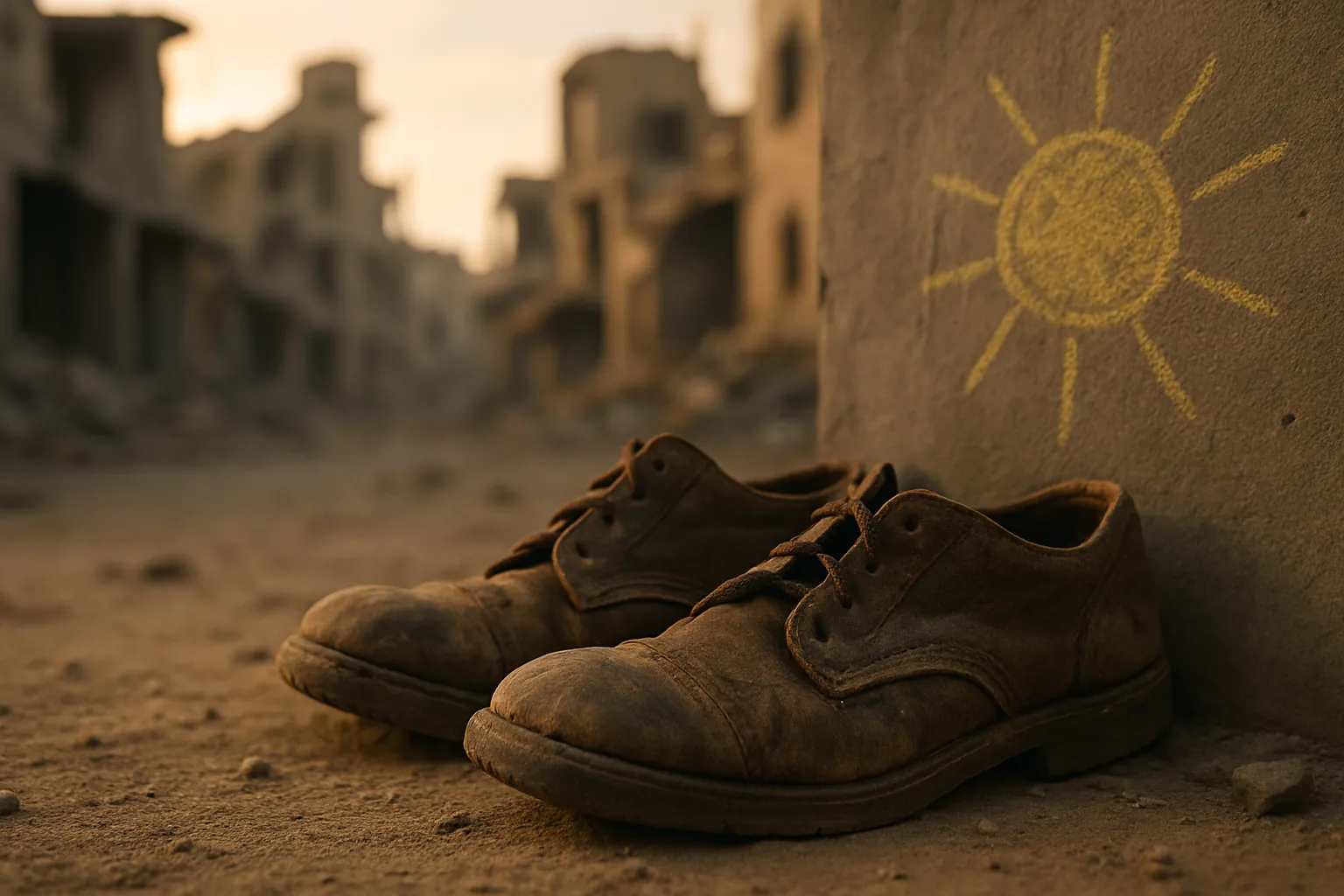
A Family Shattered: The Night That Changed Everything
Late into a May night in Khan Younis, Gaza, a home was obliterated by an Israeli airstrike, leaving a story that defies comprehension. Amid the rubble, a father’s guttural cries haunted the tangled ruins—the only survivor, aside from his badly wounded son, after nine of his children were killed. Palestinian physician Hamdi al-Najjar, now a patient at the overstretched Nasser Hospital, hovers between worlds, clinging to life after enduring two major surgeries for catastrophic injuries to his brain, lungs, abdomen, and chest. The names and ages of his children—Yahya (12), Rakan (10), Ruslan (7), Jibran (8), Eve (9), Rival (5), Sadeen (3), Luqman (2), and baby Sedar (less than a year old)—will never again echo through the family’s home. According to Gaza’s Civil Defense, Sedar’s remains were never found.
Hamdi’s wife, Dr. Alaa al-Najjar, was on duty, herself racing to save casualties of war, when her world was upended. News of her family’s loss swept through the hospital—grief and disbelief etched into every face. “You are ok, this will pass,” Hamdi’s sister whispered by his bedside, willing him to survive. Yet, the magnitude of their suffering, as recounted by relatives, sinks in slowly, the trauma unspeakable even to doctors accustomed to tragedy.
The Israeli military in a statement confirmed it carried out the airstrike, claiming to have targeted suspects in a structure near its soldiers and asserting that civilians had been evacuated beforehand. An investigation into the “unintended casualties” is reportedly underway. Still, the outcome remains unchanged for the al-Najjar family and for Gaza: burnt-out homes, shattered families, and children lost too soon.
Collateral Damage: The Human Cost in Numbers and Faces
Numbers threaten to become abstract in the relentless cycles of headlines, but the reality seeps through with unbearable clarity. Since October 2023, following Hamas’s devastating cross-border attack that killed 1,200 Israelis and resulted in 251 hostages, Israel has waged a campaign in Gaza that, according to the Palestinian Health Ministry, has killed over 54,000 people—including upwards of 15,000 children. This estimate is not just data—it is thousands of families erased or broken, generations deprived of future and history alike.
Hamdi al-Najjar’s ordeal is a microcosm of a larger tragedy: more than 2 million Palestinians, nearly the entire population of Gaza, have been displaced. The war’s 20-plus months have rendered “no space safe,” in the words of Hamdi’s sister Tahani. Her memories—her life—all swallowed by dust and loss. The al-Najjar family’s tragedy serves as stark evidence of the civilian toll supposedly secondary to military objectives, raising questions that few in power seem willing to answer with sufficient urgency.
“The death, separation, and destruction. I lived in my family’s house, my memories, my whole life is gone. They wouldn’t do to the targeted people what they did to Hamdi.”
How many parents, siblings, and children must follow in the al-Najjars’ wake before the patterns of destruction force a reckoning?
International watchdogs and human rights experts, such as Human Rights Watch, have repeatedly warned that Israeli military operations must comply with international law, which prohibits attacks that cause disproportionate civilian harm. Harvard Law professor Gabriella Blum notes, “Civilian protection isn’t just a legal nicety—it’s the minimum moral standard for any democracy’s conduct in war.” But moral standards, it seems, often yield before political imperatives.
Beyond Numbers: History’s Judgment and the Mandate for Change
What distinguishes the devastating strike on the al-Najjar home is not simply a casualty count. The context—a pediatrician mother treating wounded children, her entire family destroyed while at work, a father whose medical skills now serve his own survival—pushes the boundaries of what any society should tolerate in the name of security.
History has repeatedly judged harshly those who wage conflicts without regard for civilian lives. Lessons from Vietnam’s My Lai massacre to the bombing of civilian shelters in Syria are clear: civilian deaths are not only tragedies but stains on the moral fabric of nations. Today, with ubiquitous images and viral witness, accountability—if delayed—is unavoidable. Mass outcry across Europe, the U.S., and even Israel itself demands an end to the relentless campaign and a renewed commitment to human dignity and life over cycles of revenge.
United Nations agencies and other humanitarian organizations have sounded the alarm about Gaza’s catastrophic conditions—blockaded aid, targeted infrastructure, and shattered health systems combine to create what UN Secretary-General António Guterres has labeled “a graveyard for children.” The World Food Programme last week described an unprecedented threat of famine, urging immediate action. According to a recent Pew Research study, global attitudes toward the war have shifted sharply, with majorities in Europe and North America demanding a ceasefire and increased humanitarian access.
The punitive policies and rhetoric underpinning such strikes—couched in the language of security and deterrence—too often obscure the far-reaching, generational harm they inflict. These realities demand a political and moral response far bolder than what we have witnessed from conservative policymakers who treat Palestinian suffering as a regrettable but inevitable byproduct of Israel’s right to self-defense. Is this truly an acceptable cost in the 21st century?
For progressive voices, the answer must be an emphatic no. A closer look reveals that justice and peace are only possible when the deaths of innocent children cease to be tolerated as collateral. True security, as generations of peacemakers and justice advocates have shown, comes not from the rubble of family homes but from the affirmation of shared humanity and the courage to choose life over retribution.
