
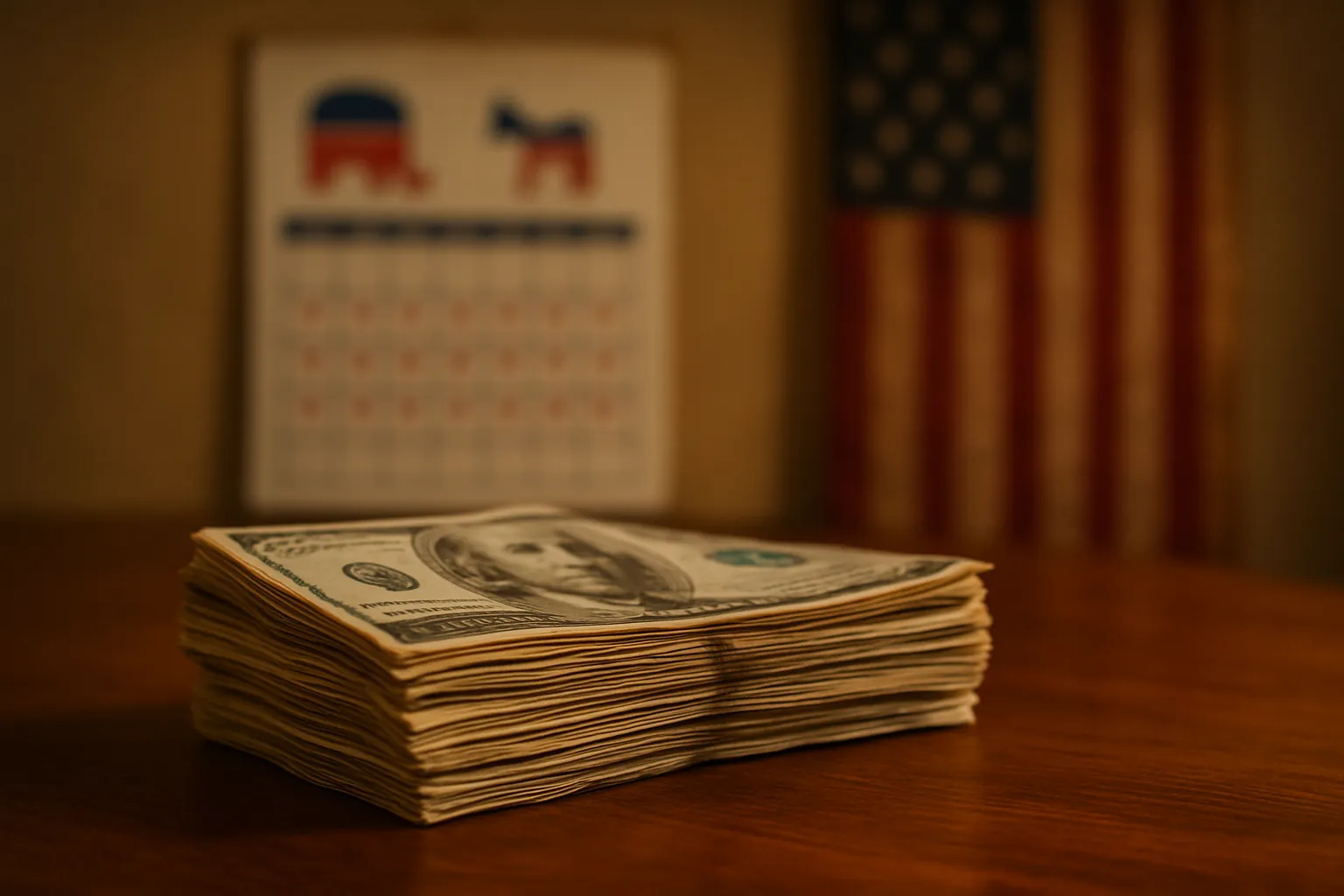
The Price of Access: Pardon for Sale?
It’s the kind of story that strips away any illusion about fairness in America’s highest office. Paul Walczak, a former nursing home executive convicted of embezzling millions from the paychecks of frontline medical workers, found redemption at Mar-a-Lago—not in a courtroom, but at a $1 million fundraising dinner his mother attended. Just twelve days after Walczak was sentenced to 18 months for massive tax fraud and ordered to pay $4.4 million in restitution, President Donald Trump issued a sweeping pardon. Less than three weeks separated his mother’s presence at the palatial Trump estate from her son’s extraordinary release from criminal liability.
The full details, as first reported by The New York Times, paint a damning picture: Walczak admitted to siphoning over $10 million from his employees’ payroll taxes, money meant for the IRS, over more than a decade. The ill-gotten gains bought him not just a $2 million yacht but shopping sprees at Cartier, Bergdorf Goodman, and Saks. According to court records, this money was supposed to bolster the Social Security and tax safety nets for the very workers he exploited—nurses, aides, and doctors risking their health through two pandemics.
But Walczak’s mother, Elizabeth Fago, wasn’t just any donor. A major Trump fundraiser, Fago has hosted campaign events, attended VIP inaugural celebrations, and reportedly raised millions for Trump’s political machinery and other Republican candidates. Her influence extended deeply: she was even considered for a presidential appointment to the National Cancer Advisory Board in 2020. This latest episode, where her son’s application for a pardon emphasized her political connections and fundraising prowess, only adds to the mounting evidence that Trump’s clemency decisions have become, to many, indistinguishable from pay-to-play politics.
Legal Privilege and Political Ties: Who Gets a Second Chance?
A closer look reveals an unsettling trend: for all the national rhetoric about “law and order,” Trump’s use of presidential pardons mirrors the gilded exclusivity of Mar-a-Lago. Why Walczak? Why now? His case is not an outlier but part of a broader pattern. Research by NYU law professor Rachel Barkow, an expert on executive clemency, shows that Trump’s pardons have frequently favored celebrities, loyalists, and donors—a marked shift from the bipartisan, often justice-reform-minded pardons of presidents past. “Access to the president appears to be a more important eligibility criterion for mercy than the merits of the case itself,” Barkow told NPR.
“We talk a lot about fairness in our justice system, but when presidential power is wielded like a private club reward, the concept becomes meaningless for millions.”
How did Walczak make his pitch for forgiveness? His legal team stressed not just his remorse or restitution, but also the political activism of his mother. The application went so far as to claim that his prosecution was motivated by her political efforts—flipping the narrative so that a leader of a MAGA fundraising operation became the supposed victim of political reprisal. Few ordinary Americans—certainly not the thousands who languish in prison for lesser tax crimes—have this kind of red-carpet access to the ultimate get-out-of-jail-free card.
Corruption by Another Name: Undermining Trust and Justice
Patterns like this don’t just raise eyebrows; they chip away at faith in democratic institutions. Remember the historic precedents: Gerald Ford’s pardon of Richard Nixon sparked national outrage, but at least carried a rationale about healing the nation. Trump’s clemency spree, however, often appears transactional, rewarding personal loyalty and campaign largesse. It’s about who you know and what you can pay.
Consider the broader context. Trump’s other highly controversial pardons—Joe Arpaio, convicted of criminal contempt for racial profiling, and a handful of campaign donors convicted of fraud—signaled a White House willing to reward those who bolstered its political fortunes. Columbia University historian Ruth Ben-Ghiat notes, “Such uses of clemency signal to supporters that the rules don’t apply to those in power, and to adversaries that accountability is negotiable.” These actions not only leave victims of white-collar crime without justice, but also send an unmistakable message to those with access and cash: justice is for sale.
For progressives and anyone concerned with actual justice, the Walczak affair recalls Tammany Hall more than a modern democracy. Elizabeth Fago’s involvement didn’t stop with fundraising. Reports indicate she played a role in efforts to leak Ashley Biden’s stolen diary in the run-up to the 2020 election, attempting to weaponize personal tragedy for political gain—yet, no charges followed. Mercy is a virtue, but selective, self-serving mercy corrodes public trust and undermines the principle of equal justice under law.
What’s at Stake: Accountability, Equality, and Power
Where does this leave the rest of us? According to a 2023 Pew Research Center survey, 67% of Americans believe that wealthy individuals have far too much influence in politics—and that gap is growing. As headlines like Walczak’s become more frequent, skepticism morphs into cynicism and disengagement. When you or your loved ones face legal trouble, you don’t get to buy a seat at the table for $1 million in hope of executive salvation. That’s not justice—that’s autocracy masquerading as democracy.
The American promise rests on equality before the law. When those in power erode that foundation with impunity, it’s not just the law that suffers, but the whole fabric of trust that makes civic life possible. The Walczak pardon is not an isolated scandal, but a warning siren. The integrity of our institutions—and the faith millions place in their fairness—requires more than performative outrage.
Will Congress tighten pardon oversight? Will reformers from both parties unite for a system where politics and money are checked at the door of justice? America, the world’s oldest constitutional democracy, deserves an answer worthy of its vision of equality and accountability.
