
Escalating Temperatures: Welcome Warmth or a Prelude to Unrest?
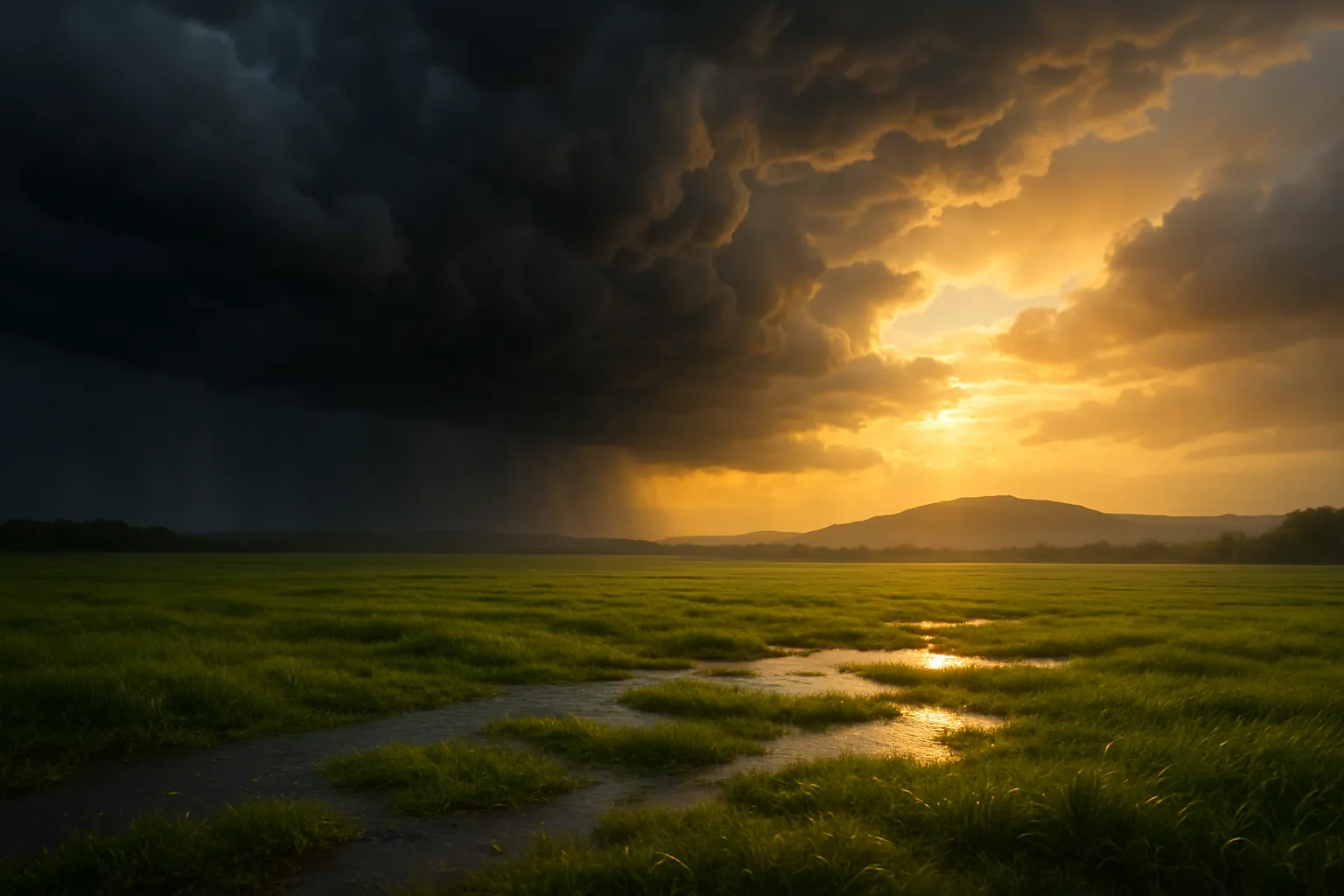
City pools opening early across Lincoln should herald carefree summer afternoons. Yet, as temperatures climb steadily into the upper 70s and 80s from Nebraska through Tennessee and into the Southeast, the classic joys of seasonal warmth are coming hand-in-hand with a different kind of anticipation. Across the Midwest and Southern Plains, that expectation is tinged with uncertainty—it’s not just the sunshine on the horizon, but the brooding build-up of showers and storms promising both relief and risk.
Thursday looks deceptively benign: mild afternoons draw people outdoors, yet forecasts caution that spotty afternoon thunderstorms dot the landscape, particularly in Nebraska and along the Alabama/Tennessee border. These storms, feeding on the day’s heat and increasingly humid air, signal what climate scientists have warned for years: warming weather patterns are not delivering predictability, but instead ushering in instability. According to recent analyses, overnight storms are set to become more widespread, delivering not just rain but also the threat of damaging wind gusts and localized flooding—concerns echoed by meteorologists from Middle Tennessee to Southern Kentucky. Pools may be opening, but so are opportunities for sudden disruption.
By early June, Lincoln may flirt with 90-degree days, and what once felt like a distant forecast of severe weather—hail, damaging winds, even possible tornadoes—becomes very much a near-term concern. Such extremes are no longer anomalies. “We’re witnessing what happens when the climate system’s old rules are rewritten,” observes Dr. Zeke Hausfather, climate scientist with Berkeley Earth. “Each degree of warming stacks the deck for more variable and more violent weather.”
Precipitation’s New Patterns: More is Not Always Merrier
Recent global and regional data underscore a troubling truth: not only is mean precipitation on the rise by 1 to 3% for every degree of surface warming, but extreme precipitation events are increasing far faster, at rates nearing or surpassing 6 to 7% per degree. This pattern, supported by the Clausius-Clapeyron relationship—a principle well-understood by atmospheric scientists—means that a warmer atmosphere holds more moisture. But this leads, paradoxically, to heightened variability: some areas, especially already wet regions, are growing wetter, even as the timing, amount, and intensity of rainfall swing ever wider.
The direct result for ordinary Americans—both urban and rural—is that simple weather forecasting, once enough for weekend plans or crop calendars, no longer suffices. In Southwest Virginia, for example, a steady funnel of Gulf Coast moisture now feeds both morning and afternoon thunderstorm cycles, with the National Weather Service warning of a marginal to slight risk of severe storms moving through. Boston University meteorologist Dr. Sabrina Turner cautions, “It’s not just how much rain falls, but when and how fast. A month of drought can be offset, or even overcompensated, by a few hours of deluge—yet that leads to flash floods, not stable water supplies.” The South faces similar uncertainty, as overnight showers and thunderstorms grow stronger with rising temperatures, raising alarms about localized flooding just as many communities have only begun to rebuild from last year’s weather extremes.
Strong storms and shifting seasons are not random acts—they are the logical outcome of a planet running a fever, and every fraction of a degree counts.
Behind it all lies an uncomfortable lesson: precipitation variability threatens not just property but livelihoods. According to a 2023 Pew Research study, one in three Americans say their local community has been directly affected by severe weather in just the past year, with lower-income and rural populations bearing the brunt. Short-term forecasts of a sunny Saturday or a rainy Thursday afternoon suddenly seem trivial compared to the grinding question: how do we plan for a future in which weather’s only certainty is its unpredictability?
Challenging the Conservative Playbook: Business as Usual Is Not an Option
Some political voices, especially among Republican lawmakers and conservative think tanks, continue to push narratives of resilience—that America’s communities are naturally tough, and that adaptation and free-market innovation will suffice to weather whatever nature throws our way. But such bromides ring hollow against the mounting evidence. When dangerous storms sweep through the South or when Midwestern fields flood in June, it’s clear that incremental adaptation is no match for the scale of climate-driven volatility now at hand.
Government action, rooted in science and justice, is the only path forward that offers real protection. Progressive critics point to the decades-long erosion of funding for state and federal emergency preparedness programs under conservative leadership, warning that shredded safety nets leave millions vulnerable. According to Harvard policy analyst Dr. Ellie Ford, “Waiting for disaster to strike before acting is both costly and cruel. Proactive investments—whether in updated levee infrastructure, better flood forecasting, or robust social insurance—save lives and money in the long run.”
Beyond that, a closer look reveals that the climate crisis magnifies inequality. Marginalized groups—often living in lower-lying neighborhoods or in housing ill-equipped for severe weather—are at outsized risk. Ignoring these systemic factors does not toughen American communities; it abandons them. If you’ve ever watched a forecast shift sharply from sunshine to a severe storm warning, you know just how swiftly—and how unfairly—the fallout can land.
Moments like today’s unsettled weather are not isolated flukes. They are windows onto a reshaping America. The chance to reshape policy is closing almost as quickly as severe weather warnings flash across local screens. Will we demand and enact climate solutions that match the scale and urgency of this new reality, or cling to old narratives until the next disaster becomes simply another line in an insurance ledger?
