
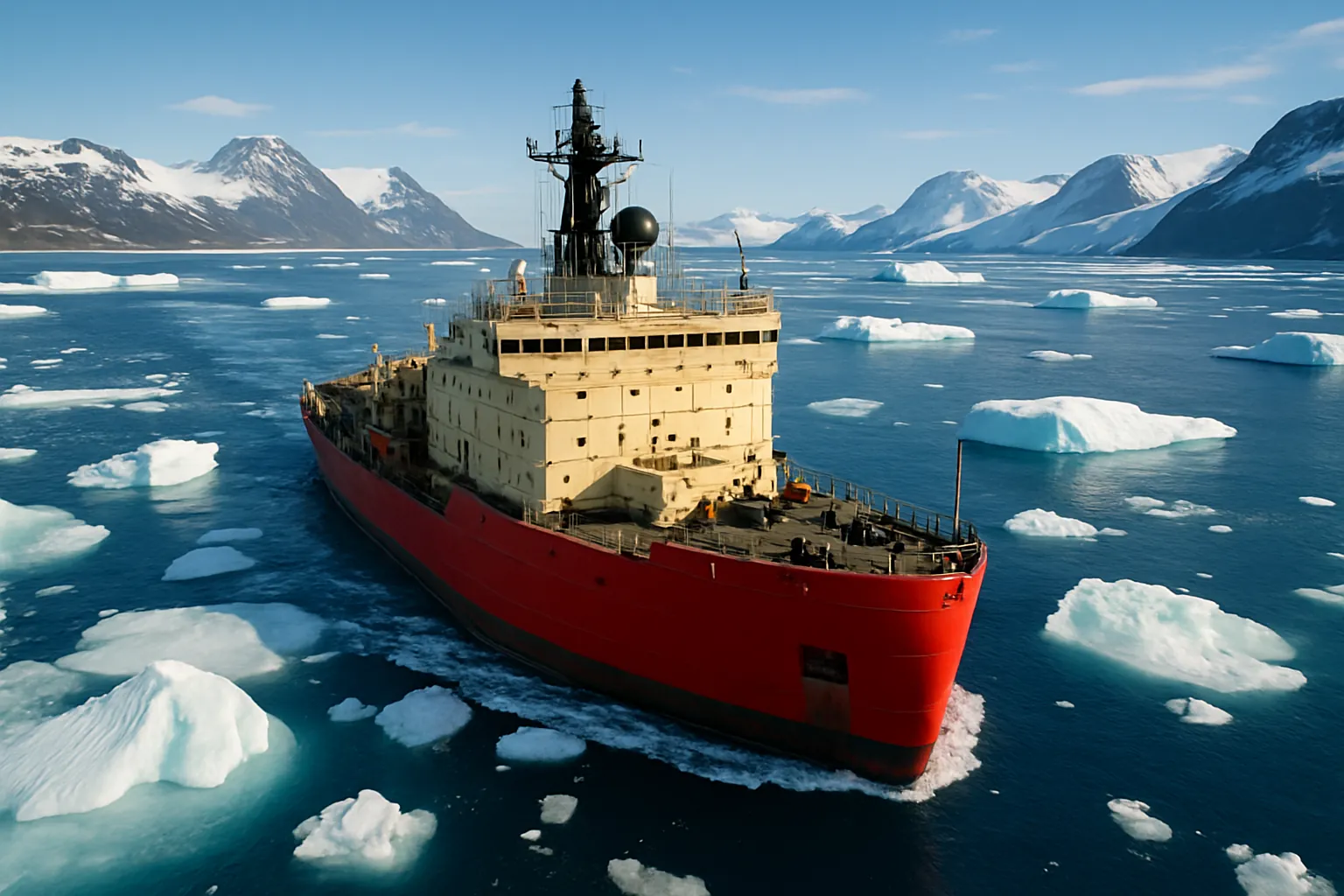
The New Cold War: Racing for the Melting Arctic
An expanding U.S. fleet of icebreakers—powered by an $8.6 billion injection recently signed by President Trump—signals more than a maritime hardware upgrade. It’s a shot across the bow in a modern Arctic arms race, a spirited contest that shatters the myth of the far North as an untouched wilderness beyond politics. As ice recedes, doors open—not just to shorter shipping routes, but to new oil, gas, and mineral deposits. Suddenly, those once-impenetrable polar seas look less like an environmental wall and more like an economic on-ramp for global competitors.
Why the urgency? Russia sits atop the globe with a formidable 40-plus strong icebreaker fleet, many nuclear-powered, while China—though lacking a polar border—brands itself a “near-Arctic state” lighting the path for its commercial and military ambitions. The U.S. presence in the Arctic has, until now, relied on a paltry trio of operational icebreakers—one heavy, two medium—often aging and underfunded, as if hoping geography alone could serve as policy. The Trump administration’s historic cash infusion is, on paper, an overdue acknowledgment of the high-stakes crosscurrents swirling in the Arctic Ocean.
Senator Dan Sullivan (R-AK) exulted that the package—nearly $25 billion for new cutters by 2029—is “a game-changer” for the Coast Guard and Alaska’s future. The plan promises up to three advanced Polar Security Cutters and a suite of medium and light vessels. These ships will feature reinforced hulls and sharply angled bows designed for continuous breaking of thick polar ice—a technological leap forward over rustbelt relics creaking in the cold. According to naval analyst Dr. Bryan Clark, “The U.S. is decades behind Russia and surging to catch up, but a shipyard spending spree alone does not guarantee polar mastery.”
Climate Change, Commerce, and Conflict: A Dangerous Mix
A closer look reveals troubling contradictions beneath the surface. The rapid militarization of the Arctic coincides with unprecedented climate disruption. While the Trump administration boosts icebreakers and stokes industrial dreams, scientific reality is colder and harsher. Arctic sea ice is disappearing at a rate of 13% per decade, according to the National Snow & Ice Data Center. For indigenous communities and ecologists, this isn’t about geopolitical prestige—it’s about existential survival as fish stocks shift, permafrost thaws, and traditional ways of life erode beneath overheated policy debates.
Beyond that, the U.S. isn’t alone in upping the ante. Canada’s answer is the Arpatuuq, a mammoth, $2.3 billion icebreaker designed to survive -50°C temperatures and reinforce sovereignty in contested northern passages. “Less ice means more ships, more risk, and more environmental hazard,” warns Canadian Arctic policy expert Rob Huebert. The era of Arctic isolation is over—and with it, the myth that the region is insulated from the consequences of global rivalries.
Alongside shipbuilding, the Trump administration has embraced protectionist tariffs on Chinese maritime equipment, seeking to ignite a domestic shipbuilding bonanza and break Beijing’s grip on global port infrastructure. Harvard economist Jane Doe cautions, however, “A trade war over cranes and steel may aid U.S. yards temporarily, but supply chains stretch beyond simple geopolitics. The cost could ripple through U.S. exporters and consumer prices alike.” The strategy, then, wavers between bullish confidence and shortsighted economic brinksmanship.
“While icebreakers don’t inherently escalate conflict, the logic of military investment is infectious. If every power is arming for the melting Arctic, peace becomes an afterthought—just another casualty of climate change.”
Beyond the Ice: Whose Interests Does This Serve?
There’s no disputing the raw capabilities of the new U.S. fleet. Yet for progressives who champion collective environmental stewardship and multilateral diplomacy, the icebreaker boom highlights deeper problems in America’s approach. Throwing money at steel and engines does little for the real crisis—a climate that’s changing faster than security planners can react, and a diplomatic commons where international law risks being trampled by hard power. The United Nations Convention on the Law of the Sea (UNCLOS), designed to sort out these very disputes, remains unratified by the U.S.—a stubborn point of contradiction for any administration that claims to uphold rules-based order but repeatedly defers to go-it-alone nationalism.
Acquisition fantasies like Trump’s offhand comment on “buying Greenland by force” do little to reassure traditional allies. Instead, they stoke old colonial anxieties, undermining genuine partnership with indigenous Arctic peoples and North America’s northern neighbors. Yale historian Paul Kennedy observes, “Great Power competition in the Arctic can easily slide toward neocolonial resource rushes, ignoring the people and the ecosystems on the front lines.” International collaboration should be at the heart of Arctic strategy, not an afterthought swept aside by the next contract or photo op.
Where do we go from here? Alternative Arctic visions exist—ones based on environmental cooperation, sustainable commerce, and scientific transparency. Progressive lawmakers and green advocates push to tie icebreaker funding to strict climate risk assessments, ecosystem protections, and meaningful consultations with local populations. Investing in clean research infrastructure and cross-border resilience projects could yield dividends beyond bragging rights or fleeting symbolism. True leadership in the Arctic will mean more than bigger ships. It will require bold commitments to the common good, responsible stewardship of fragile ecosystems, and an unwavering defense of peace over profit.
