
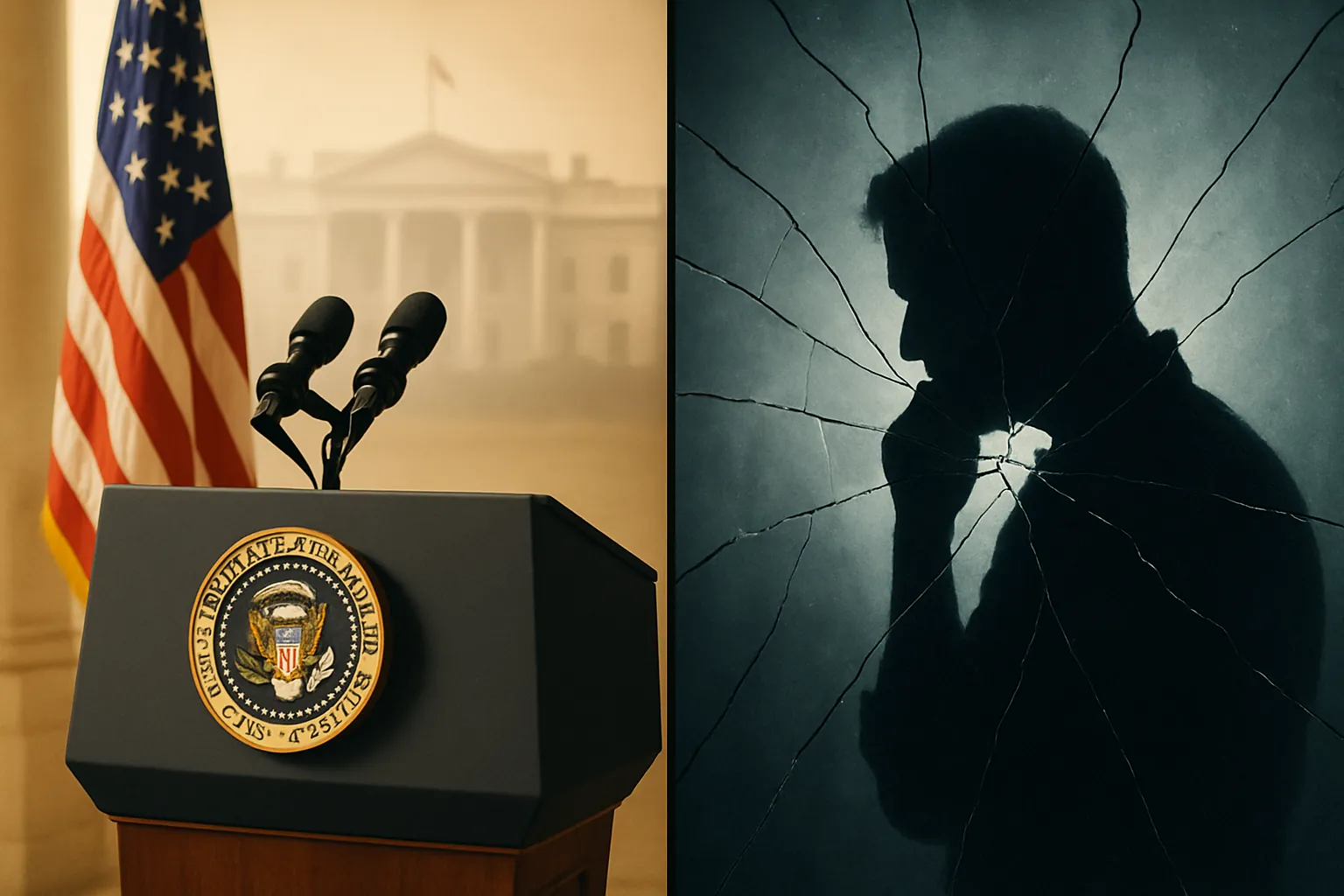
The Self-Styled Savior: Trump’s Vision of His Legacy
Donald Trump’s legacy, if you listen to the man himself, is a story of America redeemed from the brink. In a recent televised interview with his daughter-in-law, Lara Trump, on Fox News, the former president recounted not only the harrowing details of an assassination attempt in Butler, Pennsylvania, but insisted he will be remembered as “the man that saved our country”. It’s a provocative choice of words, freighted with a blend of messianic self-regard and political calculation as the nation remembers an attempted act of political violence on its soil.
One year after narrowly surviving a would-be assassin’s bullet—eight shots fired, he recalls, as he “got down quickly”—Trump reflects on that day as the moment he dodged not just death, but the supposed demise of American greatness. “I really would like to be known as the man that saved our country,” he declared, tying his survival to the continued survival of the nation itself. To millions of his supporters, it’s a compelling narrative. To many others, it comes off as familiar Trumpian bravado: a case study in self-mythologizing.
Historical context matters here. No modern president has so nakedly sought to define his own legacy while leveraging personal trauma for political purpose. Lyndon B. Johnson, emerging from tragedy after JFK’s assassination, rarely publicly claimed credit for “saving” the country—he let sweeping social reforms like civil rights and Medicare do the talking. Barack Obama, too, often deferred to collective efforts. Trump, however, is both protagonist and narrator, insisting the plot of America would be lost without him on the stage.
Security Failures: Results of Politicizing Protection
What’s startling about the Butler, PA episode isn’t just Trump’s survival, but the alarming pattern of security lapses revealed in the aftermath. A freshly released government report details embarrassing coordination breakdowns, including a failure to alert local police about credible threats known ten days before the event. As Trump himself pointed out—laying blame, with minimal subtlety, at the feet of the Biden administration and the Secret Service—”they should have known; someone should have been in that building.” This refrain echoes louder in a political era where everything, even presidential security, can be twisted into a cudgel in partisan warfare.
Harvard security expert Juliette Kayyem notes, “Incidents like Butler reveal how the erosion of trust between institutions and the White House can have real-world consequences.” Particularly dangerous is the trend of exploiting government failures for immediate political gain, rather than building safer, nonpartisan protective systems. When national security professionals are undermined in service of partisan narratives, faith in the machinery meant to guard our democracy deteriorates—putting everyone at risk, regardless of party.
Beyond that, consider what this says about the American culture of political violence. Political scientists like Robert Pape at the University of Chicago warn that “The normalization of violent rhetoric and grievance politics makes threats against politicians—and even democracy itself—more likely, not less.” When a former president presents his own survival as synonymous with national survival, it both glamorizes danger and raises the temperature of national discourse.
Perilous Nostalgia and the Real Lessons of Leadership
A closer look reveals a subtle but crucial tension in Trump’s revisionist self-portrait. Trump casts the four years under President Biden as a “horror show,” arguing that only his return could rescue a faltering nation beset by border crises, inflation, and lost international stature. He invokes anecdotes involving world leaders—supposedly praising the U.S. now as “the hottest country in the world”—to buttress his case. Yet these sweeping claims are contradicted by independent data: According to the Pew Research Center, America’s global standing saw a measurable dip in key allied nations during and after Trump’s first term. On matters like border security and inflation, analysis by the nonpartisan Brookings Institution shows challenges that were neither unprecedented nor unique to the Biden years.
Conservative nostalgia for a lost golden age of “strength” under Trump overlooks the complexity of modern governance. Real national resilience requires more than bravado and high-profile heroics—it demands investments in social trust, civility, and a functioning democracy. Leaders known for true greatness—Lincoln, Roosevelt, even Eisenhower—rooted their legacies in expanding rights and strengthening civic bonds, not in crowd-pleasing spectacle.
“The greatest danger to American democracy is not political defeat, but the reduction of our national story to the triumphs—or grievances—of a single, self-declared hero.”
Trump’s approach to legacy is as much about rewriting collective memory as claiming credit for victory. Memory, however, is a two-way street: Many Americans do remember those years not as a time they were “saved,” but as a period marked by division, disinformation, and the emboldening of anti-democratic forces. Trump’s insistence that only he could save America discounts the foundational principle that democracy’s strength lies in continuity, compromise, and the willingness of many hands—not one—to right the ship.
When you hear claims of single-handed salvation, ask yourself this: What is lost when a nation puts its fate in a single individual’s hands? Progressive values urge us instead to honor the everyday courage of citizens, the unsung work of public institutions, and the healing power of inclusive leadership. That’s the real story America deserves—and needs—moving forward.
