
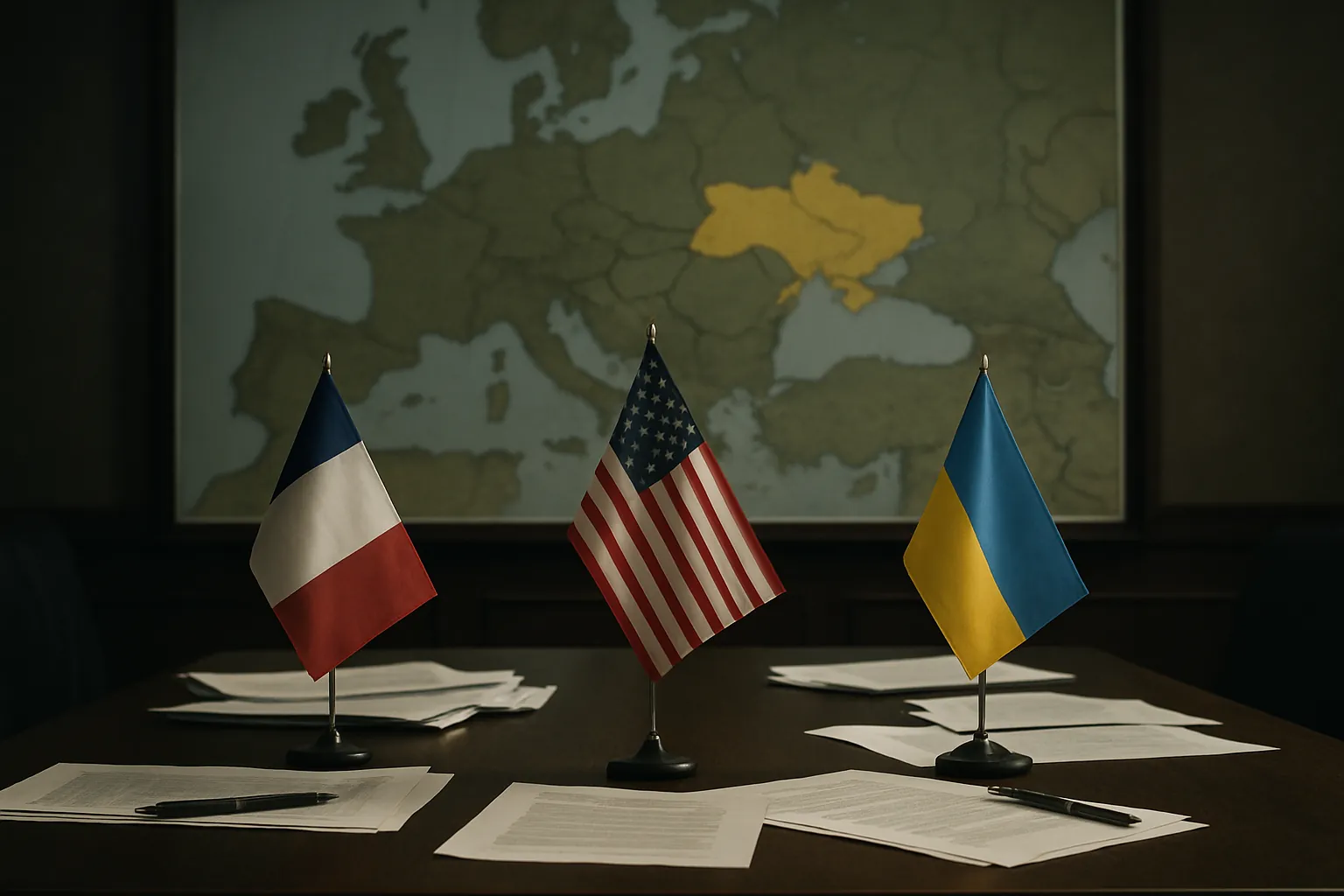
Strains on the World Stage: High Stakes, Dwindling Trust
In the unforgiving calculus of international diplomacy, perception can be as powerful as policy. That is precisely what played out this week as French President Emmanuel Macron warned that President Donald Trump risks being maneuvered by Russian President Vladimir Putin in the latest round of efforts to end the devastating war in Ukraine. Macron’s pronouncement came against the somber backdrop of Kyiv’s most recent suffering: an air assault whose death toll has climbed to 25, a brutal reminder that diplomatic inertia extracts a dire human cost (according to updated casualty reports by the Kyiv city administration).
How did we arrive at this crossroads? Russian officials, particularly Foreign Minister Sergey Lavrov, continue to maintain that Vladimir Putin is “ready to meet” with Ukrainian President Volodymyr Zelenskyy – but only if every agenda item is meticulously choreographed in advance. The U.S., while energetically promoting a trilateral summit involving Trump, Putin, and Zelenskyy, remains unable to secure straightforward bilateral talks between the Russian and Ukrainian presidents. The optics matter: as French and German leaders grow restless, Europeans are questioning the credibility of American leadership in forcing Moscow’s hand toward genuine peace.
President Trump’s willingness to operate within this diplomatic ambiguity is, to some, reminiscent of the 2018 Helsinki summit, where he famously sided with Putin over U.S. intelligence agencies on election interference. Back then, the world saw a U.S. president cede moral and factual ground to an autocrat. A closer look reveals that history threatens to repeat itself—with Ukraine paying the price.
Diplomacy or Delay? Europe’s New Red Line
No one at the foreign policy table missed the urgency in Macron’s message: if Putin has not committed to meeting Zelenskyy by Monday, Macron warned, “it will show again President Putin has played President Trump.” The implication couldn’t be more pointed. European allies now openly suggest that the Kremlin’s refusal to engage isn’t just tactical equivocation—it’s a deliberate attempt to stall Western unity while continuing assaults on Ukrainian cities.
The stakes for sanctions are escalating. Both Macron and German Chancellor Friedrich Merz have raised the possibility of new primary and secondary sanctions if Russia stonewalls. “We will push for meaningful consequences at the European level,” Merz told Deutsche Welle, underlining frustration with the White House’s incrementalism. Is the U.S. still the indispensable force, or simply a convenient venue for photo ops?
“If President Trump cannot secure a commitment from Putin to meet Zelenskyy now, we must recognize that Moscow simply intends to run out the clock—and Western resolve—with tragic consequences for Ukraine.” — French official close to Elysee negotiations
It is telling that, despite official optimism from the White House, there is no formal preparation underway for a direct Putin-Zelenskyy summit. Trump’s approach, by setting a two-week window before deciding on unspecified actions against Russia, seems to some European diplomats to be less an ultimatum and more a blank check for continued Russian military escalation.
Beneath the Summit: Realities of Leadership and Moral Clarity
Beyond the public statements and diplomatic choreography lies a stark moral reckoning. The bloodshed in Kyiv, as another 25 fall victim to missile fire, throws into sharp relief the disconnect between geopolitical theater and on-the-ground suffering. Ukrainians have watched with ever-deepening skepticism as high-level summits and promises of peace have failed to translate into security or relief. According to Orysia Lutsevych, a research fellow at Chatham House, these interminable negotiations “risk normalizing a ‘forever war’—with Western powers growing fatigued and Russia emboldened to play for time.”
American leadership has long prided itself on being the bulwark of liberal democracy, an advocate for self-determination in the face of authoritarian aggression. Yet recent conservative strategies appear built on a willingness to give autocrats the benefit of the doubt—“diplomatic engagement” morphing all too easily into appeasement when real leverage is absent. It recalls the West’s tragic history with Bosnia in the 1990s; peace was only taken seriously by aggressors once Western diplomats put meaningful consequences on the table. The alternative—hesitancy—prolongs war and suffering for those on the front lines.
Europe’s alarm about President Trump’s approach is not merely a matter of style or “tough talk.” It springs from hard-won experience about the dangers of underestimating Putin’s capacity for manipulation and delay. According to a recent Pew Research Center survey, more than 60% of Europeans now see Moscow—not Washington—as the driver of the impasse, and support for stronger sanctions remains robust.
Peace in Ukraine demands more than performative summits or symbolic deadlines. It requires moral clarity, collective resolve, and the political courage to call an aggressor’s bluff. As the world watches, you have to ask: are Western leaders willing to stand up to the Kremlin, or do they merely hope to run out the clock and declare whatever result emerges “success”? For Ukrainians facing missile strikes and loss, the answer could not be more urgent.
