
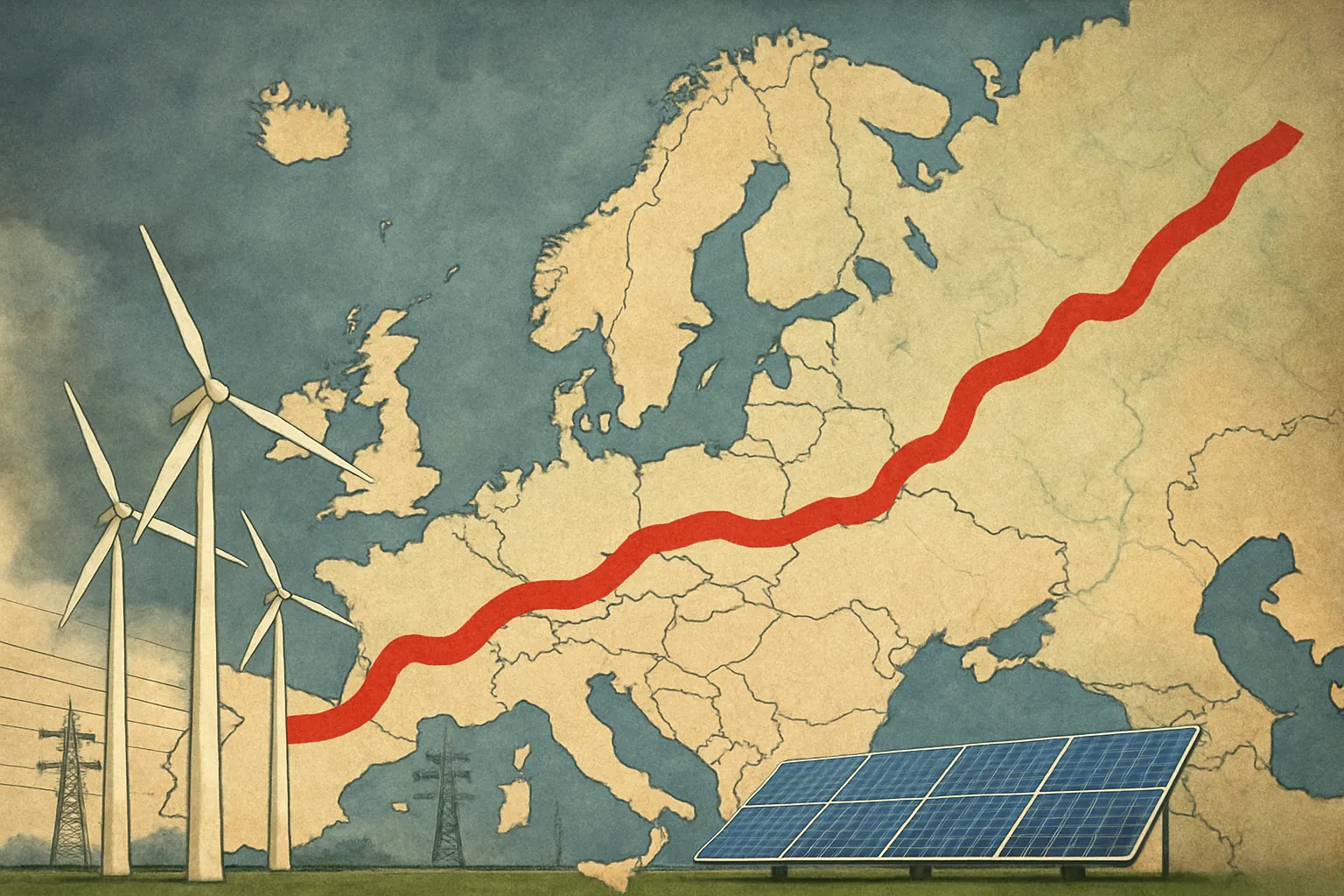
A Decisive Break: The EU’s Permanent Farewell to Russian Energy
In the annals of modern European history, few decisions have carried such far-reaching implications as the European Union’s announcement to permanently sever its energy lifeline to Russia. Energy Commissioner Dan Jørgensen’s recent declaration—”We will never again import as much as one molecule of Russian energy”—is more than just diplomatic rhetoric. It marks an unequivocal departure from decades of dependence on Moscow’s oil and gas, fundamentally reshaping Europe’s energy future and geopolitical posture.
War in Ukraine forced a reckoning. When Russian tanks rolled over Ukraine’s borders in 2022, Europe’s chronic reliance on Russian hydrocarbons seemed like an afterthought to policymakers. Yet, as the invasion’s brutality unfolded, the uncomfortable reality set in: every barrel or cubic meter of Russian energy imported by Europe bankrolled the Kremlin’s war machine. The EU’s steps—phasing out new Russian energy contracts in 2026, ending short-term contracts by June of that year, and cutting off all long-term contracts by January 2028—signal a moral as much as an economic reckoning.
A closer look reveals that this is not mere posturing. According to European Commission President Ursula von der Leyen, European imports of Russian oil and gas plummeted following the outbreak of the war, with only Hungary and Slovakia now clinging to Moscow’s supplies. The message from Brussels could not be clearer: financing Russian aggression through energy purchases will not be tolerated, in wartime or beyond.
Global Repercussions: US Pressure, Sino-Russian Ties, and the “Indian Arbitrage”
The EU’s resolve arrives amid a global energy realignment. US officials—across administrations—have long pressed European allies to diversify away from Russian energy. President Donald Trump once lambasted Europe for “indirectly funding the Ukraine war by purchasing Russian oil,” a critique that carried sting even after the continent’s decisive pivot away from Moscow. While the US perspective has sometimes veered into cynicism, it underscores a genuine point: until recently, Europe remained dangerously exposed to the whims of authoritarian energy politics.
The current strategy extends well beyond Europe. Facing parallel scrutiny, India and China have deepened their ties with Russia. Beijing’s recent Power of Siberia 2 pipeline project, set to carry 50 billion cubic meters of natural gas annually from Russia to China, reflects not only economic opportunism but also a defiant response to Western isolation. Meanwhile, Washington has imposed tariffs on India, targeting what Treasury Secretary Scott Bessent described as “Indian arbitrage”—buying discounted Russian oil, refining it, then reselling it on the global market.
“The permanent end to Russian energy in Europe is not just an economic pivot—it is a line in the sand for European values and global security. The true test will be whether similar resolve can be forged in trade relationships stretching from the North Sea to the South China Sea.”
This global chess match over energy reveals complexities often lost in partisan sound bites. While progressives may applaud the EU’s moral clarity, critics—often from conservative circles—warn of soaring energy prices and industrial fallout. Such warnings, however, fail to grapple with the pressing reality: as long as fossil fuel reliance props up autocrats, Western values and global security remain at risk.
Charting a Sustainable Future: The Role of Nuclear and Green Partnerships
Beyond that, the EU isn’t just quitting Russian oil and gas cold turkey—it’s actively charting a bold new course. In a deal valued at $750 billion with the United States, nuclear energy will play a starring role, reflecting Europe’s determination to “electrify everything” while slashing emissions. This is not nostalgia for 1970s-style nuclear projects, but targeted, next-generation investments designed to dislodge fossil fuels from every corner of Europe’s economy.
According to Harvard energy economist Jane Smith, “Europe’s pivot to cleaner and more secure energy supply chains is as much about environmental responsibility as it is about democracy. Democracies don’t flourish when blackmailed by despots or left vulnerable to energy crises.” There’s historical resonance here: The 1973 oil shock, for instance, triggered by OPEC’s embargo, upended economies and spawned a generation of green innovation. Today, Europe faces another moment of reckoning and opportunity—to reinvent itself as a model for climate action, resilience, and collective security.
Critics who warn of short-term cost spikes overlook the huge long-run dividends: a creative, diversified energy sector resistant to blackmail, and a globe less beholden to petrostate politics. Getting there won’t be easy. Hungary and Slovakia’s continued reliance on Russian energy, as von der Leyen has pointed out, exposes persistent fault lines in EU unity. Yet if the bloc can weather this transition, it will have shown that energy isn’t just a commodity—it’s an expression of shared values, sovereignty, and the future we choose together.
In the final analysis, what’s at stake isn’t just who supplies Europe’s kilowatts. It’s whether our democratic societies have the courage to stand up to blackmail, invest in cleaner technologies, and set a moral example for the rest of the world. That’s a gamble progressives—indeed, anyone who cares about justice and collective well-being—should be willing to take.
