
Procedural Integrity Meets Political Symbolism
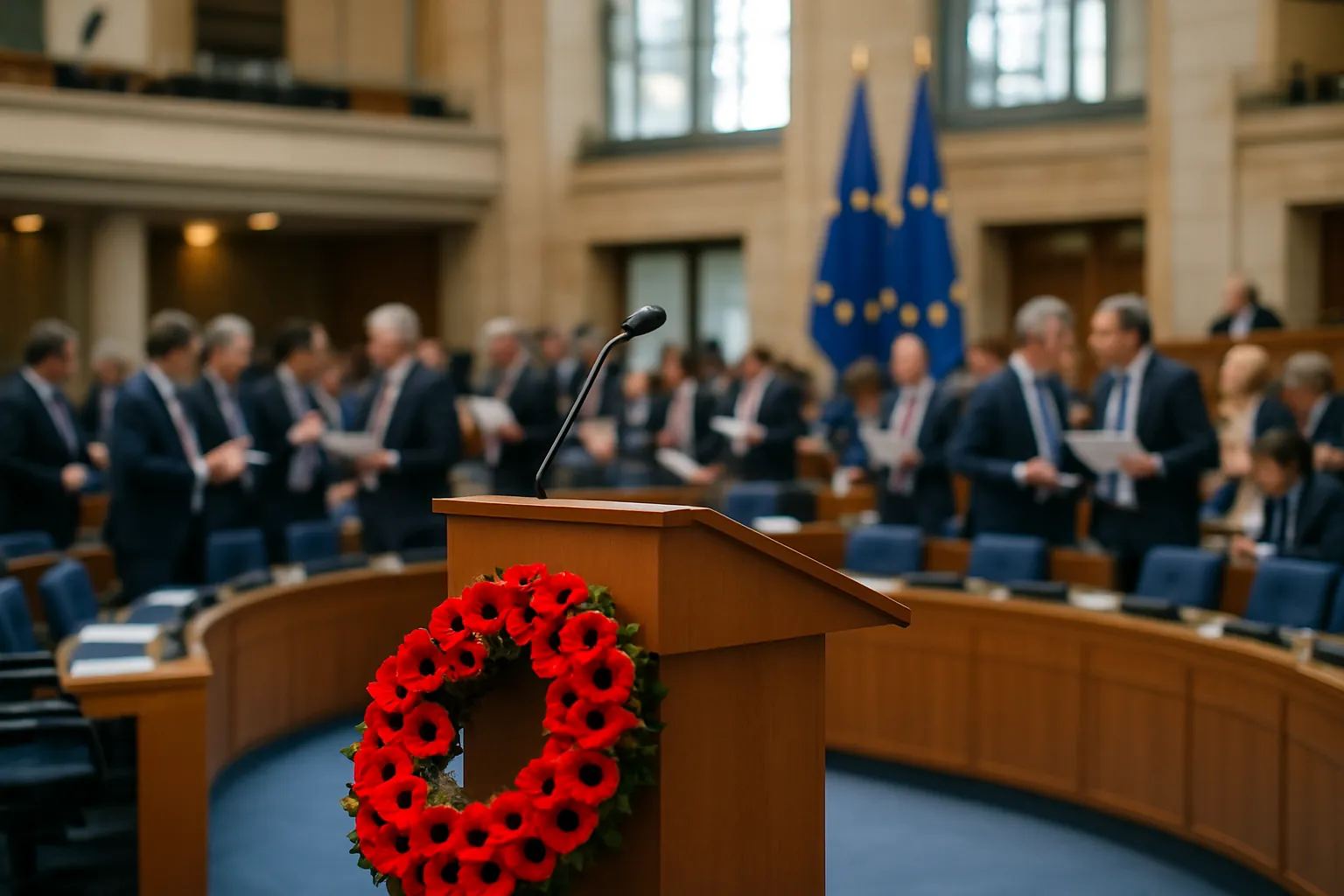
Wednesday’s session at the European Parliament in Brussels spiraled from anticipation to uproar, exposing the continent’s ongoing fracture lines over political identity and the legacy of US influence. The spark? A denied request for a minute of silence to honor slain conservative activist Charlie Kirk, a move demanded by far-right lawmakers yet decisively quashed by the Parliament’s president and session chair.
Kirk, only 31, became a prominent and polarizing figure in American politics as founder of Turning Point USA and ally to Donald Trump, building a digital army among young conservatives. His recent death—fatally shot while speaking on gun violence at a university event—rocked the global right-wing community, triggering calls for public tributes on both sides of the Atlantic. Lawmakers on Europe’s right, known for their close ties to Trump’s movement, saw an opportunity to foreground freedom of speech and ideological kinship. Swedish MEP Charlie Weimers gave voice to these sentiments, seeking a parliamentary moment of silence. Yet, President Roberta Metsola’s response was swift and unambiguous: parliamentary protocol only permits such tributes at the opening of plenary sessions, the next opportunity months away.
Her ruling was met not with resigned acceptance, but rather thunderous desk-banging and shouted accusations of bias from the right, creating a scene that quickly drew international scrutiny. Socialists and Democrats session chair Katarina Barley cut Weimers’ impromptu tribute short, stating plainly, “We have discussed this, and you know the president said no to a minute of silence.” That firmness left little room for further debate—at least within the chamber’s official proceedings.
Debate Lines: Bias or Boundaries?
Through the clamor, a deeper tension flickered. Critics from the right pointed to what they called clear double standards, invoking the Parliament’s 2020 tribute to George Floyd. “Why him, but not Kirk?” became a rallying cry. They accuse Parliament’s leadership—and, by extension, European liberalism—of inconsistent values and political hypocrisy. Charlie Weimers did not mince words, insisting Kirk’s ideology was the sole reason for the refusal: an affront, he argued, to free speech itself.
Those on the center and left offered a more nuanced, and arguably principled, view. French centrist lawmaker Nathalie Loiseau struck a somber but rational note in her social media statement: “Charlie Kirk did not deserve to die, but does he deserve to be honored by our Parliament? That is another subject.” She referenced Kirk’s record of inflammatory rhetoric, such as posts attacking Ukraine’s President Zelensky, suggesting that the act of public commemoration should mean more than simple recognition of loss.
This tension between freedom of speech and the responsibility not to glorify divisive figures runs deep—even within the EU’s own walls. According to Harvard political scientist Erica Chenoweth, “Democracies excel when they both protect expression and apply shared values to public honors. Parliament isn’t a forum for blanket approval of every ideology, especially when ethics and European unity are at stake.”
“Commemorations are not neutral acts—they shape, signal, and sometimes distort which values we privilege in public life.”
Looking at history, the choice of whom to honor in official settings has long been fraught. Consider the postwar German Bundestag’s strict rules on public tributes, born from a determination to never again platform hateful or exclusionary ideologies. Parliamentary decorum, it turns out, can be a shield—sometimes the only one—against normalization of fringe beliefs.
The Broader Stakes: Free Expression or Platforming Extremism?
Beneath it all simmers an unresolved dilemma central to twenty-first century democracy. The far-right’s outrage over Kirk’s snub is about more than just parliamentary process; it’s an assertion that their voices—and those of their American ideological cousins—should have equal weight in symbols as well as speech. But in pluralist societies, should every cause for outrage be met with solemn ceremony? Where is the line between honoring human life and elevating controversial legacies?
Liberal democracies are at their healthiest when they scrutinize such questions openly, weighing both procedural fairness and the dangers of normalizing bigotry. The EU Parliament’s careful application of its own statutes, denying Kirk’s tribute not for his politics but for procedural timing, may seem cold to some. That so many conservatives fixate on perceived hypocrisy reveals just how much the culture war’s battlefront has shifted: symbolic gestures now spark as much fury as substantive policy.
Beyond that, these debates illuminate the ongoing contest over the very soul of transatlantic alliances—a recalibration of how European institutions define themselves in a world where American cultural and political influence is not just assumed, but endlessly negotiated.
What’s clear is that the European Parliament’s decision will not quell the right’s campaign for greater legitimacy within the halls of power. It does, however, underscore the need for institutions to hold fast to procedural integrity, even amid a storm of performative outrage. As Prof. Chenoweth warns, “What we do in our moments of tribute reveals as much about our future as our past.” In the end, the clash over Kirk’s commemoration says more about Europe’s evolving identity—and democracy’s perpetual balancing act—than about any single, tragic death.
