
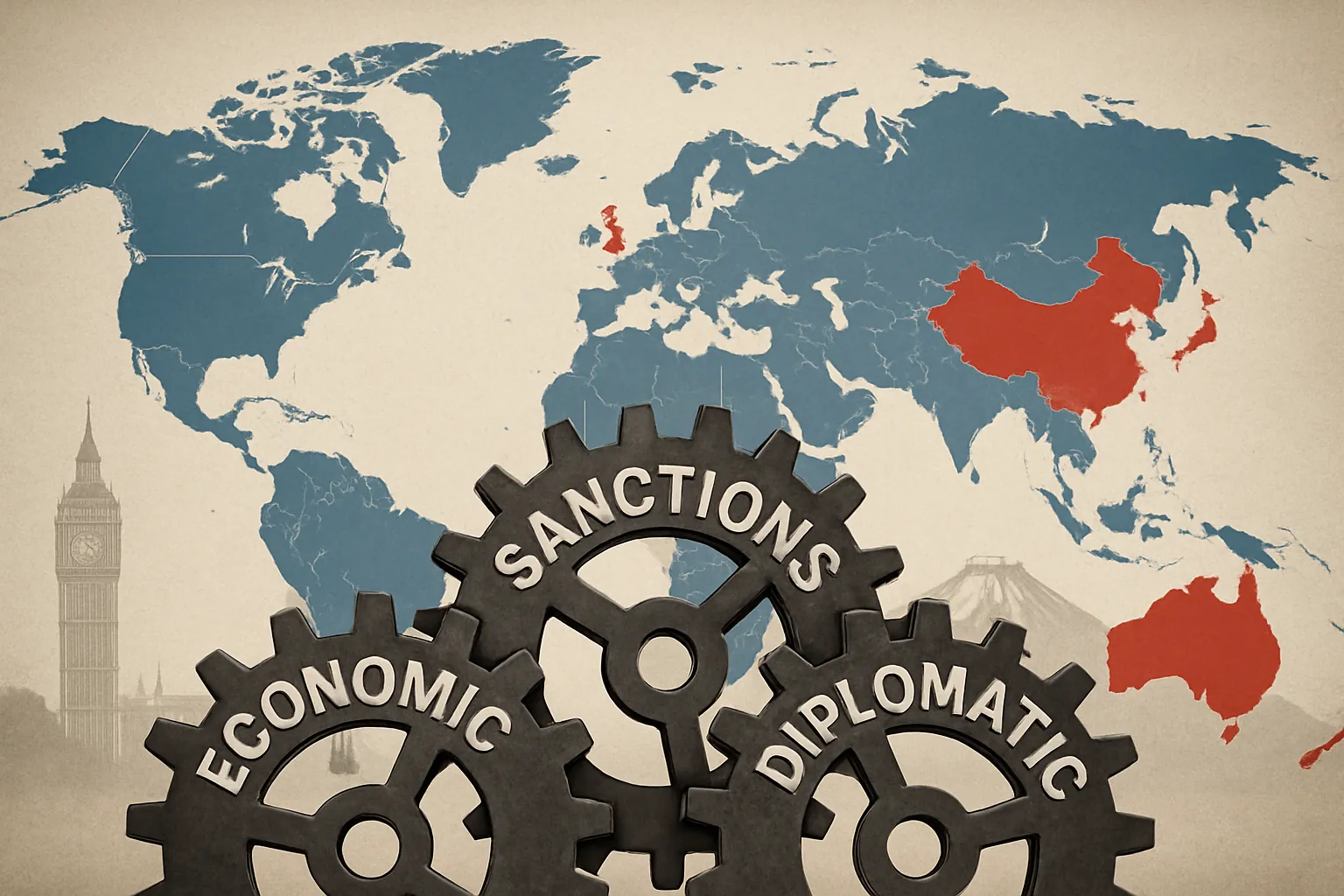
Turning Economic Screws: Japan Takes a Stand
A year ago, few would have predicted that the world’s third-largest economy would play such a pronounced role against Russian aggression. Yet, that’s precisely what has transpired. Japan’s expanded sanctions network underscores an unambiguous break from its traditionally cautious foreign policy, placing Tokyo at the forefront of international resistance to Russia’s war in Ukraine.
On Friday, the Japanese government announced sweeping new measures: asset freezes targeting 51 organizations and 14 individuals, not just in Russia but extending to groups in Ukraine’s occupied eastern and southern regions labeled as destabilizing actors. Export bans were slapped on 11 groups, including those based in Russia, China, and Turkey—an explicit signal that Tokyo is watching for and countering sanctions evasion through third countries.
What’s driving this bolder posture? The calculus is both moral and strategic. Japan has supported Ukraine’s sovereignty from the outset, already contributing over $12 billion in economic aid. Recently, it earmarked a $3.3 billion loan to Kyiv, financed by proceeds from frozen Russian assets. By lowering the G7-imposed price cap on Russian seaborne crude from $60 to $47.60 per barrel, Japan aligns itself with the European Union and the UK, sending a clear message: collaboration and economic might remain potent tools in the global order.
According to Mieko Nakabayashi, an international relations expert at Waseda University, “Japan’s sense of vulnerability in the face of regional threats—including North Korea and China—makes its alignment with Western democracies on Ukraine all the more significant.” The urgency is palpable. Economic sanctions aren’t just symbolic—they’re part of a coordinated effort to drain Russia’s war chest and curtail the machinery fueling its aggression. Japanese exports to Russia have cratered, with oil imports phasing out gradually as part of a broader G7 framework.
Global Coordination: Allies Uniting Against Autocracy
Japan isn’t alone. In tandem, New Zealand unleashed its 32nd consecutive round of sanctions, hitting 19 individuals and organizations, including entities linked to cyberattacks (notably Russia’s notorious GRU Unit 29155), chemical weapons, spreaders of disinformation, and so-called “shadow fleet” vessels evading previous restrictions. The breadth of this action points to an understanding that modern warfare transcends battlefields—it infects global commerce, information streams, even cyberspace itself.
New Zealand’s move to lower its own cap on Russian crude reflects a recognition that every loophole must be closed. As Harvard economist Laura Alfaro recently explained, “No country can play spoiler in a global sanctions regime without risking damage to its own credibility and markets.” Unity, not fragmentation, is the recipe for pressure that matters.
Meanwhile, the United Kingdom, fresh under a new Foreign Secretary, rolled out an aggressive package of 100 new sanctions. These targeted Russia’s so-called “shadow fleet” that quietly moves sanctioned oil, as well as Chinese, Turkish, and other suppliers funneling electronics and key components to Putin’s war machine. Some of the hardest blows struck firms providing drone components to Russia’s military, as well as intermediaries working from as far afield as North Korea and Iran.
“Sanctions alone won’t end this war, but the world cannot let tyrants act with impunity. Closing economic loopholes is essential if we want international law to mean anything.”
Beyond that, the UK has pledged to jumpstart drone manufacturing for Ukraine—an asymmetric but crucial move in modern warfare where drones routinely outmatch Russia’s older equipment. If the Cold War narrative was about nuclear arms, today’s fight is as much about controlling who produces, funds, and maintains the digital and physical tools of combat.
Complex Paths Forward — and the Stakes for Democracy
The sanctions regime faces its own perils and complexities. Critics, disproportionately from the conservative wing, argue these measures risk destabilizing global markets or inadvertently hurting the populations they’re meant to protect. But the history of targeted sanctions is instructive. According to a recent Pew Research analysis, majorities in G7 countries now support tougher economic actions against invaders, a leap from the skepticism during previous conflicts. That democratic mandate matters.
A closer look reveals that Japan’s approach remains nuanced. Travel restrictions on Japanese nationals heading to Russia for business, study, or research have been “eased”—but only for compelling reasons and never for those near the volatile Ukraine border, still subject to a Level 4 evacuation advisory. Diplomacy remains alive, but so does realism.
The stakes are far larger than Eurasian territorial lines. By synchronizing with allies and closing financial loopholes, these nations are drawing a line for all would-be aggressors. Will these steps be enough to force Moscow to change course? That depends on whether global resolve outpaces the creativity of autocrats.
Sanctions are imperfect tools, but history—think South Africa’s anti-apartheid measures, or pressure on Iran’s nuclear program—shows they can shift calculations, when wielded with unity and a clear moral purpose. The emerging consensus across Japan, New Zealand, and the UK sends a potent message: the rules-based order isn’t just an ideal, but an ongoing project, defended one hard policy choice at a time.
For Tokyo, Wellington, London, and their allies, it’s about more than punishing a belligerent power. It’s a struggle for the foundational values that keep societies open and just. Choose your side, say these nations—with their coordinated, ever-toughening response, they’ve made theirs abundantly clear.
