
Hidden Threats: The Secret Service’s High-Stakes Race
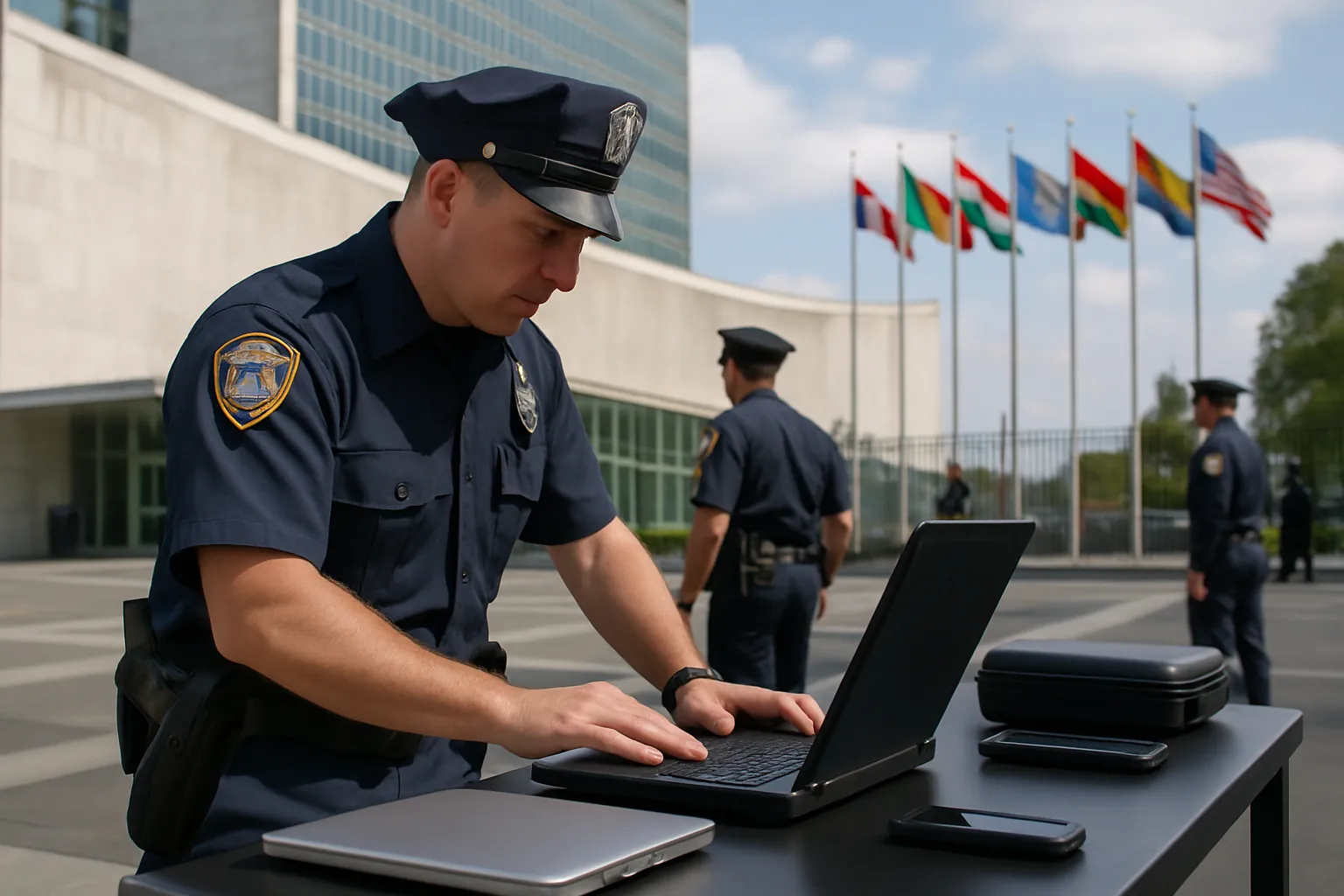
Most New Yorkers don’t think twice about the invisible arteries running beneath their city: the cellular networks that keep millions connected, keep 911 operating, and ensure even the most mundane routines, from ride shares to banking, flow smoothly. But just days before world leaders were set to assemble for the United Nations General Assembly this September, the U.S. Secret Service pierced this sense of digital invulnerability with a startling discovery. In an operation that reads more like a modern techno-thriller than a press release, agents from the Secret Service’s Advanced Threat Interdiction Unit, in concert with Homeland Security Investigations and the NYPD, swooped in on a hidden telecommunications network sprawling within a 35-mile radius of the U.N. headquarters.
What they found was staggering by any measure: Over 300 co-located SIM servers and at least 100,000 SIM cards scattered in clusters across the New York tristate area. A cache of illegal firearms, 80 grams of cocaine, and a trove of computers and burner phones only deepened the intrigue. But more than the paraphernalia of shadowy operatives, it was the capabilities of this network that set off alarms across every level of government security. As one official told Reuters, the system had the muscle to send a dizzying 30 million text messages per minute, potentially overwhelming cellular infrastructure, imperiling emergency services, and providing the perfect cover for encrypted communications among those who would wish to do real harm.
This wasn’t just about preventing dropped calls on the Upper East Side. The operation, months in the making, represents the largest such seizure in Secret Service history. The timing was no accident. With President Biden, dignitaries, and world leaders converging on Manhattan, the stakes for securing the city’s digital lifelines had never been higher. So, how did an underground syndicate build such a formidable network? And—perhaps even more crucially—what does this episode reveal about the threats facing open societies in the age of sprawling, invisible technology?
Sophisticated Sabotage: Who Was Behind the Curtain?
A closer look reveals the complexity of the operation—and the broader context that made a potential disaster all too real. The investigation, initially triggered by a flurry of anonymous telephonic threats against senior U.S. officials last spring, expanded rapidly as agents traced the digital breadcrumbs. According to officials briefed on the case, intrusions like these blur the boundaries between criminal enterprise and geopolitical maneuvering. Early forensic investigation of the seized network exposed communications not just between criminal organizations but also between foreign governments and individuals already known to federal law enforcement.
As the New York Times and Reuters reported, law enforcement sources continue to carefully weigh evidence pointing to possible “nation-state” involvement—some allegations reportedly implicate China, though conclusive public attribution remains elusive. As is often the case with cyber-enabled crime, guilt is obfuscated by layers of anonymous SIM cards, spoofed signals, and a global web of intermediaries. The fact that the seized equipment was not only capable of encrypted, untraceable messaging but also, potentially, denial-of-service attacks against cell towers, highlights the convergence of cyberwar and organized crime networks. Beyond that, the operation sits at the intersection of real-world violence—the presence of illegal weapons and drugs at network sites—and the high-tech world of SIM farms and mass text smishing operations.
“The potential for disruption to our country’s telecoms posed by this network of devices cannot be overstated.” — Secret Service Director Sean Curran
When a single technological network, built almost entirely in the shadows, can threaten the fundamental ability of a city to function or respond to emergencies, alarm bells should ring not just for security agencies, but for anyone who values democracy and public safety. The lack of public arrests so far speaks to just how complex—in both technical and legal terms—it is to dismantle such networks and bring their architects to justice. Analysts like Eva Galperin of the Electronic Frontier Foundation note this is a dilemma facing open societies everywhere: “We want our infrastructure open and accessible, but that openness is precisely what malicious actors exploit.”
Safeguarding Democracy in a Shadowy Cyber Age
High-profile takedowns like this reinforce a hard truth: America’s digital infrastructure is now as much a battlefield as its physical streets. Just as the progressive cause has long demanded that police and courts evolve in the face of complex, transnational threats—from drug syndicates to terrorism—today’s reality demands a similar evolution for how we protect public networks and democratic institutions. The risks posed by these clandestine operations reach far beyond targeted sabotage. As Harvard cybersecurity scholar Bruce Schneier has argued, “A collapse of telecommunications during an event like the U.N. General Assembly wouldn’t just threaten political stability—it could endanger lives with delayed or missed emergency response times.”
Right-wing critics often dismiss aggressive investments in cyber defense as expensive overreactions or as license for unchecked surveillance. That critique misses the larger point. The major threat here was not, as they often warn, coming from an overreaching government but from covert actors—possibly with hostile state backing—leveraging gaps in the system for potentially devastating impact. True security in a plural, free society isn’t about shrinking government nor about blanket suspicion of technology; it’s about transparency, accountability, and robust, federated infrastructure capable of both resilience and oversight.
The months-long, multi-agency probe demonstrates the necessity—and effectiveness—of interagency, intergovernmental cooperation, rather than the fragmentation some conservatives champion as a model. The threat doesn’t stop at one agency’s jurisdiction; neither should our response. Just ask anyone caught in past infrastructure failures (during Hurricane Sandy, tens of millions in the tri-state area lost communication, hindering emergency and recovery efforts). To safeguard against similar—or potentially more malicious—scenarios, officials must invest in both prevention and rapid remediation. That means not just money, but a commitment to modern, progressive policy approaches and international collaboration that recognizes our interconnected world.
The Secret Service may have neutralized this immediate threat, but the episode should prompt a wider political and civic reckoning. What will it take to secure America’s vital networks—telecom and otherwise—against the next iteration of technological sabotage? For progressives, the answer is clear: double down on transparency, smart public investment, and inclusive, cross-border strategies that defend both liberty and the common good.
