
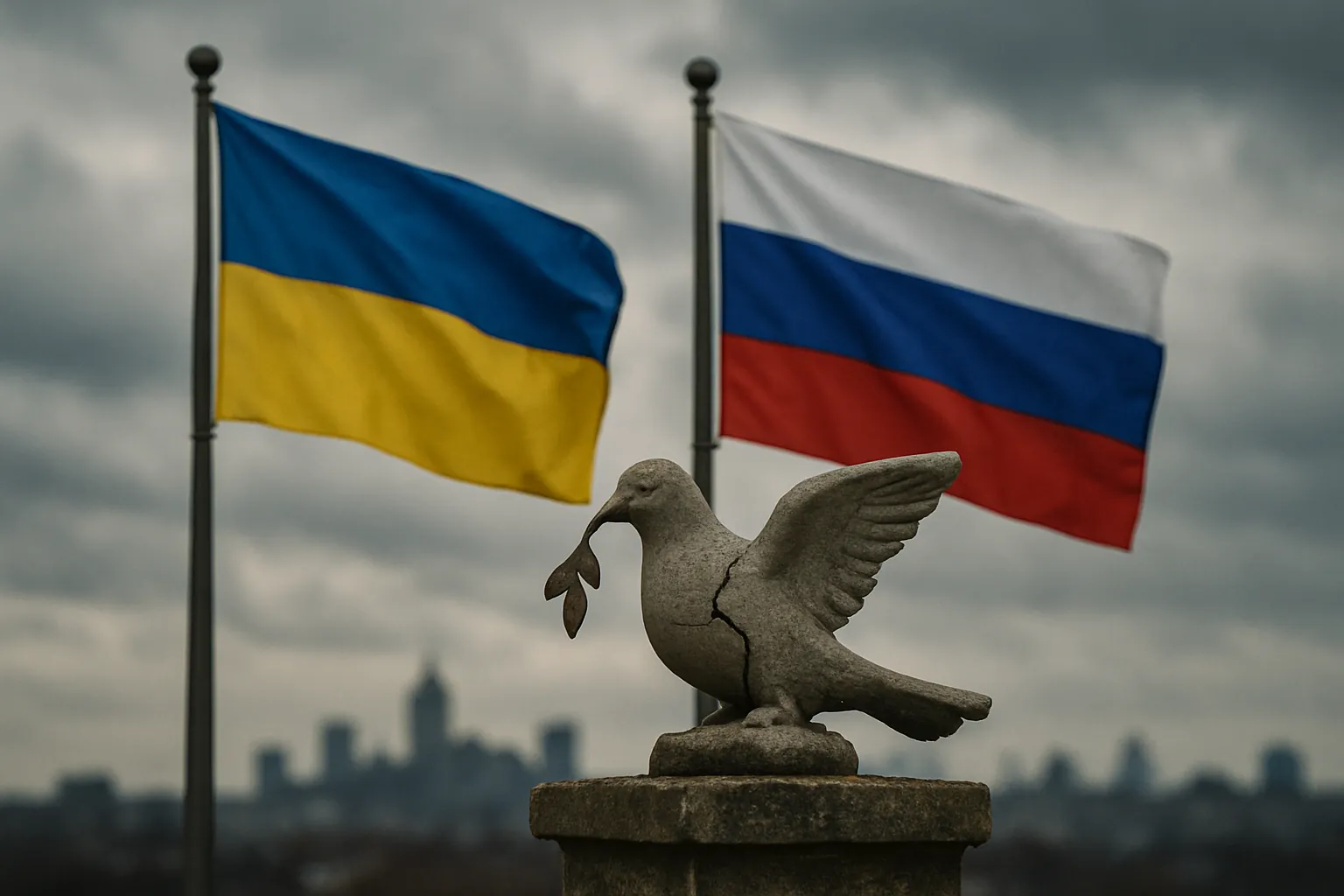
Lost Opportunities: Where Peace Talks Faltered
Only months ago, a glimmer of hope emerged as Presidents Vladimir Putin and Donald Trump met on the isolated tarmac of an Alaskan air base. The world watched as the two most powerful leaders promised renewed attention to ending Europe’s deadliest land conflict since World War II. Russian Deputy Foreign Minister Sergei Ryabkov now declares that the momentum for a settlement has “already run out”. What happened in the aftermath? Beyond diplomatic platitudes, the summit has left few tangible results and even fewer optimistic voices.
Ryabkov’s latest comments are a damning assessment. According to the Deputy Foreign Minister, it was not simply intractable differences between Moscow and Kyiv, but active sabotage by European powers that brought the process to a standstill. Ryabkov paints a picture of a divided West, unwilling to make the hard compromises necessary for peace. Calling out NATO member states, he accuses them of putting “noise” and obstacles where there should have been consensus-building. Yet, this narrative glosses over the Kremlin’s own responsibility for the war’s escalation and the human cost borne—so far—overwhelmingly by Ukrainians.
What’s happening is depressingly familiar for anyone following the long arc of this conflict. Moments of diplomatic promise, such as the 2015 Minsk accords or sporadic ceasefire talks, have repetitively dissolved beneath waves of mistrust, maximalist demands, and conflicting foreign interests. According to a 2023 Council on Foreign Relations report, fewer than a third of observers believe any durable peace will be achieved so long as external arms shipments and domestic hardliners on both sides dominate the agenda.
Tomahawks, Escalation, and the Dangers of Military Brinkmanship
Now comes a new potential flashpoint: U.S.-supplied Tomahawk cruise missiles in Ukraine. Deputy FM Ryabkov warns that such a move would represent a significant escalation, requiring direct U.S. involvement and risking unpredictable consequences. Echoing similar concerns, Harvard security expert Fiona Hill cautioned last month that “the further entanglement of U.S. military assets in this conflict heightens the specter of miscalculation—potentially drawing America into a regional war we have tried, until now, to prevent.”
President Trump, for his part, has vacillated between hawkish rhetoric and caution. He has branded Russia a “paper tiger” since the full-scale invasion, but voices private disappointment with Vladimir Putin’s intransigence, stating that Moscow’s ongoing assaults have dashed any prospects for an early peace deal. He has also raised alarms about dispatching ever more advanced weaponry, arguing that such arms transfers could escalate the conflict beyond NATO’s intentions. As he told Fox News, “If you start sending Tomahawks in without a clear plan or knowledge of how they’re going to be used, you risk crossing a line toward direct confrontation.”
“The further entanglement of U.S. military assets in this conflict heightens the specter of miscalculation—potentially drawing America into a regional war we have tried, until now, to prevent.”
—Fiona Hill, Harvard University
The question lingers: Can advanced weaponry really end the war, or will it only solidify battle lines, locking both sides — and their international backers — into an endless cycle of escalation? History offers little comfort. Vietnam, Afghanistan, and most recently Syria show what happens when superpower interventions raise the stakes without a realistic off-ramp.
Why Diplomacy Remains Elusive — and Necessary
A closer look reveals that neither Moscow nor Washington appears genuinely invested in the exhausted framework of arms control. Ryabkov has bemoaned the U.S.’s lack of engagement on the New START Treaty extension, seeing it as a signal that trust and basic cooperation are fraying. The Biden administration, meanwhile, remains tight-lipped, calculating its every move with Congress eyeing the November election and allies nervous about instability. This mutual suspicion echoes the logic of the Cold War, when dialogue froze at the worst moments — until opened by visionaries willing to take political risks.
The cost of this failure isn’t measured solely in diplomatic missives or press conference soundbites. Civilians continue to pay the highest price. International monitors report more than 10,000 civilian casualties since the conflict’s escalation in 2022, a figure that only rises as heavy weaponry pours in. According to the United Nations, nearly 8 million Ukrainians remain internally displaced or seeking asylum abroad. These staggering numbers remind us that while statesmen squabble over weapons and blame, ordinary families wait for a ceasefire that never comes.
There is little appetite among the Kremlin’s top brass for meaningful concession — but nor should the U.S. or its allies defer endlessly to military logic. As John Mearsheimer writes in “The Tragedy of Great Power Politics,” lasting settlements require every side to recognize not only their own interests, but the basic security needs of their adversaries. The architecture of peace is built in slow, painstaking increments — and only when leaders risk unpopularity to pursue compromise.
Progressives and pragmatists in both Russia and the West must therefore resist hardline calls for escalation. The future of Ukraine’s children, its battered hospitals and homes, depends not on a new missile system or the next high-level summit, but on leaders willing to prioritize dialogue, accountability, and mutual security over zero-sum thinking. Can such diplomacy prevail in today’s climate? History suggests it’s possible — but never inevitable.
