
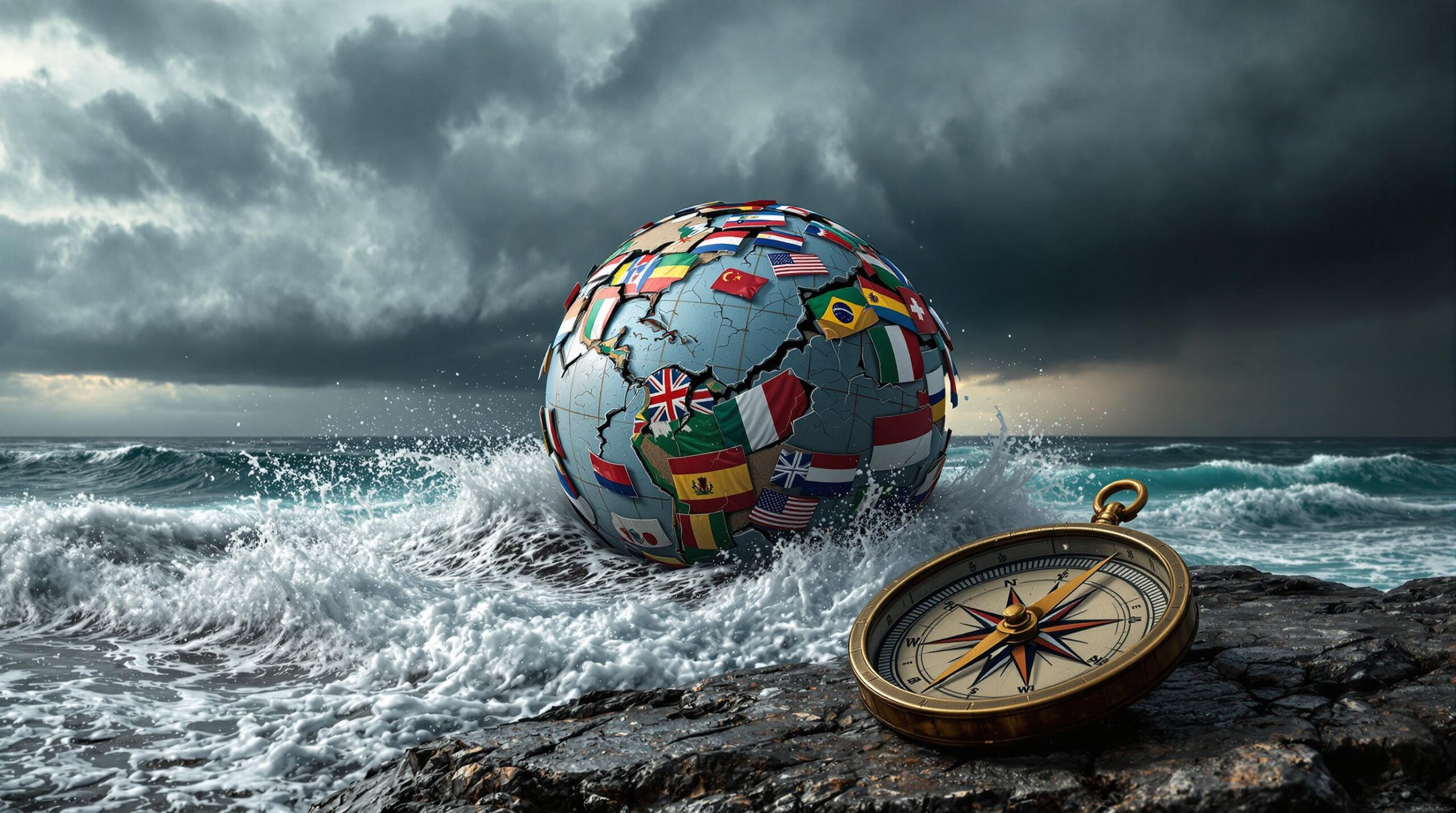
The international landscape is experiencing seismic shifts under President Donald Trump, whose recent tenure illustrates a stark departure from traditionally held U.S. foreign policy norms. Trump’s administration is forging ahead with decisions that prioritize transactional gains and sharp rhetoric, creating waves of instability throughout the global community.
A Departure from Democratic Values
A striking feature of Trump’s foreign policy has been his administration’s willingness to sideline democratic values in favor of strategic nationalism. This trajectory sharply contrasts with America’s historical legacy as a beacon of democracy. During his recent term, Trump has aggressively dismantled foreign assistance programs supporting political opposition and democratization efforts in Cuba, Nicaragua, and Venezuela. This bold action demonstrates a clear relinquishing of America’s softer power tools that historically allowed influence without military intervention.
Berkeley’s political science professor Steven Fish aptly characterizes this moment, cautioning that America’s traditionally steadfast commitment to promoting global democracy is now severely questioned. “The U.S.’s historical commitment to democracy is now questioned,” Fish warns, indicating that these policy choices might irrevocably reshape America’s international standing. The implication is clear: as the world witnesses these shifts, U.S. influence may diminish, shaking international trust and redefining geopolitical alliances.
Transactional dealings over democratic values have now become hallmark Trumpian methods, as evidenced by his decisions to end support for vital institutions like the Inter-American Foundation, US Agency for Global Media, and even the United States Institute of Peace. These organizations historically advanced America’s democratic missions and conflict resolution abroad. Trump’s moves against such initiatives underscore a troubling shift away from proactive diplomacy and toward isolationism masked as nationalism.
Expansionism and Geopolitical Recklessness
Trump’s rhetoric and proposed policy actions represent a profound disruption of the global rules-based order, challenging norms established after World War II against territorial conquest. His aggressive ambitions concerning territorial acquisitions, such as suggestions of purchasing Greenland or exerting control over essential infrastructure like the Panama Canal, are unprecedented and alarming. Michael Albertus of the University of Chicago clearly notes, “Making explicit threats of acquisition of another territory by force has been off the table during the postwar era. Since Trump, that has changed dramatically.”
This shift towards expansionist narratives is more than mere rhetoric; it signals to international actors that previously taboo actions are now seemingly permissible. History teaches that such precedents can incite similar aggressive behaviors elsewhere, causing regional conflicts or fueling existing disputes. The ripple effect of Trump’s expansionist tendencies poses severe risks to international stability.
Former Trump administration official Stephen K. Bannon succinctly captures the essence of Trump’s geopolitical strategy: “geopolitically, it’s all gas, no brake.” In practical terms, this adds volatility to international negotiations, emboldening hardline stances while reducing opportunities for peaceful conflict resolutions.
“Trump’s MO is to always be in a hurry, looking for the transaction, for the temporary, for the now.” — Aaron David Miller, former Middle East negotiator
Complex Conflicts and Hasty Diplomacy
While pushing an aggressive and instantaneous approach to diplomacy, Trump consistently seeks rapid, often simplistic solutions to deeply entrenched, complicated international conflicts. This strategy was obvious in his attempt at arranging a rapid cease-fire agreement in Gaza and a fast-tracked nuclear deal with Iran. Both efforts met with significant hurdles; experts viewed them as superficial band-aids to complex, enduring problems rather than lasting diplomatic solutions.
Former negotiator Aaron David Miller’s assessment rings particularly true: Trump’s approach is seemingly tailored to immediate gains, yet complicated geopolitical conflicts require nuanced, sustained diplomacy rather than rapid transactional resolutions. The devastating escalation seen recently in Gaza—an area Trump himself acknowledged as critical—demonstrates vividly the dangerous shortcomings inherent in rushing through sensitive negotiations.
A hasty diplomacy model risks misunderstanding the intricate dynamics underpinning international conflicts and can result in agreements that fall apart, exacerbating conditions on the ground. Moreover, rapidly devised peace deals often overlook essential justice-oriented or human-rights related factors, further alienating the involved communities and weakening trust in diplomatic processes.
Trump’s approach to Ukraine encapsulates another troubling yet compelling example. His administration’s fast-paced diplomacy attempts to end the brutal conflict, yet critics note that allowing territorial concessions could inadvertently normalize conquest as a legitimate policy mechanism. This kind of outcome sets an alarming precedent that may encourage similar actions by other powerful states.
The Future at a Crossroads
Looking forward, the long-term impacts of this aggressive strategy are deeply uncertain. Trump’s foreign policy choices could permanently reshape the global order and redefine the role of the United States within it. America’s allies and global powers alike are carefully watching, reevaluating relationships in light of these unconventional and unpredictable U.S. actions.
For progressive advocates, Trump’s dramatic deviation away from democratic ideals and established global norms underscores the urgency of active engagement and steadfast commitment to fostering international cooperation. The past provides us clear lessons: peace and stability are best maintained through multilateralism, mutual respect, power-sharing, and patient diplomacy—not rushed transactions or heavy-handed dominance.
Ultimately, Trump’s current policies highlight a critical juncture: Will America maintain its historic position as a global diplomatic leader committed to democratic principles, or will the administration’s isolationist and expansionist tactics erode the envisioned liberal global order constructed painstakingly over decades? The choices made in these turbulent years will undoubtedly shape global affairs for decades to come.
