
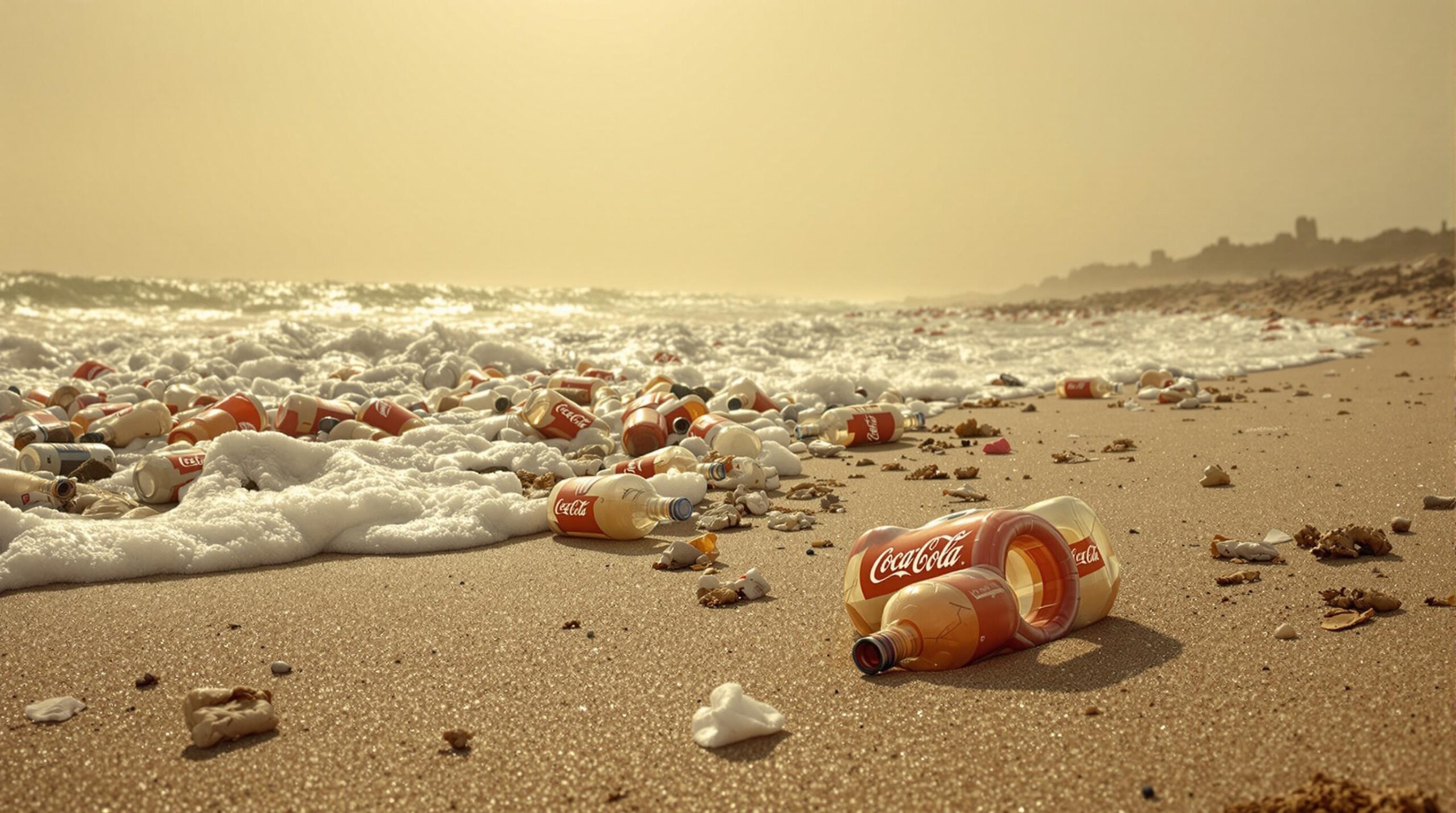
As waves crash onto beaches across the world, carrying along the telltale shimmer of plastic bottles and wrappers, a sobering new study presents dire forecasts about Coca-Cola’s outsized role in future plastic pollution. The iconic beverage company, a brand synonymous with American culture and global capitalism, is projected to pour a staggering 1.33 billion pounds of plastic waste into our oceans annually by 2030. That’s equivalent to filling the stomachs of 18 million whales—an alarming visualization of the environmental devastation unfolding before our eyes.
A Failure of Corporate Accountability
At the heart of this disconcerting analysis is the stark abandonment of sustainable commitments by Coca-Cola. Oceana, the non-profit environmental advocacy group behind the report, has highlighted the urgent need for action based on Coca-Cola’s already heavy environmental footprint. Initially professing ideals of environmental responsibility, Coca-Cola had committed itself in 2022 to a highly publicized goal: achieving 25% reusable packaging by 2030. Yet barely a year later, in an abrupt reversal that seemed divested from public accountability, the company has apparently withdrawn this crucial pledge from its sustainability roadmap. This corporate about-face underscores how corporations typically prioritize profitability over responsible environmental practice.
The troubling implication is clear: Without stricter oversight, major corporations can continue to renegotiate their responsibilities whenever sustainability goals conflict with profit margins. It’s especially critical now at a time when the dangers of plastic pollution are clearer and more concrete than ever, impacting marine biodiversity and magnifying ecological crises across the globe.
Microplastics: A Crisis Hitting Close to Home
Beyond marine life suffering immediate impacts from Coca-Cola’s plastic waste, the pervasive issue of microplastics has grown into an undeniable human health crisis. Tiny pieces of plastic debris have infiltrated not only ocean waters but our daily lives, embedding themselves in our food, water supply, and even the air we breathe. The detrimental health implications of microplastics ingestion, increasingly linked by scientists to serious conditions such as cancer, infertility, and heart disease, pose a dire threat increasingly understood with each new research endeavor.
The invisible yet insidious prevalence of microplastics starkly highlights how Coca-Cola’s irresponsibility reverberates beyond immediate environmental concerns and deeply affects human wellbeing. Even more troubling, this plastic crisis exacerbates inequities, disproportionately impacting vulnerable coastal and lower-income communities, compounded by inadequate waste management infrastructure and resources.
“Coca-Cola’s escalating plastic waste isn’t simply an environmental statistic—it’s a profound human and ecological crisis demanding immediate corporate accountability and sustainable innovation.”
A Return to Reusability is Essential
While the looming figures are indeed daunting, viable solutions exist. The Oceana report strongly emphasizes that reinstating reusable packaging models—such as glass bottles or more durable PET plastics that can withstand repeated usage—could significantly reduce Coca-Cola’s plastic footprint. This model, which Coca-Cola utilized successfully in past decades, isn’t merely nostalgia; it was, and could become again, an efficient, sustainable, and popular method of reducing plastic waste.
Indeed, the shift away from returnable packaging wasn’t due to inefficiencies or consumer dissatisfaction. Instead, it was driven primarily by economics—specifically profits—that made single-use plastics the preferred option. This corporate shift saddled society, particularly marginalized and economically vulnerable communities, with the immense responsibilities of managing plastic waste, transferring the environmental and public health burdens onto consumers and taxpayers rather than producers and profiteers.
The global community of consumers—now perhaps better described as stakeholders—must demand that corporations engage transparently and actively in sustainability solutions. Returning to reusable packaging presents an opportunity not just for Coca-Cola, but for other beverage giants like PepsiCo and Nestlé, which also feature atop polluter lists, furthering a collaborative push for industry-wide standards in tackling plastic waste.
A Call to Consumer and Regulatory Action
Regulatory oversight remains a crucial factor. Progressive policies mandating corporate transparency, sustainable practices, and penalties for environmental negligence are essential tools in addressing the crisis. We must collectively advocate for robust environmental regulations at local, national, and international levels. Activism, supported by consumer habits that reflect environmental awareness, moves markets and pressures brands toward meaningful, sustainable practices.
This news offers not just an indictment but also an invitation—to demand change from corporations whose ecological footprints dwarf individual impacts, and whose business decisions hold massive sway in the global fight against pollution and climate change. It’s a call not to retreat in fear of overwhelming stats but to remain steadfastly hopeful and persistently vocal, confident that collective action can stimulate tangible change.
In confronting Coca-Cola’s monumental plastic pollution, we confront the larger structural realities underpinning the climate crisis itself. Corporate indifference—combined with a regulatory apparatus frequently undermined by powerful business lobbies—continues the cycle of ecological harm. Ending this cycle demands action and accountability, shifting permanently towards ethical practices that honor environmental integrity and human health. Against a background of mounting alarm, the choice before us—between preserving corporate profits or protecting our beautiful imperiled planet—could not be clearer.
