
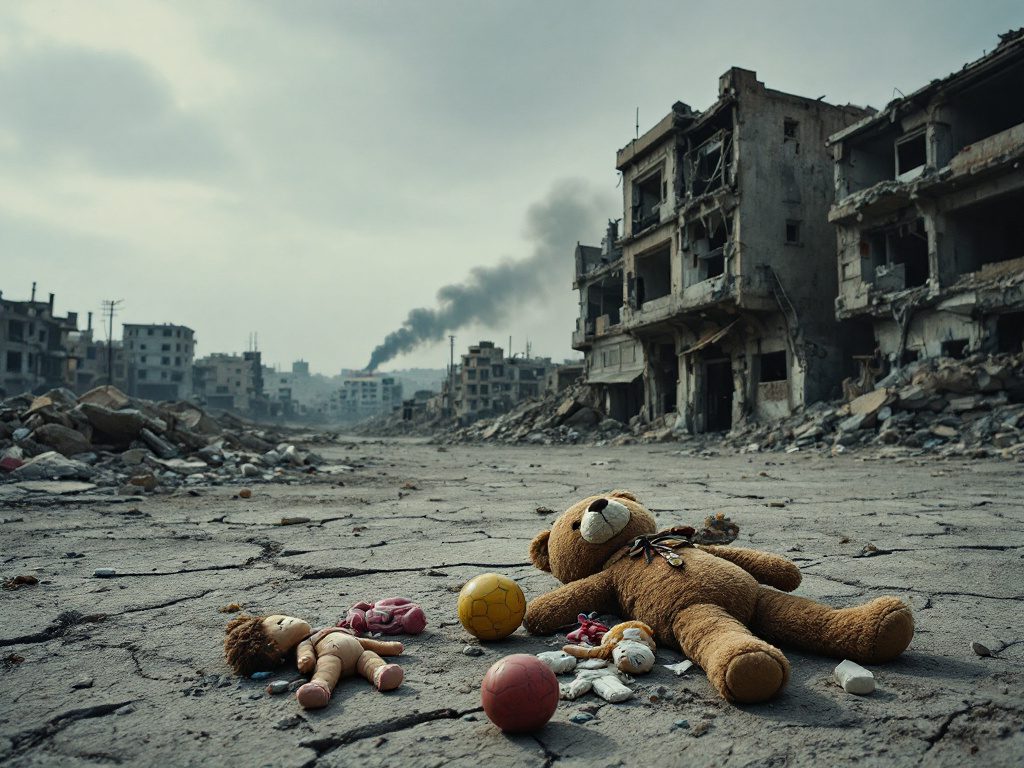
Imagine waking up in a land where death has become a daily companion, uncertainty a haunting normality, and the laughter of children—tragically replaced by terror, tears, and trauma. Sadly, Gaza’s children are not bound by imagination, but a devastating reality as Israeli military operations continue to wreak havoc across the beleaguered enclave.
A Childhood Under Siege
According to the UN Relief and Works Agency (UNRWA), at least 100 Palestinian children have been killed or wounded daily since Israel resumed its brutal assault on Gaza on March 18, 2025. Many of these children were displaced already, forced into makeshift shelters, tents, or homes still bearing scars from previous attacks. Philippe Lazzarini, head of UNRWA, poignantly captured the scale of this tragedy by stating Gaza has become a ‘no land’ for children, declaring the continuation of war “is again robbing them of their childhood.” His remarks underline the catastrophic impact on an entire generation, stripped violently from innocence into unimaginable suffering.
UNICEF’s tally from the recent offensive approximates at least 322 child fatalities and 609 injured in a mere ten days since the resumption of hostilities. Beyond the statistics exist lives abruptly ended, dreams violently shattered, and communities destroyed. Hospitals and medical facilities, areas traditionally seen as safe havens amidst conflicts, have instead become direct targets, escalating the suffering of already vulnerable children needing medical attention.
An Orphan Crisis Unfolding
Behind the tragic death toll lies another harrowing reality—tens of thousands of children left without parents. The Palestinian Central Bureau of Statistics revealed over 39,000 children in Gaza have lost one or both parents due to ongoing Israeli operations. Approximately 17,000 are now utterly orphaned, facing a lifetime void of parental support during their crucial developmental stages.
This increasingly dire orphan crisis—dubbed the largest in modern history—poses profound moral questions: Who will care for these traumatized children? What does the future hold for a generation robbed of family, safety, and normalcy? The reality is painful—these children are not merely statistics used in rhetorical debates; they represent Gaza’s fractured future, traumatized and forced to endure further instability and vulnerability from ensuing societal ruptures.
“Nothing justifies the killing of children. This violence is a stain on our common humanity,” — Philippe Lazzarini, UNRWA Chief.
A Global Responsibility to Act
As the violence escalates and death toll dramatically increases—the Gaza Health Ministry counting over 50,609 fatalities and over 115,000 injured since October 2023—the international community remains criticized for its inertia. UNICEF Executive Director Catherine Russell explicitly described post-ceasefire Gaza as spiraling tragically into a ‘deadly spiral of violence’, underscoring the urgent international responsibility to implement a lasting ceasefire.
The deliberate targeting and widespread destruction of civilian infrastructure—including vital healthcare facilities—exemplify compounding levels of human rights violations attributed to Israeli operations. The ongoing blockade, similarly condemned as “collective punishment,” continues to trap over two million residents in a deteriorating humanitarian crisis, continually worsened by the systematic denial of aid and essential services.
Criticism has sharpened, reflected in the recent actions of the International Criminal Court (ICC), issuing arrest warrants against Israeli Prime Minister Benjamin Netanyahu and former Defense Minister Yoav Gallant for war crimes and crimes against humanity. Such actions reinforce international legal condemnation of a conflict defined increasingly by the unacceptable civilian toll.
Perhaps most chillingly, the global community now faces a stark moral imperative: To remain passive witnesses or actively intervene on behalf of human dignity, moral justice, and basic protective rights afforded universally to children everywhere.
As numbers increase and daily heartbreak compounds, a sober reflection on our collective humanity is essential. For every day of delayed action, more lives slip through our fingers—each child lost represents a preventable tragedy, a life that the world failed to protect. Ultimately, this is not solely Gaza’s crisis—it echoes as a powerful call for justice, accountability, and shared humanity worldwide. How we respond defines not just our international commitments, but profoundly, who we are as people united by common values and empathy.
