
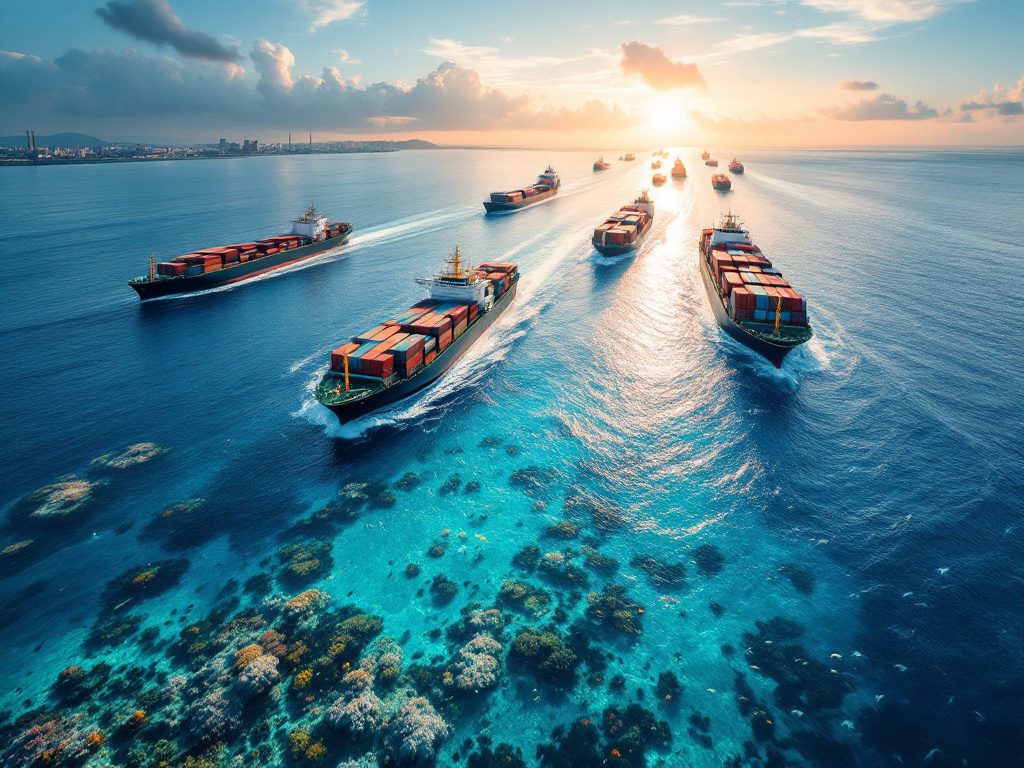
Picture this: colossal vessels cruising our oceans, quietly responsible for approximately 3% of global greenhouse gas emissions. It’s a startling statistic, one that often sails beneath public awareness—but could our seas finally see meaningful change?
Navigating Through Global Negotiations
This week, representatives from 176 nations converged in London under the banner of the International Maritime Organization (IMO), with one clear goal—implementing a global carbon tax aimed at drastically reducing maritime emissions. This tax isn’t merely theoretical; the regulations under discussion are set to become mandatory for ships worldwide, marking an unprecedented step forward in maritime accountability.
These talks gain particular urgency given the IMO’s ambitious commitment to achieving net-zero emissions by 2050. To meet this target, stringent standards for alternative fuels like hydrogen and ammonia are also under consideration, along with robust financial frameworks specifically designed to foster innovation and speed up adoption of greener technologies.
Yet while nations broadly endorse these goals, the details have sparked sharp debate. Pacific island nations and over 60 supportive states have vocally advocated for a straightforward, flat levy on emissions, widely viewed as the most equitable and impactful method of incentivizing industry transformation.
How Equitable is a Flat Levy?
Climate diplomacy expert, Emma Fenton, underscores the urgency and equity inherent in this proposal, firmly stating that a high-priced, simple levy is the optimal strategy. She argues strongly for the flat-rate arrangement, emphasizing it’s “the only equitable way to decarbonize the shipping industry,” ensuring major stakeholders in the sector shoulder their fair share of responsibility for the planet’s future.
Critically, revenue generated from this levy could undertake a dual role; it can substantially reduce the cost gap between fossil fuels and emission-free alternatives, making green technology economically viable faster. Additionally, funds could support vulnerable nations’ climate mitigation efforts, equipping them with resilience amid increasingly severe climate threats.
“A high, flat-rate levy isn’t just about reductions in emissions. It’s about fostering a global solidarity, signaling that every nation, from the richest to the most vulnerable islands, has an equal stake in addressing our shared climate future,” stresses Fenton.
Chasms in Consensus and the U.S. Crossroads
Yet even as many embrace this landmark idea, significant discord simmers beneath the surface. Powerful economies including China and Brazil have proposed alternative cap-and-trade systems, revealing deep divisions that could complicate achieving the fast-approaching 2050 target. This contention highlights the broader complexities and political sensitivities inherent in creating truly global climate solutions.
The United States, curiously caught between economic caution and environmental responsibility, finds itself at an uncertain juncture. While some U.S. policymakers express reservations about potential economic blowback for American consumers—arguably forecasting increased costs passed down from elevated fuel mandates—experts like Harvard economist Rebecca Henderson suggest these fears might be at least partly misplaced. Henderson highlights the small scale of the U.S. merchant fleet and emphasizes the global interconnectedness of the trade industry, suggesting a modest direct economic impact for U.S. consumers.
Indeed, proactive U.S. involvement could yield strategic advantages. Supporting and helping shape this groundbreaking policy would allow the nation to influence global ecological governance substantially. Conversely, hesitancy or outright resistance only risks leaving America sidelined, weakening the nation’s standing in vital international climate discussions.
Historically, maritime shipping has evaded the kind of scrutiny and regulation that sectors like air travel or heavy industry cannot. But increasing acknowledgment that shipping’s heavy fuel oils remain devastating to our environment—a reality evidenced by increased coastal pollution and escalating greenhouse gas emissions—means this era of exemption could rapidly end.
So, are global waters charting an entirely new course with this proposed maritime tax? One thing is certain: The decisions made this week won’t simply impact maritime trade. They’re a test case—a litmus test for international commitment to effective, universal environmental responsibility. At stake isn’t just the sailing efficiency of the world’s shipping fleet—it’s the direction we’re collectively taking toward our climate future.
