
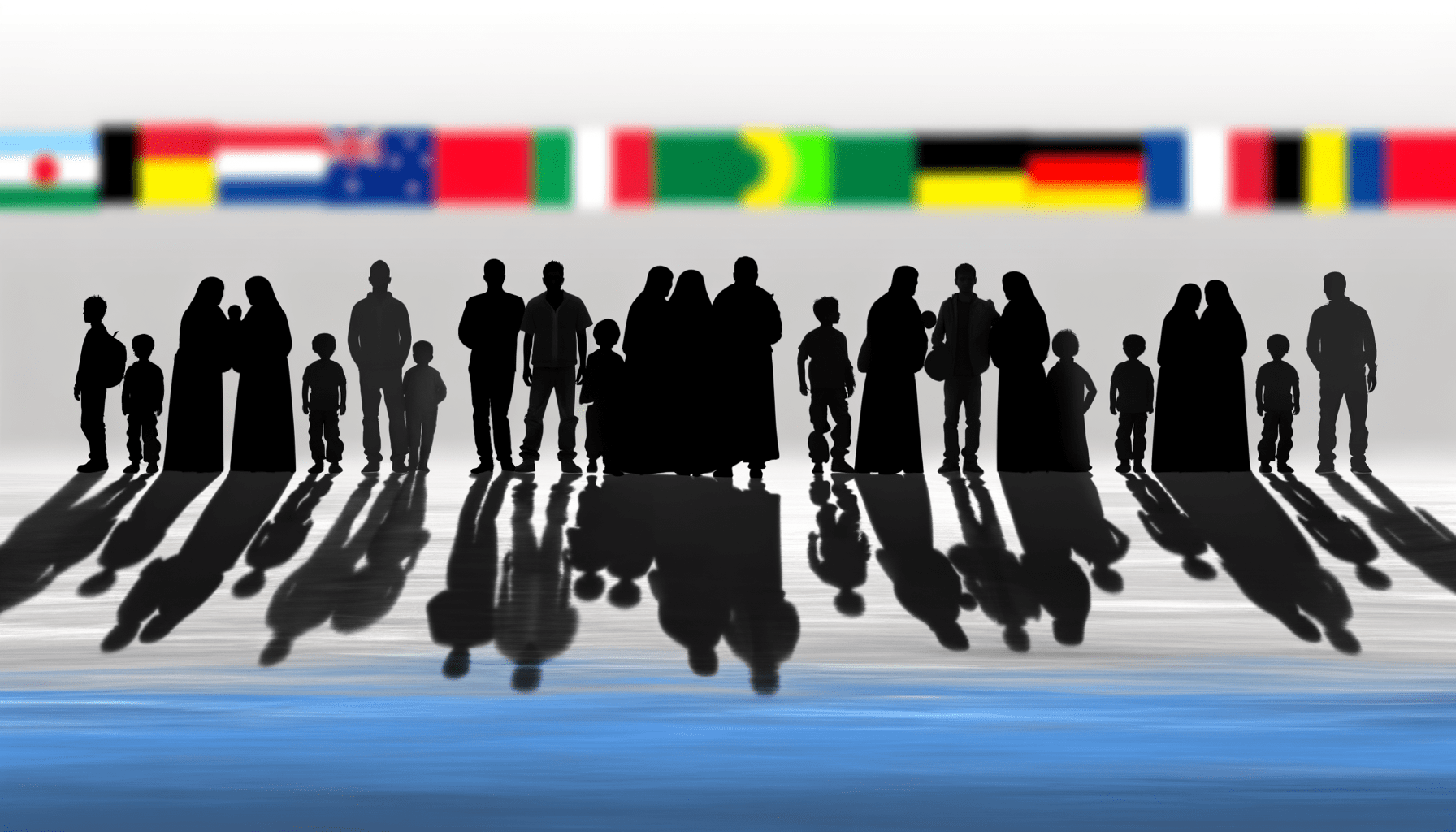
The United States has often been described as a nation built by immigrants, yet its immigration policies continue to be battlegrounds for deeply opposing ideologies. Under Trump’s administration, immigration policies significantly shifted towards isolationism and restriction, while Biden’s presidency seeks a return to more inclusive policies. This ideological conflict symbolizes not just governmental shifts, but also speaks volumes to the broader national identity conversation emerging across America today.
Trump’s Legacy of Isolation and Deterrence
Former president Donald Trump took a hard-line stance on immigration, infamously crystallized in the “Build the Wall” slogan. Trump’s policies were marked by an aggressive reduction in acceptance of immigrants, including high-profile measures like travel bans targeting predominantly Muslim countries for purported “national security reasons.”
Arguably the most controversial of Trump’s decisions was the heart-wrenchingly callous family separation policy. Reports indicate that approximately 3,900 children were separated from their parents under this directive—a stark manifestation of an immigration stance lacking in compassion and rooted deeply in fear.
Furthermore, Trump’s administration aggressively pursued the rollback of birthright citizenship and sought to limit family-based migration. These policy choices faced relentless backlash, both domestically and internationally, with critics pointing out their flagrant disregard for human rights and family unity.
Biden Administration’s Pivot to Inclusive Immigration
The Biden administration distinctly contrasted Trump’s rigid approach, adopting a more inclusive stance toward immigration. Within his tenure, Biden facilitated the legal entry of approximately 5.8 million immigrants, granting citizenship to nearly 3.5 million individuals—one of the most significant accelerations in naturalization during a presidential term.
Biden’s agenda has involved explicitly reversing many policies instituted by his predecessor, tackling the moral stain of family separations head-on by reinstating protections and reunifications for immigrant families affected by Trump’s orders. Yet, despite these progressive moves, concrete systemic challenges within U.S. immigration policy remain unresolved, illustrating the complexity and depth of the immigration policy debate.
The Case of H-1B Visas: Waning Attraction in India
A notable area of immigration policy exhibiting tangible uncertainties is the H-1B visa process. Traditionally, this visa has signaled immense opportunity for skilled finance, IT, and healthcare professionals, notably from Hyderabad—India’s tech industry heartland. Yet, interest in the H-1B route has decreased sharply in India, chiefly due to increased application fees from $10 to $215 and more stringent application processes.
These hurdles, exacerbated during Trump’s restrictive tenure, have precipitated a substantial shift in perception among young professionals in India. Now confronted with uncertain job markets in the United States, many Indian experts are infusing their career aspirations with pragmatism, exploring other nations with friendlier immigration environments.
Iceland’s Welcoming Doors: An Emerging Alternative
As hopeful immigrants increasingly perceive the U.S. landscape as unwelcoming or unstable, other nations have seized the opportunity to open their doors wider. According to Remitly’s Immigration Index 2025, Iceland emerged as a surprisingly attractive destination, clinching the top spot for individuals looking for a higher quality of life, safety, and strong career opportunities.
With an enviable combination of environmental consciousness, excellent healthcare, safety, and a commendably high wage structure, Iceland’s progressive policies offer critical lessons for nations like the U.S.—demonstrating concretely that human-centered, inclusive immigration policies do indeed lead to successful outcomes for both newcomers and native populations alike.
April Visa Bulletin: Signs of Moderate Optimism?
The latest U.S. State Department Visa Bulletin indicated promising movements across several categories, such as EB-1 India and EB-3 Other Workers China, sparking moderate optimism from immigration advocates. Despite these modest gains, continued vigilance is warranted. Advocates suggest these improvements remain incremental, highlighting the need for comprehensive immigration reform firmly rooted in humanitarian ethics and forward-thinking economic pragmatism.
An Ethical Imperative for Reform
These policy contrasts between two administrations elucidate a broader ethical imperative for reform in immigration. America’s values of liberty, inclusion, and fairness must cohesively reflect in its policies, beckoning significant reform initiatives that not only rectify previous injustices but also establish future strategies enabling robust social integration, economic contribution, and community harmony.
Conservatives typically advocate for tight controls frequently invoking security and economic concerns. However, restrictive policies often present a shortsighted perspective, missing the extensive economic, cultural, and social potential immigration holds. This shortcomings evident in recent years demonstrate clearly why comprehensive, compassionate immigration reform is not only a moral but an economic necessity.
In the grand narrative, America’s migration story continues to unfold amidst complex political landscapes. Yet, it is imperative—ethically, socially, economically—for America to rethink and reshape immigration, adopting policies profoundly reflective of empathy and equitable opportunity. Amid these policy tensions, the nation’s foundational ideal remains clear: a country enriched by diversity and strengthened by inclusion.
