
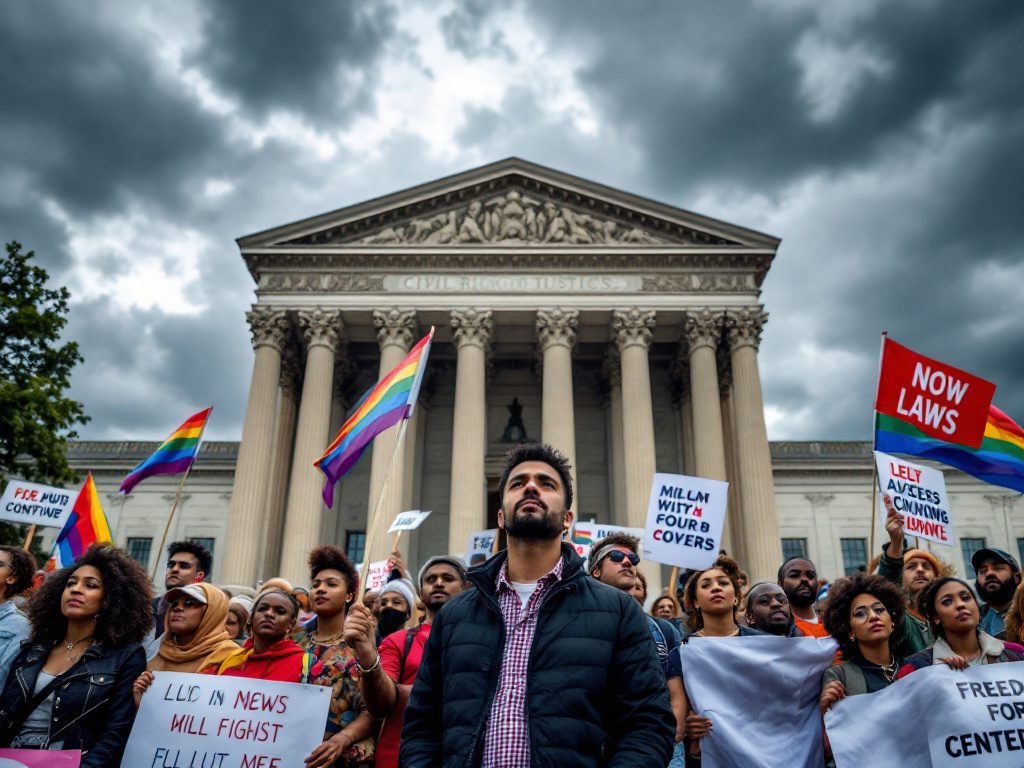
A Law from a Bygone Era, Revived with Dangerous Consequences
Texas, June 2024: At a windswept detention facility in Anson, a group of Venezuelan men waits in mounting fear, clutching hastily handed notices in both Spanish and broken English. For them, the past 24 hours have spiraled from uncertainty to outright panic as busses rumble toward the tarmac. The American Civil Liberties Union (ACLU) alleges that many of these migrants haven’t even seen a judge, let alone shared their story with an attorney. Their crime, according to the Trump administration? Alleged membership in the Venezuelan Tren de Aragua gang — a label that feels as arbitrary as it is damning, given the thin evidence cited by immigration officials.
The heart of the issue is the century-old Alien Enemies Act, a law so rarely used that most Americans have never heard of it in their lifetimes. First passed in 1798 during the fevered days of the John Adams administration, it allowed for the summary removal of foreigners from hostilities-declared nations. Since then, the law has only been invoked in times of war — against German, Italian, and Japanese nationals during both world wars, with grim and often shameful results. Invoking wartime statutes to address 21st-century immigration, especially against civilians fleeing hardship, strikes many as both anachronistic and chillingly authoritarian.
The Trump administration, however, touts the move as necessity. “We’re at war with the gangs,” President Trump declared in a recent rally, “and we’re finally giving law enforcement the tools they need.” By any historical measure, this feels like an overreach. As Harvard historian Dr. Eileen Morales notes, “Never in the Act’s two-century history has it been applied for generalized domestic crime or gang allegations. Its use now sets a precedent steeped in suspicion rather than evidence.”
Due Process Denied: Where the Supreme Court Draws Its Line
Judicial review, the cornerstone of American liberty, is now at the center of the legal battle. In a landmark ruling just weeks ago, the Supreme Court stopped short of barring deportations outright, but did insist that those swept up under the Alien Enemies Act are entitled to a fair hearing and proper advance notice.
Yet, according to the ACLU’s emergency appeals, these guarantees remain paper-thin in practice at facilities like Bluebonnet near Lubbock. Here, dozens of men reportedly learned of their imminent expulsion only hours before being bundled onto buses. Some say they were handed notices in English or rudimentary Spanish, struggling to comprehend the document’s implications. Their attorneys, many volunteering pro bono, are scrambling to reach them before it’s too late.
“The very essence of due process — the right to a hearing, to understand the evidence against you, to seek counsel — is what separates a democracy from arbitrary rule. Bypassing these foundations isn’t just a procedural lapse. It’s a crisis for American justice.”
– Melanie Voss, ACLU immigration attorney
Beyond that, the administration claims it’s fulfilling its obligations under the law, but details are withheld “for operational security.” Department of Homeland Security Assistant Secretary Tricia MacLaughlin has stonewalled requests for transparency, stating, “We are not going to reveal the details of counter terrorism operations.” This level of secrecy — paired with accusations that legal counsel and even basic translation services are being denied — leave families in unbearable suspense, fearing their loved ones will disappear into the machinery of deportation without a trace or a chance.
Human Cost, Historical Parallels, and the Road Ahead
What happens when a government relies on laws created before the abolition of slavery to decide the fate of vulnerable people seeking sanctuary? History offers sobering answers. The Japanese American internment of World War II, now regarded as a stain on U.S. history, was justified — at least on paper — through similar emergency powers. Few would defend those decisions today.
This time, the stakes stretch beyond legal abstractions. Over 100 migrants have already been sent to the notorious Salvadoran CECOT megaprison, a place Amnesty International describes as “inhumane and irreversible” in its effects. The specter of mistaken identity, the rapidity of removals, and the lack of meaningful judicial review evoke an unsettling question: Can we ever be certain we’re not repeating the injustices of the past in the name of public safety?
The ACLU is calling on justices to issue a sweeping injunction — not out of sympathy, but out of constitutional necessity. Only with at least 30 days’ bilingual notice and robust access to counsel, they argue, can any semblance of fairness be preserved. Attorneys for the detained emphasize that in previous cases where courts intervened, proceedings slowed, mistakes were caught, and innocent people were spared wrongful deportation.
Critics of the administration’s approach point to mounting evidence that sweeping, unaccountable enforcement produces chaos: children separated from their parents, asylum-seekers mistakenly deported to countries where their lives are at risk, and a labyrinth of trauma that will echo for generations. “The point of law,” Professor Janelle Rivera of the University of Texas reminds us, “is not the efficiency of government, but the protection of the individual from the overreach of the state.”
America’s commitment to fairness should not be hostage to political winds or throwback laws. Our national character is measured not in our rhetoric, but in those moments when protecting human rights is the harder path. The fate of these Venezuelan migrants presses that challenge on the current Supreme Court — and on all of us who believe due process is more than a slogan, but a birthright worth defending.
