
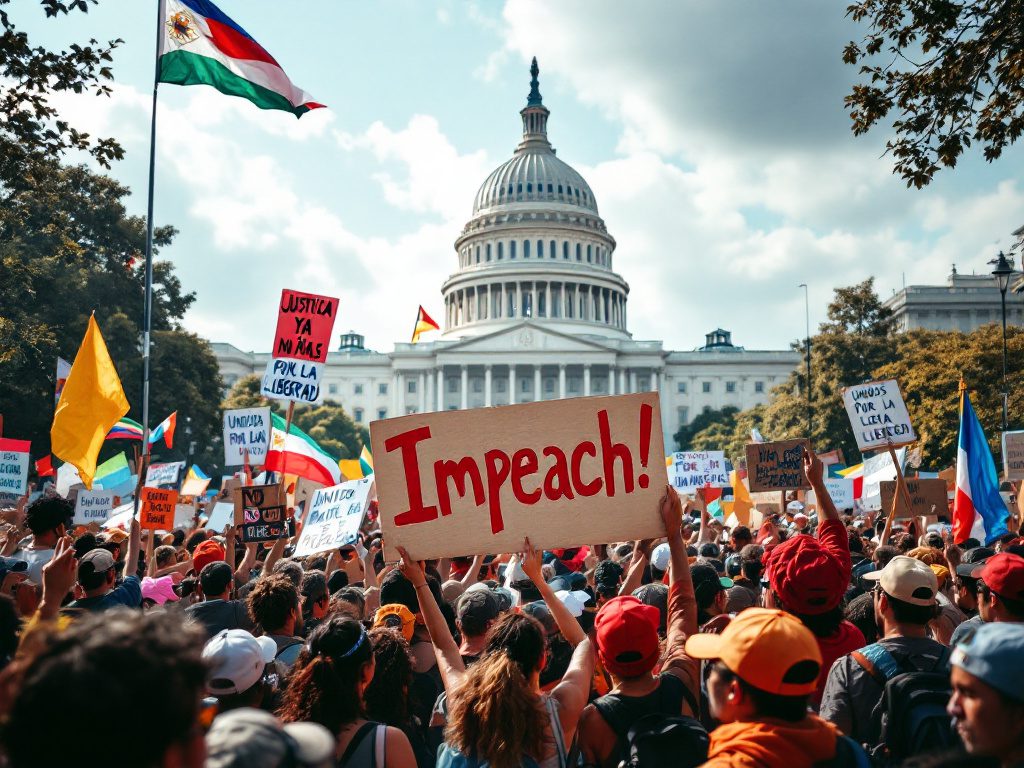
At a moment when political divisions run deep and public frustrations mount, Congressman Al Green (D-TX) has delivered a powerful promise to constituents and progressive activists alike: Within the next thirty days, he will formally submit articles of impeachment against President Donald Trump. Addressing a passionate crowd gathered at the ‘Hands Off!’ rally in Washington, D.C., Green encapsulated his resolve by evoking the timeless story of a small but determined David confronting a seemingly invincible Goliath, declaring boldly, “I’m coming for you, Mr. President.”
Building Momentum Amidst Nationwide Protests
The backdrop to Green’s announcement is a surge of civil mobilization—thousands of protesters convened at the U.S. capital, echoing a sweeping dissatisfaction that’s resonated globally. Representatives from veterans’ groups, labor unions, educators, and civil rights activists passionately spoke at the gathering, objecting not only to Trump’s perceived moral failings but also to concrete policy decisions harming vulnerable communities. The Trump administration’s aggressive budgetary cuts, especially anticipated reductions in funding for vital social programs, have galvanized opposition, pushing critics to turn outrage into organized resistance.
Congressman Green, previously censured by the House for boldly interrupting Trump’s joint address to Congress, described the urgency of a Senate that would, in his words, “convict him this time.” Directly highlighting Trump’s controversial track record, Green cited a staggering “thirty-four felony convictions” and underscored the significance of Trump’s unprecedented legacy as a twice-impeached president. This outspoken stance mirrors the current progressive sentiment that accountability must accompany voiced outrage.
“My friends, for every Goliath, there is a David… This David is going to bring articles of impeachment against you within the next thirty days. You don’t deserve the office you hold.” — Rep. Al Green
A Battle Against Harmful Policies
The essence of the protest—and Al Green’s public denouncement—transcends the personal and significantly connects to Trump’s substantial policy shifts gripping the nation. Prominent among these concerns are plans perceived to undermine key social safety nets such as Medicare, Medicaid, and Social Security. Critics, including demographics often critical of Trump advised policy, vehemently assert that such cuts disproportionately affect America’s elderly, disabled, and economically disadvantaged. The White House has predictably pushed back sharply against these criticisms, aggressively flipping the narrative by claiming Democratic policies would “bankrupt Social Security and crush American seniors.” Yet, beyond political spin, the tangible anxiety of vulnerable communities remains palpable amidst these repeated debates.
Green’s impeachment proposal accompanies broader progressive worries about President Trump’s misuse of executive power, specifically his extensive influence over both the military and judicial branches. This comprehensive narrative questioning the president’s overall fitness for office—and the integrity of his administration—has repeatedly surfaced in activist circles, feeding into a burgeoning movement determined to shape political outcomes rather than merely protesting them.
A History of Determined Opposition
It’s important to acknowledge that Congressman Green is no newcomer to impeachment advocacy. Historically, despite unsuccessful attempts during past Trump administration terms, Green has remained staunchly resolute, regularly highlighting issues frustrating progressives who believe fundamental American values—like equality, democracy, and justice—remain under siege during the Trump administration. His unyielding conviction, as he stressed in Washington, is rooted not merely in political opposition but in perceived threats to fundamental democratic institutions and ethical standards. Indeed, Green positions impeachment proceedings less as a congressional courtesy or formality, and more as an essential moral imperative championed by a movement demanding accountability for ethical and constitutional breaches.
You might well ask: What’s the likelihood of success this time around? A Senate vote, while possible, remains uncertain given historical context and current political calculations. The Senate environment crucially shapes whether an impeachment resolution transcends symbolic importance to carry tangible legislative consequences. However, the current atmosphere—characterized by rapidly shifting allegiances and strained patience from influential sectors—does seem distinctively more charged than earlier attempts. Green’s announcement isn’t just about catalyzing impeachment proceedings; it’s about strengthening collective resistance and delivering a unified progressive front against what many critics deem an increasingly alarming executive overreach.
In essence, Green’s latest impeachment initiative reflects both a powerful aspiration within America’s progressive communities and a tactical recognition of the necessitated fortitude required to confront politically entrenched positions. Whether this moment translates political momentum into durable institutional change remains uncertain, yet Al Green’s critical challenge undeniably sparks a consequential assessment of democratic accountability at a pivotal moment for the nation.
