
Bold Spending, Uncertain Dividends
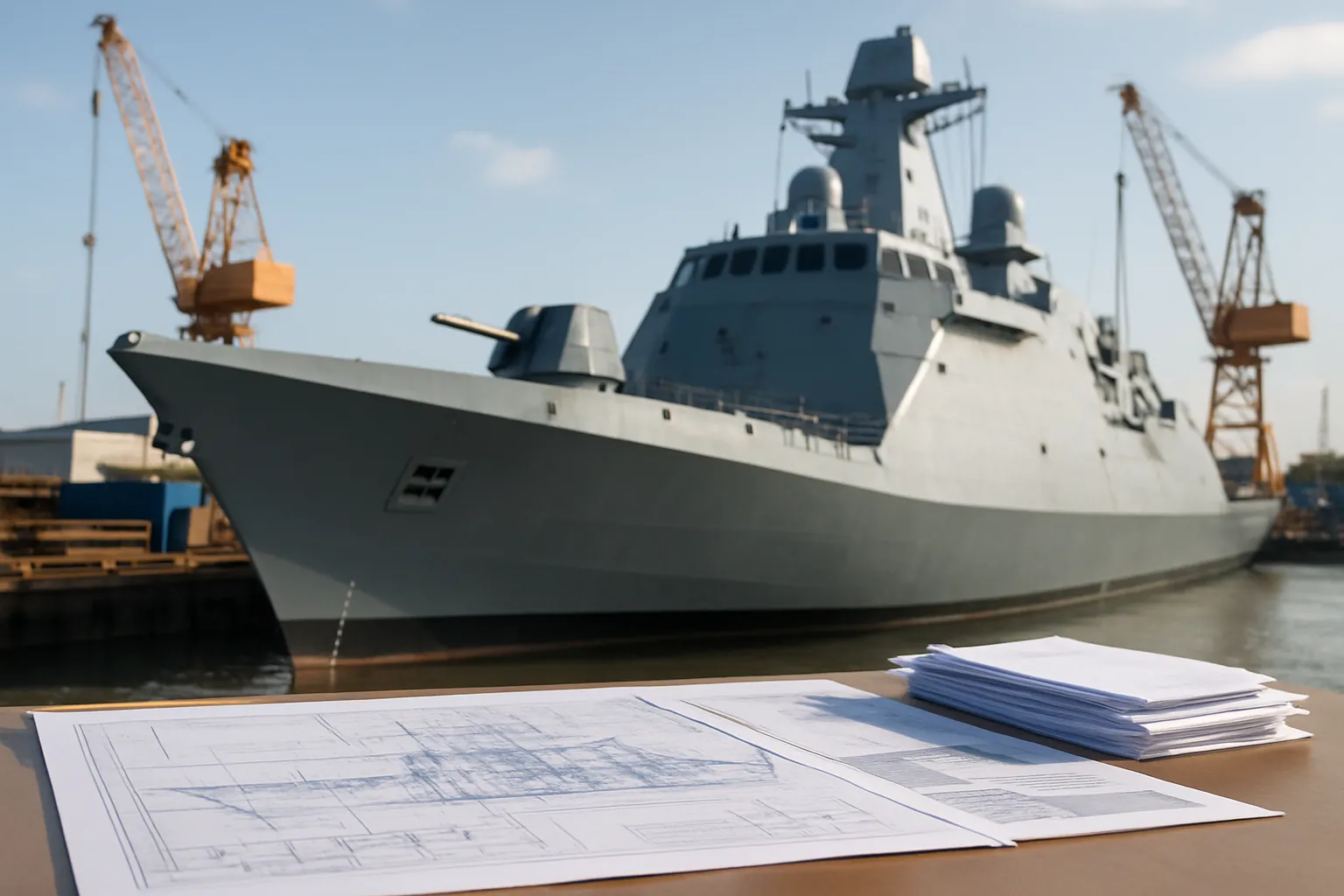
Few government announcements land with the echo of history as decisively as Australia’s recent $12 billion gamble on its submarine and shipbuilding future. Prime Minister Anthony Albanese’s pledge, unveiled just before a highly anticipated U.S. visit, represents a staggering leap not only in dollar amount—twelve times the scale of the Commonwealth’s own Perth City Deal—but in national ambition. This is Australia’s largest-ever investment in naval infrastructure. Yet, the optics and consequences ripple well beyond shipyards and balance sheets.
For supporters, the new Henderson defence precinct is a masterstroke, securing jobs and forging Australia’s place at the heart of a strategic partnership with the United States and United Kingdom through the AUKUS pact. If all goes according to plan, by 2027, the site will welcome five nuclear-powered submarines and up to 1,000 American personnel as part of the Submarine Rotational Force-West. As Defense Minister Richard Marles announced, this is more than just bricks and mortar. It’s an overt declaration that Australia intends—despite escalating global uncertainty—to take a leading role in Indo-Pacific security.
But is it a plan anchored in necessity or drowned in political showmanship? Observers on both sides of the aisle recognize the complexity of the moment, shaped as much by the specter of a rapidly rising China as by America’s convulsive domestic politics. With the AUKUS deal facing fresh scrutiny under Donald Trump’s renewed “America First” rhetoric, the long-term reliability of this strategy is anything but assured.
This Goes Beyond Submarines
Look beneath the surface: Henderson’s transformation isn’t just about nuclear-powered attack submarines or the forward rotation of U.S. hardware. The announced funding also supports the construction of new landing craft for the Army, future general-purpose frigates, and vital maintenance facilities that will deliver real skills and stable livelihoods. The anticipated 10,000 jobs—ranging from tradespeople to skilled engineers and project managers, with routes for both local workers and allied military specialists—promise to fortify the economic and social fabric of Western Australia.
Yet, job creation must be viewed within a wider economic tapestry. Western Australia’s Premier Roger Cook, even as he accompanied federal officials on this historic rollout, has been traveling to Beijing and Tokyo with a purpose: how to moderate, not erase, the state’s overwhelming trade reliance on China and Japan. The timing is no accident. Australia’s government knows the dangers of economic over-dependence—harshly punctuated during recent Chinese trade sanctions on barley and wine—and is now tying its fortunes to global partnerships that claim to stand for open, rules-based order in the Indo-Pacific. This pivot, as Harvard economist Jane Golley recently told ABC News, hinges on “balancing economic interests with security obligations,” a reality that isn’t without risk.
Australia’s approach to defense technology is also accelerating. In parallel to the submarine base buildup, Canberra recently injected $1.7 billion into local development of ‘Ghost Shark’ autonomous undersea vehicles in collaboration with U.S. startup Anduril Industries, a project warning of a future where unmanned systems reshape maritime security altogether. “
Australia is trying to future-proof not just its navy, but its entire strategic outlook, betting on technology to do the heavy lifting where politics may fail.
“
The Conservative Contradiction
Conservative critics, predictably, frame the Albanese government’s actions as reactive—a panicked overture to wavering U.S. commitment, masking deeper inertia over local industry policy. Yet it’s difficult to square these attacks with reality. Years of conservative leadership yielded little more than delay and drift on shipbuilding procurement, outsourcing major contracts overseas and leaving Australian workers out of the nation’s own defense renewal.
Progressive voices are right to be wary of oversized military contracts, but this isn’t a replay of post-9/11 blank-check era spending. The Albanese government has moved, albeit imperfectly, to shore up not just defense but also skills development and local manufacturing. As former Chief of Navy Chris Barrie observed on RN Breakfast, the real test will be sustaining political and community support over the next decade, especially if American politics swerve again. With the Trump orbit openly questioning the utility of AUKUS, what insurance does Australia have against U.S. backtracking or a return of isolationism?
A closer look reveals the deal’s dual edge: it promises sovereignty via collective security, even as it ties Australia’s fate to volatile superpower agendas. For some, that’s the price of global relevance. For others, it’s a dangerous bet on forces well beyond Canberra’s control. Yet if history is any guide, retreat from engagement only amplifies risks, as seen in the failed protectionist experiments of the 1930s or the disastrous supply chain gaps exposed by COVID-19. An open, prepared, and assertively independent Australia—committed to alliances but not beholden to them—remains the best antidote to a world growing darker and more divided by the year.
What Does Real Security Look Like?
So what are the lessons for progressives, and for any reader who wonders where their tax dollars are truly going? Real security requires more than weapons and warships. It’s about supporting communities, fostering technologies that serve both defense and civil needs, defending sovereignty without lurching into jingoism, and confronting the climate and social disruptions that genuinely threaten long-term peace. Massive investments like Henderson should come with vigorous debate, oversight, and a commitment to future generations—not just photo ops or election cycles.
Amid growing polarization, Australia’s $12 billion defense bet is more than a down payment on submarines or an anti-China counterpunch. It’s a litmus test of whether a wealthy democracy can steer its own destiny—listening to allies, yes, but shaping its own values above all. That’s the danger, and the opportunity, at the heart of Albanese’s momentous pledge. The world will be watching not just what ships are launched, but what kind of nation emerges from the shipyards.
