
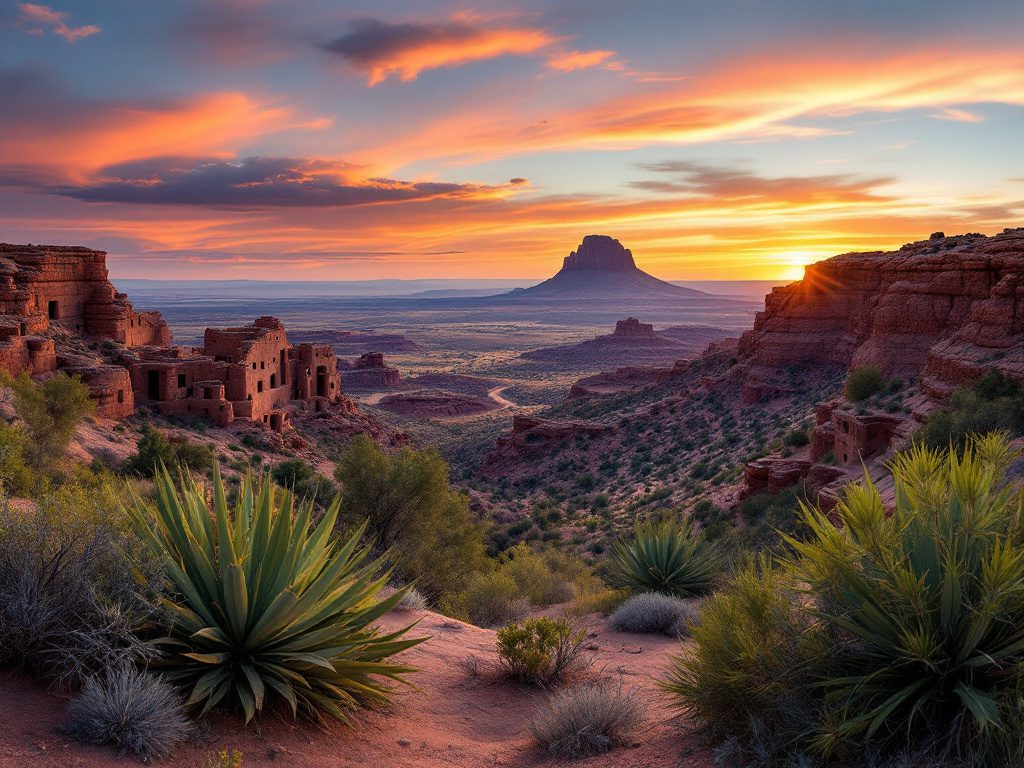
The Unfolding Story of a Living Heritage
In the dry, sunbaked expanse of northern New Mexico, ruins rise from the landscape—a mosaic of centuries-old stone walls and mysterious kivas, echoing with the silent footprints of ancestors. For generations, the Picuris Pueblo people have told stories of their forebears who helped shape Chaco Canyon’s Pueblo Bonito, one of North America’s most arresting ancient sites. For too long, skeptics dismissed these stories as myth. Today, the evidence is no longer just oral or cultural; it is inscribed in their very DNA.
The convergence of science and tradition marks a pivotal moment not only for the Picuris, but for Indigenous communities everywhere battling to have their histories truly recognized. Recently published research in the journal Nature confirms a direct genetic link between the contemporary Picuris Pueblo tribe and the ancient inhabitants of Pueblo Bonito. Led by a respectful partnership between tribal leaders and geneticists, the study analyzed genetic material from 16 individuals buried at Pueblo Bonito, comparing it to DNA from 13 living Picuris members. The result: a clear genomic thread tying past and present across almost a millennium of history.
This genomic connection is far more than a scientific milestone. For the Picuris, it is a triumph of identity and resilience. As former Picuris Governor Craig Quanchello said in interviews, having scientific affirmation of their ancestral claims is “both healing and empowering—proof of what we’ve always known about our origins.” This sentiment resonates through Native nations across the United States, where policymakers and historians have too often sidelined Indigenous perspectives.
Science, Sovereignty, and the Battle for Chaco Canyon
A closer look reveals that the fight for Chaco Canyon is more than just an academic debate or a matter of personal pride. This arid region—home to Pueblo Bonito, a UNESCO World Heritage site—is a flashpoint in ongoing wars over land, resources, and sovereignty. Despite their historic claim, the Picuris Pueblo—once among the largest of Pueblo tribes, now the smallest—have repeatedly been marginalized or excluded from key policy discussions about the canyon.
Oil and gas companies now circle the edges of Chaco Canyon, seeking drilling rights on the very lands where Picuris ancestors built their homes and held ceremonies. Some neighboring tribes, facing economic hardship, contemplate resource extraction as a means of survival. Picuris leaders, though, take a stand for preservation. As tribal governor Craig Quanchello told Nature, their position is clear: “Chaco is not just an archaeological site. It’s our living legacy.”
The new DNA study, orchestrated with full tribal sovereignty and consent—a crucial element, given the longstanding colonial injustices of archeology—strengthens calls for greater tribal influence in managing Chaco’s future. According to Joseph Yracheta, Executive Director of the Native BioData Consortium, scientific confirmation alone does not always guarantee legal or policy victories. “So they have the data. What’s next?” Yracheta pointedly asked in a recent panel, highlighting the frustratingly slow path from discovery to governmental acknowledgment or restitution.
“Chaco is not just an archaeological site. It’s our living legacy. The connection is in our stories, and now it’s in our DNA.” – Picuris Governor Craig Quanchello
No DNA study alone can secure land rights or stop industrial development. But it can tip the scales, raising the moral stakes for government agencies and the public. In an era of climate crisis and diminishing sacred spaces, failing to act on such evidence sends a chilling message about whose heritage is deemed worthy of preservation.
From Ancestral Memory to Policy: The Road Ahead
Beyond the headlines, the Picuris community faces difficult realities. Their population, once robust, dwindled sharply after European contact, with an estimated 85% loss in the early colonial era. These traumas—disease, forced assimilation, land theft—continue to shape tribal life and identity. Despite hardships, the Picuris have maintained a continuous and unbroken connection to Chaco, preserved not just in genetic markers, but in pottery, language, and tradition.
Recent years brought both promise and new peril. Tribal leaders now find themselves at the heart of a high-stakes debate: should ancestral sites be defended at all costs, or do dire economic conditions justify some degree of resource exploitation? According to a 2023 Pew Research Center report, nearly 70% of Native Americans polled claimed that protecting sacred sites is essential for their community’s future well-being, yet almost half said they’ve felt pressured to compromise due to outside economic pressures.
For the Picuris, science is an ally—never a substitute—for the rich body of oral tradition passed down through generations. Harvard archaeologist Patricia Crown reminds us, “All the high-tech DNA work in the world means little if it’s not done with, by, and for Indigenous people themselves.” In the Picuris-led study, mutual respect was foundational: the tribe controlled access, determined outcomes, and ensured findings buttressed—not supplanted—their established cultural narratives. This model could well set the standard for future scholarship, as calls grow louder for ethical partnerships.
What’s at stake is more than a contest over acreage or historical credit. It’s the fate of a community’s soul—and, by extension, America’s own reckoning with a legacy of erasure. Shouldn’t every effort be made to preserve irreplaceable sites like Chaco, not for trophy photos, but for the descendants who walk those grounds, praying and remembering? Recognition, when built on both scientific and traditional grounds, is transformative.
Real justice in heritage protection demands both a change in policy and in national values: respect, humility, allyship, and listening to those whose ancestors built the foundations of our collective story. The thread that runs from the stones of Pueblo Bonito to the DNA of the Picuris Pueblo is evidence—and a call to act. Not just to remember, but to honor, protect, and rebuild.
