
The Flashpoint at a Queens Town Hall
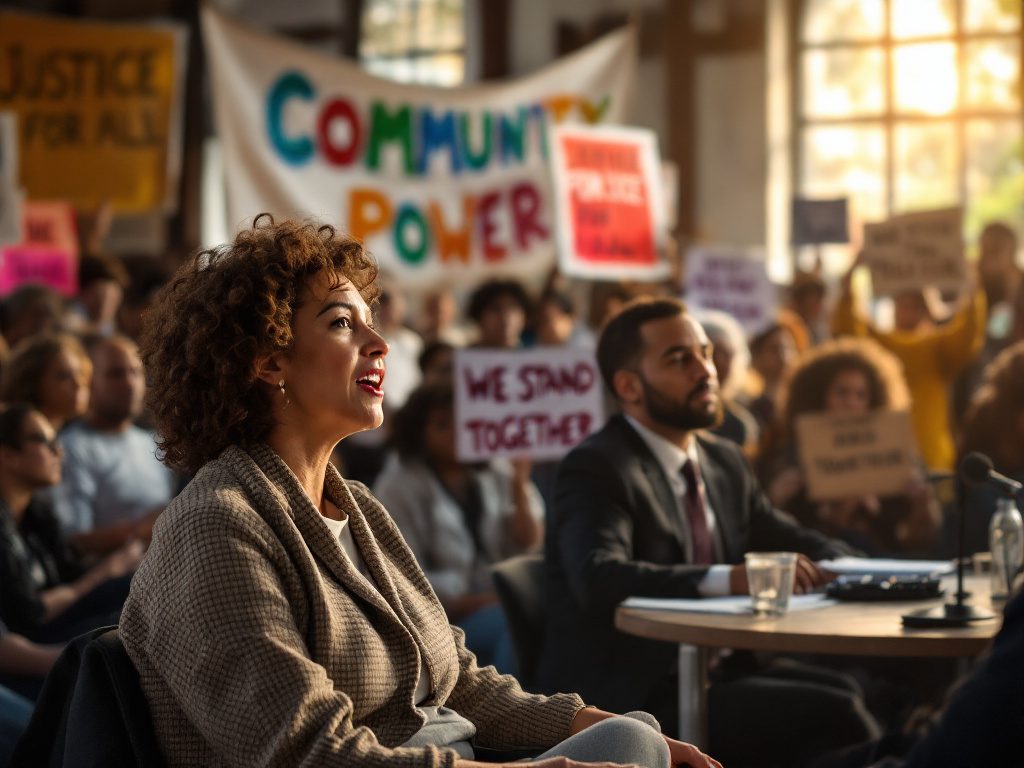
Energy crackled in the air at a recent town hall meeting hosted by Rep. Alexandria Ocasio-Cortez (D-NY), but not for the reasons organizers had planned. Before Ocasio-Cortez could deliver her first slide on the Trump administration’s proposed cuts to local healthcare—an issue directly affecting thousands in her diverse New York district—a protester in the crowd sprang up, derailing the night’s agenda. The woman, identifying herself as a healthcare worker and former supporter, shouted accusations of complicity in what she called a “genocide” in Gaza. Security and staffers attempted calm, but acrimony swelled. Audience members erupted with chants of “Shame! Shame!” and eventually, the protester was escorted out, still hurling epithets: “You’re a liar! You’re a war criminal!”
The disruption offered a striking illustration of progressive activism’s unruly energy, as well as the growing pains of a movement whose broad coalition doesn’t always align in tactics or priorities. According to video and witness accounts, Ocasio-Cortez attempted to de-escalate, but the protester was unyielding—even as she was ushered to the doors, she shouted, “Shame on you, I used to support you.” For any lawmaker used to tough questioning, this was no ordinary dissent—it was a symptom of the fraught moment in American politics, where frustration over U.S. support for Israel’s actions in Gaza has spilled from campus protests to the very heart of progressive power.
Progressive Ideals, Real-World Tensions
What drove such raw emotion? For the activist who hijacked the stage, Gaza is not a distant conflict but a moral crucible. Her anguish—echoed in similar disruptions aimed at Democratic politicians across the country—reflects the urgency felt by a vocal segment of the left that believes Democratic leadership isn’t pushing hard enough to end U.S. involvement in Israel’s military campaign. National polls show growing generational divides within the party. A Pew Research Center survey last month found that while Democratic-leaning voters under 35 overwhelmingly disapprove of current U.S. policy toward Gaza, older Democrats are more likely to see the issue as complex or remain steadfast in their support for traditional allies.
Behind the headlines and viral video clips, a deeper question gnaws: Can the Democratic Party provide a political home for both urgent antiwar activists and incrementalist pragmatists? Town halls like Ocasio-Cortez’s are designed as forums for exactly this sort of dialogue. After the protester’s removal, the congresswoman addressed the tension head-on. “We welcome strong disagreement… but we have to follow our ground rules,” Ocasio-Cortez reminded the crowd, striving to balance the demand for respectful, substantive debate with the realities of impassioned dissent.
“Disagreement is not just welcome, it’s necessary—but let’s not deprive our neighbors of a conversation that could help all of us grow.”
Her words, earnest but steely, signaled both resolve and an understanding of the moment: Progressives aren’t just “woke” college students or Twitter activists. Many, like the heckler, are ordinary workers who feel abandoned by incrementalism when innocent lives hang in the balance. Ocasio-Cortez’s challenge isn’t only about defending her positions; it’s about holding together a coalition straining under the weight of urgent moral and policy questions.
Unrest, Ambition, and the Future of Political Discourse
The Gaza protest didn’t come in a vacuum. In the shadow of relentless images from Rafah and relentless policy debates in Washington, Democratic lawmakers nationwide face an increasingly vocal constituency unwilling to accept compromise. Recent weeks have seen a surge of campus encampments, direct actions, and public disruptions, ranging from local meetings to the chambers of Congress.
What makes the Ocasio-Cortez event stand out is not simply the fiery display but the context. The congresswoman, who recently raised a staggering $9.6 million from 266,000 mostly small-dollar donors—her average donation just $21—remains emblematic of a party at a crossroads. Grassroots enthusiasm is fueling her ascent, fueling rumors about her political future, possibly even a presidential run. Yet, as Harvard political scientist Theda Skocpol has observed, movements built on moral urgency risk “burning too hot and too fast,” sometimes alienating the very leaders most likely to enact their core demands.
Beyond that, these disruptions force a reckoning with American political rituals. Town halls are supposed to be spaces where ordinary citizens pose tough questions and hold their elected officials to account. But what happens when anger drowns out dialogue? Do these tactics advance the cause—or fracture organizing efforts and discredit movements in mainstream eyes? A closer look reveals the tension between holding the powerful accountable and creating the civic space necessary for democratic deliberation.
Ocasio-Cortez herself acknowledged this tightrope, drawing a line between passionate advocacy and the need for procedural order. “I want everyone to have a chance to participate,” she insisted after the disruption, “but we must ensure everyone is heard.” This approach aims to recognize the pain and urgency without letting it devolve into chaos—a balancing act critical to the survival of progressive politics in an era defined by polarized noise and social media virality.
Across party lines, conservatives will likely seize on these disruptions to peddle the myth of left-wing chaos, hoping to stoke division and undermine momentum for substantive policy change. Yet, as historian Jill Lepore notes, American progress has always depended on “contentious, even unruly” public engagement—from abolition to civil rights to the antiwar protestors of Ocasio-Cortez’s own generation. The real test, as this latest town hall upheaval shows, is whether leaders and movements can translate anger into enduring coalitions and pragmatic change.
