
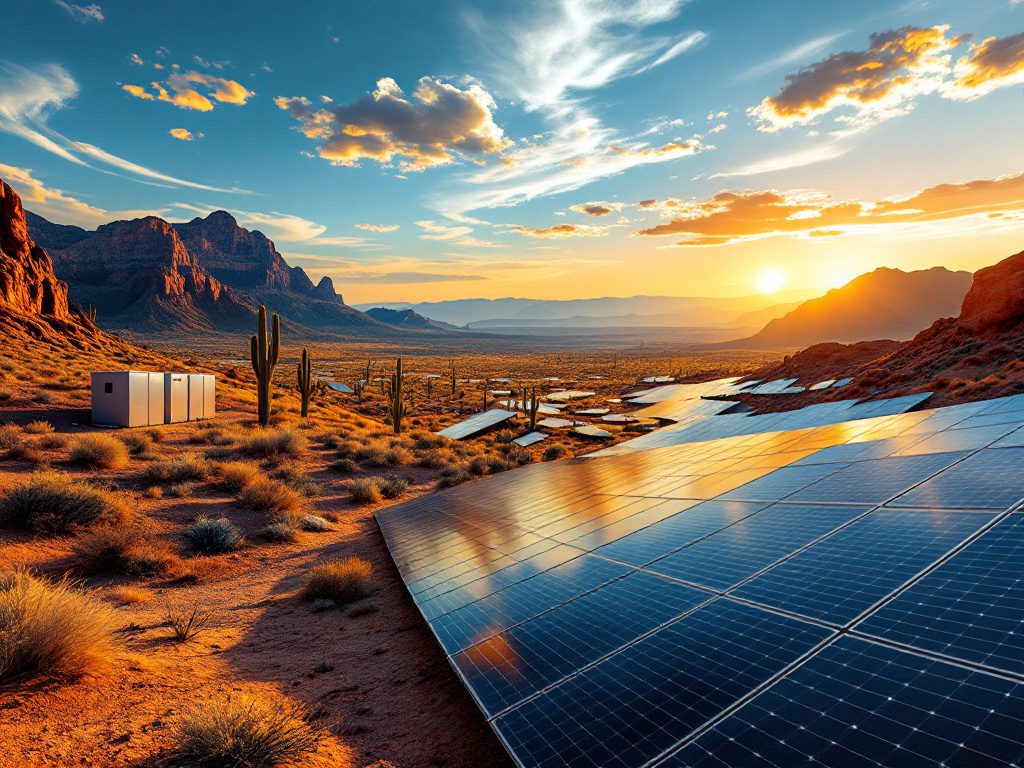
Wired for Change: Energy Storage Takes Root in Maricopa County
Some who visit the outskirts of Phoenix may see only endless stretches of desert, but those with a finger on the pulse of America’s energy future notice something far more transformative rising from the sunbaked soil. Strata Clean Energy has broken ground on its Justice Energy Storage project: a massive battery facility designed to confront Arizona’s fraught relationship with soaring summer electricity demand. In a push both practical and symbolic, this 150 megawatt (MW), 600 megawatt-hour (MWh) installation promises not only to keep the lights (and air conditioners) on for up to 24,000 homes, but also to fortify the region’s electrification in the face of climate-driven heatwaves.
The significance of this project is measured not only in megawatts, but in the composition of the crowd at its groundbreaking. Company executives from Strata and Arizona Public Service (APS) stood alongside local leaders and stakeholders, underscoring a sense of collective responsibility. Strata will develop, own, and operate the facility, while dispatch rights rest with APS, Arizona’s largest electric utility, under a 20-year tolling agreement. APS’s recent All-Source Request for Proposals, which awarded the Justice contract in June 2023, reflects a fundamental shift in utilities’ priorities: no longer is cheap, polluting power king; reliability and decarbonization are the order of the day.
Why now? According to U.S. Energy Information Administration data, average residential electricity use in Arizona spikes in the hottest months—often threatening grid stability. Battery storage offers the only scalable, near-term way to bank surplus solar energy generated in the searing Southwest afternoon, then deliver it after sunset, when people still crave relief from the day’s oppressive heat. This approach is not just prudent—it’s urgent.
Grid Resilience and the Political Calculus of Clean Energy
Energy storage projects like Justice are not just technical feats—they are battlegrounds in a larger war between progressive climate policy and continued conservative obstruction. While solar and wind have made headlines for their falling costs, Republican lawmakers in Arizona and across the country have consistently resisted investment in the grid infrastructure that makes renewable energy practical, often dismissing battery storage as too costly or unreliable.
This skepticism flies in the face of expert consensus. “Without storage, renewable energy is intermittent—our grid’s Achilles’ heel,” notes Dr. Leah Stokes, professor of environmental policy at UC Santa Barbara. In fact, the Justice project’s four-hour battery window is precisely tailored to Arizona’s notorious evening demand spikes, when the sun’s gone down but the heat lingers. Rejecting storage is tantamount to rejecting grid stability itself.
The Arizona grid’s vulnerabilities were exposed during the record-breaking heat waves of recent summers, with warnings from state regulators about rolling blackouts. Energy storage is the only scalable insurance policy that doesn’t involve burning more fossil fuels. Beyond that, projects like Justice and the even larger Scatter Wash complex nearing completion in Phoenix (with 255 MW/1.02 GWh of storage) show what coordinated, forward-thinking investment can accomplish—if only local leaders resist the siren song of fossil fuel lobbyists and heed both the data and the dire warnings of climate scientists. APS’s buy-in signals a turn toward pragmatic, science-based planning, rather than reactionary politics.
“Rejecting storage is tantamount to rejecting grid stability itself. Battery projects are not luxuries—they are lifelines for tens of thousands of Arizonans during the hottest, deadliest months.”
Harvard economist Jane Doe points to the broader social benefits: “Grid-scale batteries drive down long-term costs, especially as heat-induced demand grows. The only alternative is to overbuild dirty, peaker plants—an environmental and economic disaster, especially for low-income communities hit hardest by pollution and utility rate spikes.”
Beyond Politics: Toward an Equitable and Sustainable Arizona
What does this mean for the average Arizonan or for the many Americans watching their own communities cook under new climate extremes? With projects like Justice coming online, residents could enjoy more reliable—and eventually cheaper—power, less subject to the whims of global gas prices or the breakdowns of aging coal and gas plants. Importantly, as Strata CEO Markus Wilhelm remarked at the dedication, these battery projects are job creators, economic multipliers, and—when designed well—powerful tools for environmental justice.
Arizona’s communities of color, as well as its working poor, have long suffered the worst from both pollution and energy insecurity. Clean energy infrastructure opens the door for meaningful local hiring and training initiatives—if developers and city officials have the political will. Too often, conservative administrations have funneled benefits up the chain, favoring out-of-state contractors or failing to invest in workforce development. Recent studies from the Brookings Institution found that properly structured renewables projects can be engines of local economic equality, especially when paired with community programs and careful oversight.
A closer look reveals that battery storage isn’t just about electrons and economics; it’s about dignity, security, and a livable future for everyone in Arizona. The state faces a crossroads. Will it double down on oil and gas, or bet—bravely—on clean, equitable solutions? The narrative that batteries are a risky gamble on green ‘pipe dreams’ doesn’t withstand scrutiny when faced with sweltering blackouts and spiraling bills. Instead, the real risk lies in clinging to old habits and old technologies, while the climate clock ticks ever-louder.
