
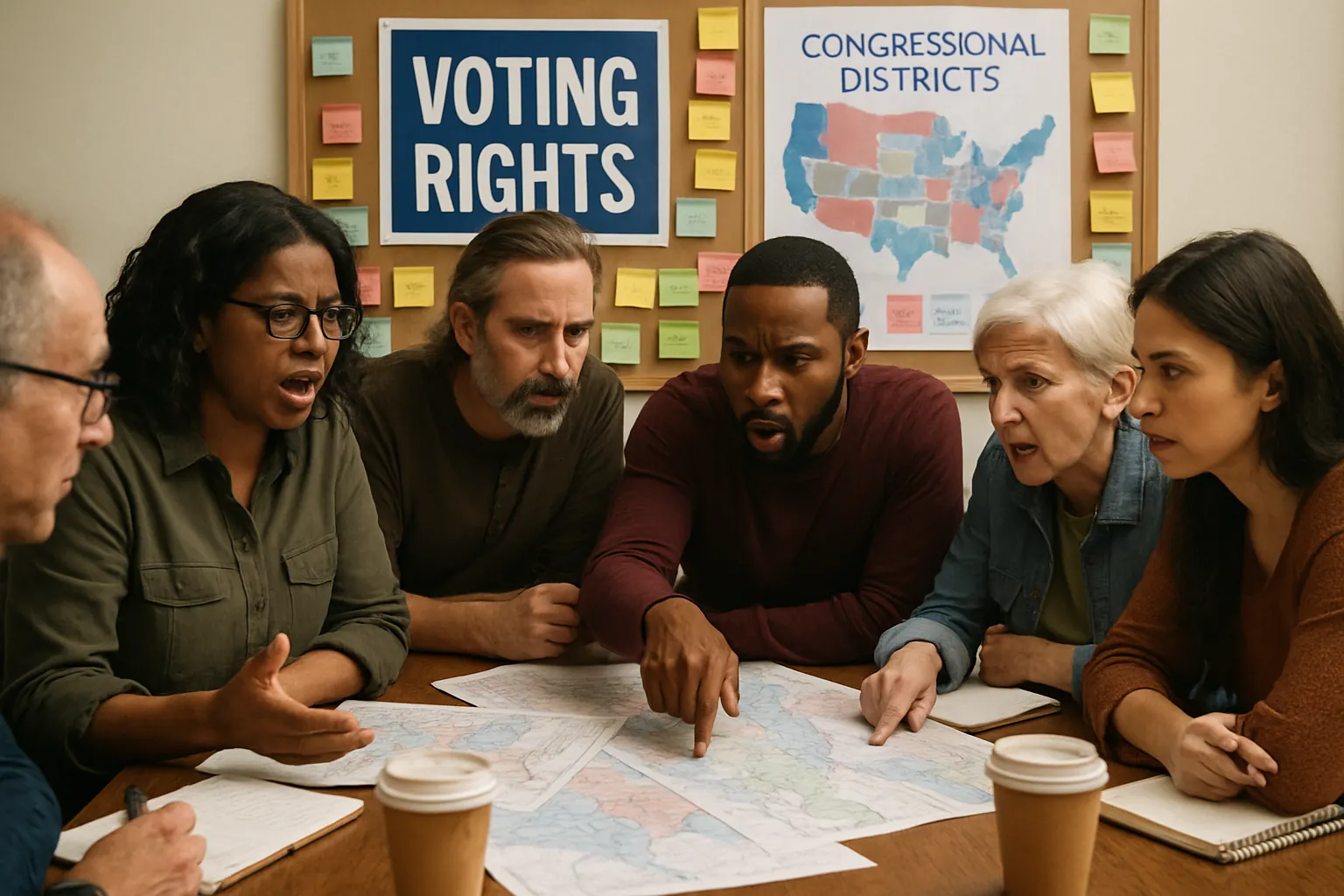
The Arrest Heard Across Texas: Voices Silenced in the Capitol
Testifying at the Texas Capitol often seems more ritual than reckoning—a prescribed display of democracy before predetermined outcomes. But when Isaiah Martin, a young Black Democrat and University of Houston graduate, refused to be just another voice cut short during last week’s explosive redistricting hearing, the room’s grim choreography of disengagement was upended. As Capitol police forcibly removed—the word “dragged” is not hyperbole—Martin from the chamber, the moment crystallized a basic truth echoing through the legislative halls: the right to protest is fundamental to American democracy, yet that right is increasingly precarious when minority voices challenge structural power.
Martin’s arrest on misdemeanor charges (disrupting a meeting, criminal trespass, resisting arrest) has ignited a tempest over Republican-dominated redistricting—an effort critics call nothing but old-school, racially charged gerrymandering. The new congressional maps, slammed as an obvious ploy to dilute Black and Latino representation, arrive suspiciously soon after the tragic death of Rep. Sylvester Turner left Houston’s 18th district—a district long anchored by Black voters—suddenly vulnerable. Martin, campaigning for that very seat, had no intention of being silent, indignant at a process experts warn is designed to distort, not reflect, Texas’s changing demographics.
While Governor Greg Abbott’s office insists the redistricting is meant to satisfy “constitutional concerns” raised by the U.S. Department of Justice, civil rights watchdogs—echoing decades of litigation over Southern electoral abuses—see a more cynical calculus at work. According to Gabriel Rosales, Texas director of the League of United Latin American Citizens (LULAC), “This isn’t about fairness. This is about packing and cracking communities of color to cement one party’s grip on power.”
Redistricting, Race, and the Fight for Representation
Redrawing congressional lines is supposed to be a decennial exercise, tethered to census realities—not political whims. Yet here Texas sits, barely four years after its last mapmaking, pushing ahead under the shadow of bruising recent floods and a community still reeling. “Are you telling me that, in the middle of disaster recovery,” Martin demanded from the Capitol podium, “we’re prioritizing partisan gain over people’s homes and lives?” The spectacle of representatives checking phones, chatting, and ignoring a parade of impassioned testimony against the GOP proposal underscored how democracy in Texas can feel like a spectator sport for those in power.
Martin’s protest wasn’t just symbolic. Like John Lewis’s sit-in on the House floor in 2016, or the mass voter registration mobilizations of the civil rights era, his refusal to yield time or presence signals profound discontent with the status quo. The difference is, today’s Republican policymakers have weaponized process and law enforcement to stifle those very acts of dissent. Even his removal—according to social media updates from Martin’s brother, who watched in disbelief—was peaceful until police escalated the situation. “He walked out with them, unthreatening, exercising his First Amendment rights,” lamented his family, adding, “This is what happens in Donald Trump’s America.”
Critics note that Texas is not alone. From Georgia to North Carolina, Republican-led legislatures are waging similar campaigns to insulate incumbents by splitting up communities of color—moves made easier by a gutted Voting Rights Act and a U.S. Supreme Court increasingly hostile to federal oversight of state election laws. “The erosion of the Voting Rights Act’s safeguards,” says Harvard Law professor Lani Guinier, “has emboldened partisan mapmakers to target Black and brown voters with impunity.”
“Every time we walk into that Capitol, we’re reminded: Their democracy is not our democracy. But we will not yield, because our votes still matter, even when they rig the game against us.”
Old Tactics, New Battles: The Stakes for Black and Brown Texans
What is at stake if Martin and others are silenced? For many, the answer is existential. The proposed map carves up Houston’s 18th—the district made legendary by the late Rep. Barbara Jordan and recently championed by Rep. Turner—fracturing Black communities that have spent generations building political power. “You weaken representation,” says NAACP legal analyst Sherrilyn Ifill, “and you empower policies that ignore, or actively harm, those left voiceless at the table.”
Recent polling by Pew Research shows that a majority of Americans, including a significant share of independent and even Republican voters, view partisan gerrymandering as a corrosive threat to democracy. Yet those in charge, emboldened by courts and the political winds of Donald Trump’s Republican Party, press on with schemes that effectively guarantee their own reelection while disenfranchising citizens of color. If there is a silver lining, it’s that organizing and protest—however costly or risky—still have power to focus national attention on injustices that might otherwise fade into the legislative weeds. Martin’s ordeal speaks to the sacrifice required to keep the promise of equality alive.
Recall the words of Rep. John Lewis: “Never, ever be afraid to make some noise and get in good trouble, necessary trouble.” Martin’s arrest is modern “good trouble”—an uncomfortable, necessary disruption in a state intent on proceeding as if the future of democracy were business as usual. Whether or not the courts—which now lean heavily conservative—will step in remains to be seen. What is certain is that history will judge harshly those who looked away, who checked their phones, while Texas voters saw their voices erased.
