
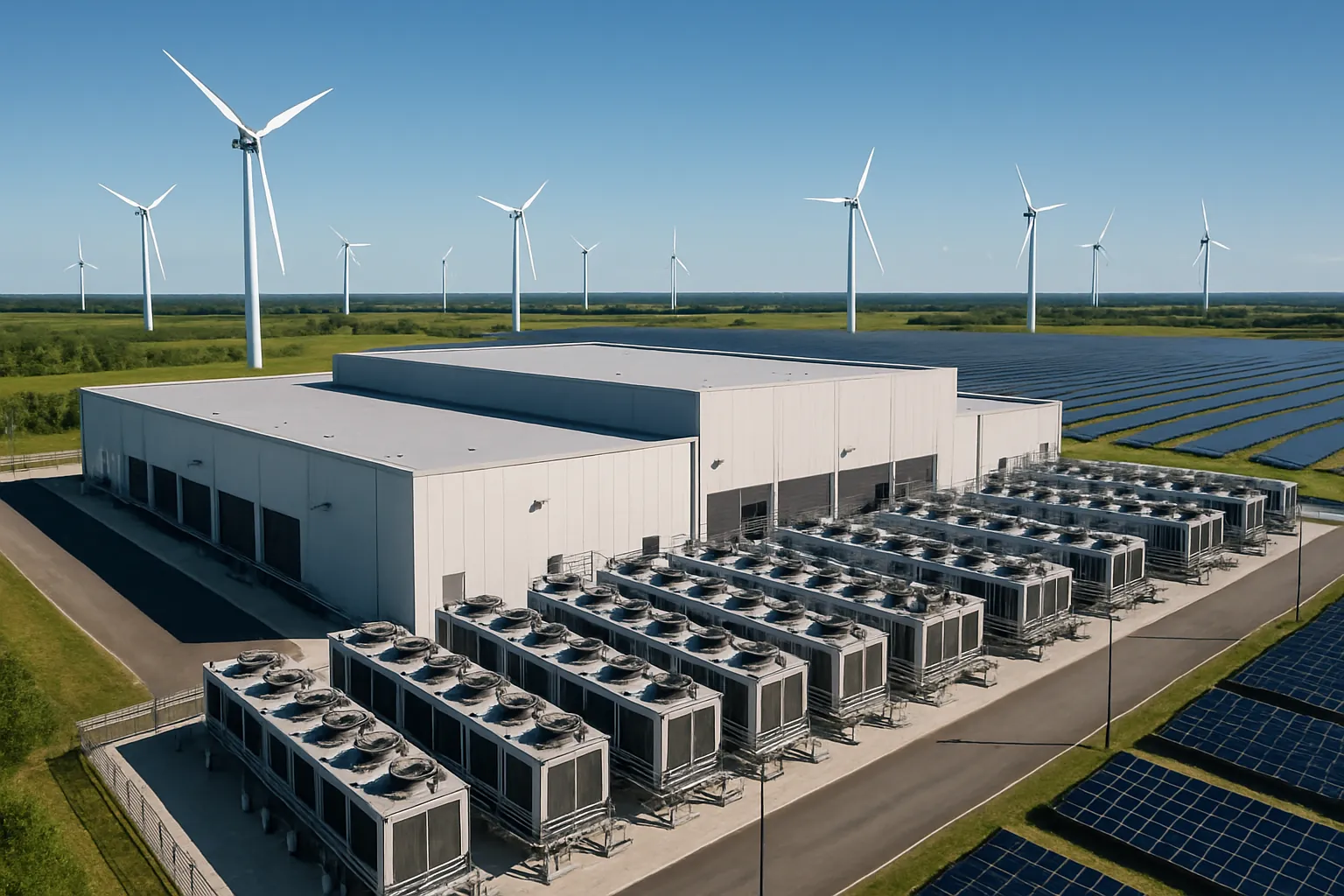
The AI Boom Meets America’s Power Reality
The explosive rise of data centers is fueling a new power struggle in the United States—quite literally. With every search, streamed movie, and AI-driven query, Americans feed a hidden but voracious beast: massive halls of servers run by Big Tech. Once relegated to the periphery of public debate, these energy-hungry facilities are now in the crosshairs as policymakers grapple with a stark dilemma: should the digital economy’s giants be cut off during grid emergencies to keep the lights on for everyone else?
The urgency of this question isn’t academic. Texas endured a deadly freeze and cascading blackouts in 2021, an event seared into the state’s collective memory. Now state lawmakers have responded by passing sweeping legislation that lets utilities disconnect large electricity users—including mega data centers—when the power system teeters on the edge. In the words of Democratic State Rep. Rafael Anchia, “We’re making sure people get to survive before algorithms do.” It’s a sentiment echoing across the country as the digital infrastructure we all rely on threatens to eclipse the supporting grid many take for granted.
Texas isn’t alone in facing the consequences of Big Tech’s appetite for energy. Grid operator PJM Interconnection—serving some 65 million people in the mid-Atlantic—reports that the region’s coming demand surge, driven in large part by data center proliferation, could overwhelm the timetable for building new power plants. With 32 gigawatts of new demand projected—a scale larger than many states’ total output—the threat of rolling blackouts is no longer hypothetical.
Grid Strain, Skyrocketing Bills, and a Fight for Policy Control
Look beyond the technical jargon of peak loads and gigawatts, and a pointed question emerges: who ends up picking up the tab? A recent analysis by the Brattle Group, cited widely in regulatory proceedings, finds electricity bills are rising at twice the rate of inflation. Under current rules, ordinary ratepayers risk effectively subsidizing Big Tech’s electricity consumption—absorbing both price hikes and the risk of outages.
Is it fair for American families working two jobs to foot the bill so Silicon Valley can chase the next AI breakthrough? Data compiled by the Environmental Defense Fund underscores that new data centers can consume as much power as tens of thousands of homes—power that’s often cleaner and more reliable than what local residents receive. According to Harvard energy economist Dr. Leah Stokes, “The rapid growth in data center energy use is a ticking time bomb for grid resilience and climate goals alike.” Unless policies adapt, the average American is left to shoulder the reliability risks and mounting costs.
Big Tech, predictably, has mounted a spirited defense of its interests. The Data Center Coalition, a powerful industry association, argues that rigid disconnection mandates could stifle innovation and economic growth. Instead, the coalition lobbies for flexible, market-based incentives—arguing that voluntary curtailment and creative backup solutions can balance grid needs. In a high-profile gesture, Google announced it would voluntarily reduce non-essential power use at its Indiana data center during peak demand periods, presenting itself as a conscientious partner in grid stability. But critics point out that voluntary measures lack standards and teeth, leaving grid operators little leverage when every megawatt counts.
Concerns aren’t limited to the bottom line; the implications ripple far beyond shareholders and executives. Texas has made headlines for its no-nonsense approach, promptly disconnecting data centers in emergencies. PJM is weighing proposals to limit guaranteed power for new facilities. The Southwest Power Pool, which operates in the Great Plains, is expanding its power-reduction programs under duress from spiraling demand. This broadening movement underscores a nationwide reckoning with the real costs—financial, social, and environmental—of digital expansion.
“We’re making sure people get to survive before algorithms do.”
– Texas State Rep. Rafael Anchia
Rethinking Progress: Who Gets Priority When the Grid Falters?
Who should decide whose power stays on when the grid buckles? As the AI revolution accelerates, this question becomes more urgent. The advent of generative AI tools like ChatGPT, which require phenomenal amounts of electricity to operate, has unleashed a tidal wave of new data center construction—particularly in rural and suburban areas where land and power are cheaper. Yet local communities often feel disenfranchised, watching as their utility bills rise and their grids strain to accommodate an industry that reaps the vast majority of its profits elsewhere.
Some progressives see an opportunity for revolutionary energy reform—a push to decouple the public interest from corporate convenience. Calls for “just energy transition” policies are growing, emphasizing that technological advancement must not come at the cost of resilience, equity, or sustainability. “Laissez-faire is not a substitute for responsible governance,” reflects Michael Skelly, an energy infrastructure advocate interviewed by NPR. Without robust policy action, grid reliability and climate progress alike will remain vulnerable to the next market-driven surge.
Is there a way forward that aligns America’s digital dreams with its energy reality? Experts are calling for a mix of solutions: stricter energy efficiency standards for new data centers, dynamic pricing models that make peak power use prohibitively expensive, and large-scale investments in renewable energy. Several European nations—including Ireland and the Netherlands—have already imposed temporary moratoriums on new data center construction, buying time to strengthen infrastructure and draft robust sustainability rules. U.S. policymakers, by contrast, have been slow to adopt similarly bold measures.
Change, though, is coming. State and federal regulators are increasingly willing to put public needs before Big Tech’s demands, signaling a critical shift in America’s approach to digital-age growth. If democratic values and social justice are to mean anything in the energy transition, they must shape not just what we build, but who it actually benefits—and who gets protected when crisis strikes.
