
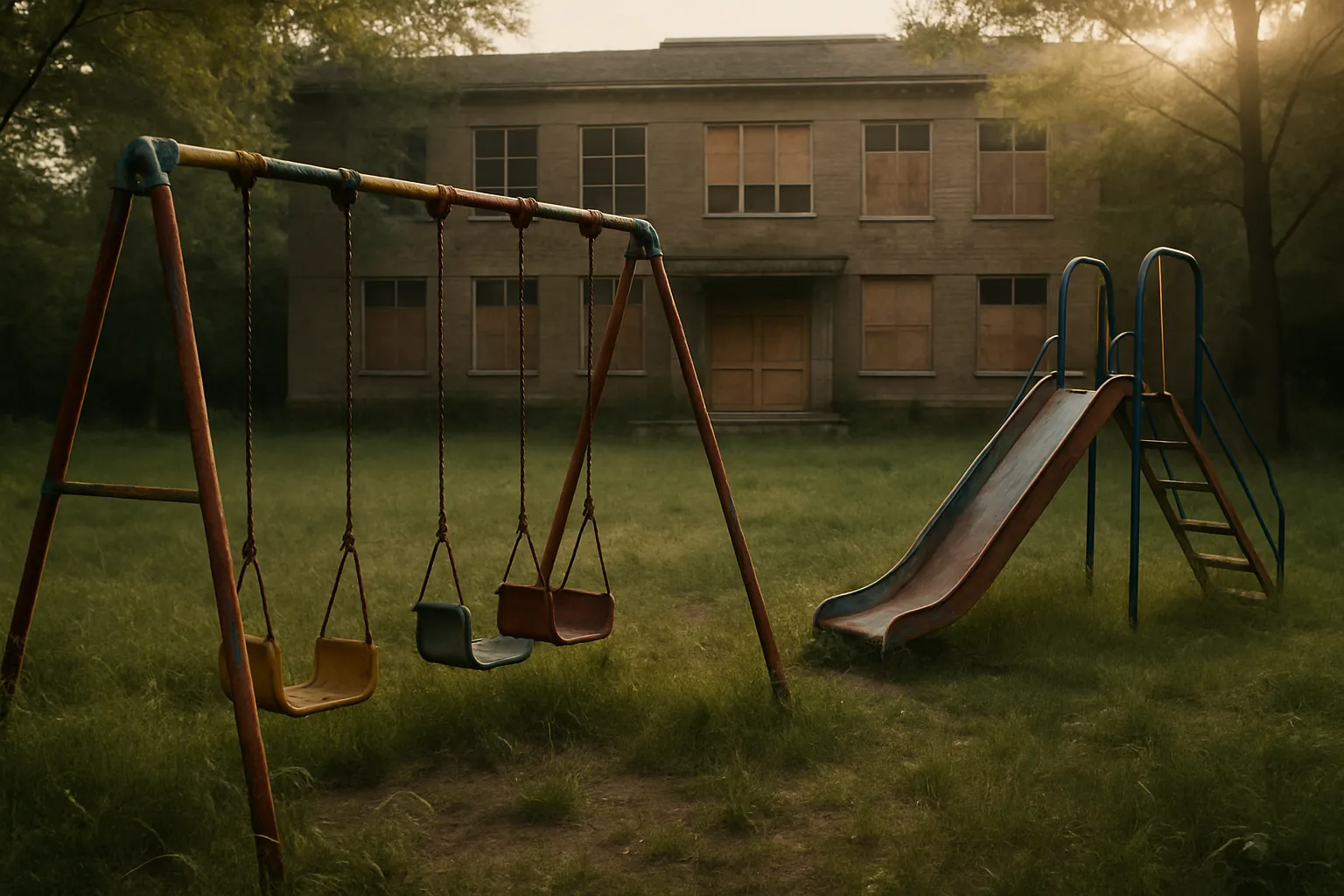
A Budget Crisis Hits the Heart of Austin Communities
Every day, hundreds of children walk into Bryker Woods Elementary not just to learn, but to feel a sense of belonging. Parents there, and at 12 other threatened campuses, didn’t expect to find out—almost overnight—that their neighborhood schools could soon be shuttered. Their disbelief and heartbreak echo throughout Austin as the Independent School District (AISD) moves forward with a controversial consolidation plan: thirteen schools face closure, thousands of students are set to be uprooted, and the emotional scars may linger long after the last bell rings.
What could bring a diverse, fast-growing city like Austin to this point? Behind the headlines, a stark budget deficit of $19.7 million has put AISD in the crosshairs. Declining enrollment—losing over 10,000 students in the last decade—has meant nearly a quarter of district seats sit empty. Budget band-aids, including $100 million in non-campus cuts, haven’t been enough. Now, with the Texas Education Agency threatening a state takeover if the district fails to comply with rigorous improvement mandates, the closure plan arrives with a sense of urgency—and mounting anxiety.
Community Bonds Under Threat
Ask any parent in East Austin or South Lamar and they’ll tell you: schools aren’t just places for math lessons and science fairs. For families at Widen Elementary, closure feels “soul-crushing.” There, the classrooms double as gathering halls, safe havens, and cultural anchors—the precious fabric of a thriving community.
The sense of loss comes not just from changing addresses or altering routines, but from erasing connections that have taken generations to build. As Dr. Maria Gutierrez, an educational sociologist at the University of Texas, observes, “Local schools are often the only reliable public institutions parents interact with every day. Disruption here isn’t just logistical—it’s deeply personal.”
Bryker Woods Elementary stands out for its International Baccalaureate (IB) curriculum, the only public elementary IB program in the city, drawing transfer students citywide. Parents were blindsided by its inclusion on the closure list, expecting that its unique program and broad community support offered some protection. “It doesn’t make sense to close a school that’s succeeding by every measure,” insists Steve Carter, a Bryker Woods parent.
Each school targeted for closure has its own story. Some, like Becker Elementary, serve diverse populations with rich bilingual traditions. Others, such as Barrington and Dawson, have weathered cycles of underfunding while maintaining strong parental participation. The disruption won’t just terminate beloved programs—it risks accelerating inequities, as public schools in lower-income communities often shoulder the brunt of such cuts.
“Local schools are often the only reliable public institutions parents interact with every day. Disruption here isn’t just logistical—it’s deeply personal.” — Dr. Maria Gutierrez, UT Austin
The Numbers Game: Savings, Shortfalls, and Shifting Priorities
AISD aims to save approximately $25.6 million through a mix of staffing reductions, facility closures, and transportation adjustments. Central office staff have already endured steep cuts, yet the looming deficit remains. As Superintendent Matias Segura notes, “There’s no perfect solution when you’re trying to maintain services with declining resources.”
The consolidation plan sweeps broadly: 98% of AISD schools will experience new boundary changes next year, affecting tens of thousands of families. Four of the closing campuses will be repurposed as non-zoned Spanish dual-language programs—an attempt to meet diverse educational demands. Meanwhile, International High School will relocate, and one campus will be transformed into a Montessori center, signaling a shift toward specialized, application-based learning opportunities.
Yet the plan’s complexity also makes the human costs hard to quantify. Grandfathering provisions allow some currently enrolled students to stay at their school of origin, but for many, next fall offers only uncertainty. According to Ann Keller, a parent and longtime PTA leader, “Every time a school closes, families have to rebuild trust in a system that’s asked them to adjust again and again.”
Adding to parent concerns is a relaxation in teacher hiring requirements for Turnaround Plan schools: whereas three years of teaching experience was the standard, staffing challenges now force AISD to require only one year and a demonstrated ability to promote student growth. District officials argue this is necessary for flexibility, but critics counter this could undermine consistency and quality—particularly for schools most in need.
Budgetary woes aren’t unique to Austin. Across the nation, urban districts grapple with the triple-threat of falling enrollment, aging facilities, and stagnant state funding. Yet research, such as the oft-cited Learning Policy Institute brief, repeatedly warns that school closings, especially in marginalized areas, rarely translate into improved academic outcomes—often the opposite. History offers sobering lessons from cities like Chicago and Detroit, where school closures deepened community fragmentation and exacerbated educational inequity.
State Pressure, Local Solutions: Who Gets to Decide?
Beneath the cost-cutting and programmatic shifts lies a larger struggle: who truly controls the future of Austin’s public schools? The Texas Education Agency has made its threat clear—comply with state mandates or lose local autonomy. If trustees do not finalize a meaningful consolidation and improvement plan, TEA could strip Austin voters of their school governance rights, appoint its own overseers, and shift priorities away from local needs.
A closer look reveals the stakes run deeper than budget lines or boundary maps. For parents, educators, and advocates, the debate is as much about democracy and representation as it is about dollars and cents. “Our communities deserve a voice in these life-altering decisions,” argues Jasmine Fields, co-founder of Austin Schools United. She fears that, under the guise of efficiency, policies are being pushed that disproportionately affect marginalized neighborhoods.
AISD leaders insist their hands are tied. “We’ve done everything short of closing schools,” Superintendent Segura explained at a recent board meeting. Nearly all non-essential spending—save for basic operations and instruction—has already been slashed. The focus now, the district claims, is to direct resources where they can do the most good, concentrating programs and staff for maximum impact.
As the Board of Trustees prepares for the decisive November vote, families face anxious months ahead. The district promises ongoing updates and community meetings, but many parents remain skeptical that their voices will alter what feels like an inevitable outcome.
What does this mean for Austin’s future? The reverberations extend far beyond the 13 school doors slated to shut. In a city priding itself on diversity, creativity, and community strength, this moment tests our collective values. Is there room to innovate, protect vulnerable communities, and maintain local control in the face of a budget crisis? Or will short-term savings translate into long-term losses for generations of children?
No matter how the AISD board decides, one truth remains: public schools are more than dollars and scores—they are the beating hearts of their neighborhoods. As this debate unfolds, the soul of Austin’s educational promise hangs in the balance.
