
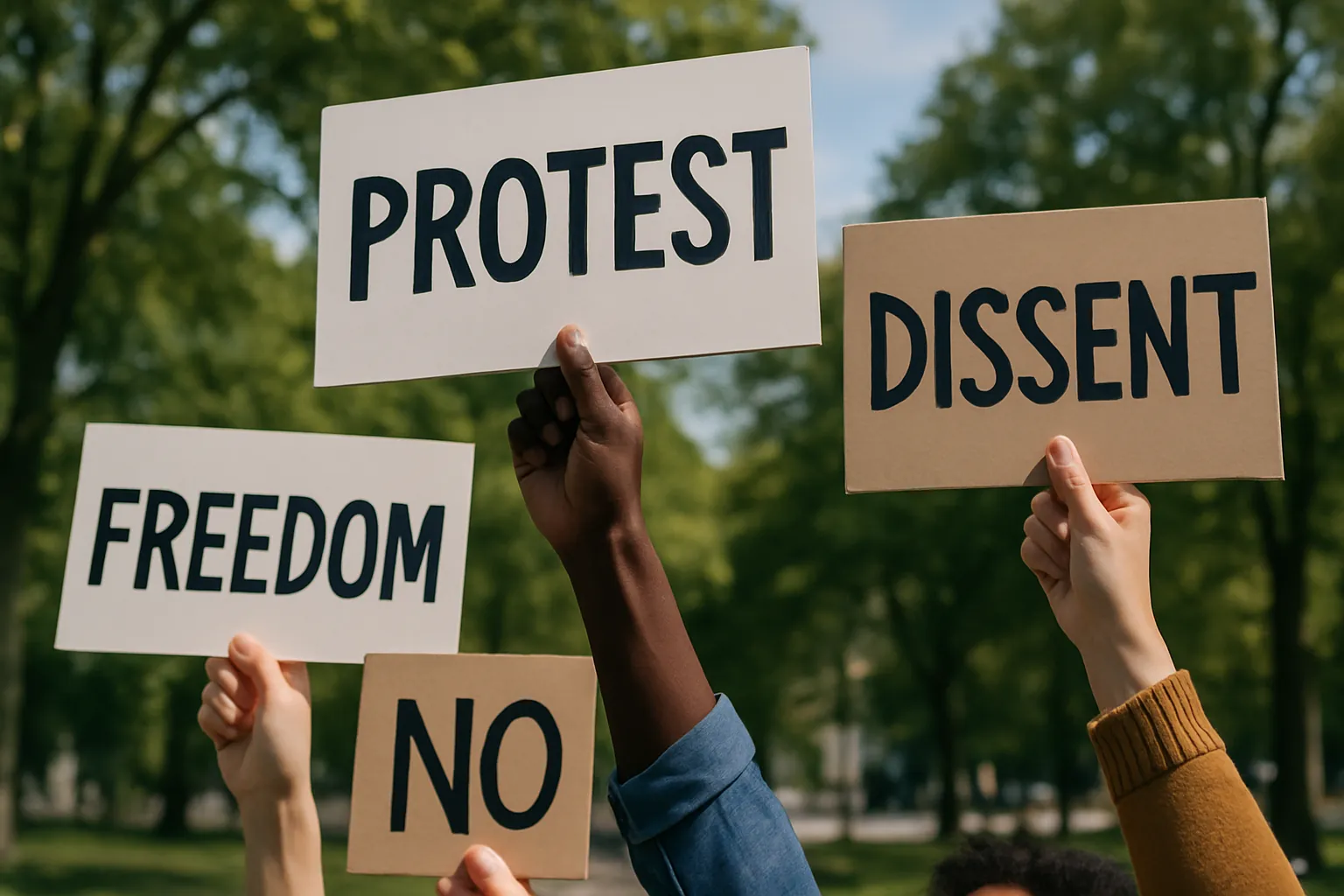
The Anatomy of a Label: Dissent or Danger?
Just when Americans believed the tempest of pandemic politics was beginning to settle, newly declassified documents have reignited questions about the balance between public safety and constitutional rights. In December 2021, a secretive intelligence memorandum—coauthored by the FBI, Department of Homeland Security, and National Counterterrorism Center—described those opposing COVID-19 mandates as potential “Domestic Violent Extremists” (DVEs). For millions who protested mask and vaccine requirements, this wasn’t just bureaucratic jargon; it was a chilling stamp, reminiscent of eras in American history defined more by fear than freedom.
How did concerns over vaccine safety, mandates, and government overreach become conflated with the threat of domestic terror? According to the report, some opponents allegedly trafficked in conspiracy, fueled by movements like QAnon, and harbored beliefs that mandates signaled an emerging social control regime. Yet, the data speaks otherwise. Of nearly 3,000 domestic terrorism cases handled by the FBI in this period, the vast majority traced back to the January 6 Capitol siege, not isolated pandemic dissenters. Harvard Law Professor Martha Minow remarked, “We must distinguish between disagreement and danger, else we risk weaponizing national security tools for political ends.”
The Machinery Behind the Moniker
The true gravity of the DVE designation lies in its application—government agencies suddenly had the justification to surveil, investigate, or even suppress dissenting voices under the banner of national security. Former FBI agent Steve Friend explained, as quoted by Public, the designation “not only justified government assessments and investigations but was leveraged to pressure platforms into censoring COVID mandate opposition by categorizing such speech as domestic terrorism.” The ramifications went beyond government monitoring. Once a message is labeled “violent extremism,” social media conglomerates were compelled—sometimes under threat of regulatory action—to erase dissenting content. Advocates for free speech worried that such actions set a precedent where the digital and civic squares were subtly narrowed, especially for those expressing legitimate skepticism, not insurrectionist intent.
Consider the parallels: Throughout the 20th century, U.S. governments periodically overstepped in the name of national unity—the internment of Japanese Americans during WWII and the Red Scare come to mind. Each time, broad, ambiguous labels gave license to infringe upon civil liberties. Why, then, did we repeat the cycle? The COVID-era crackdown on criticism echoes these patterns, where grievances aired by nurses, teachers, and parents negotiating their own pandemic risks too easily became lumped with radical and violent fringes. The result was a loss of trust—both in our institutions, and one another.
“History warns us that when surveillance powers meet political anxieties, ordinary dissent can quickly become extraordinary risk.”
Free Speech at the Crossroads: Where Is the Line?
Newly declassified records, as brought to light by Tulsi Gabbard, shine a harsh light on a Biden administration grappling with the twin demons of a deadly pandemic and a rising domestic terrorism threat. But in their attempt to preempt violence, federal agencies risked casting suspicion not only on the fevered fringe, but on concerned parents and medical professionals who simply questioned the wisdom or efficacy of a rapidly evolving mandate.
What constitutes “dangerous” speech? During her Fox News interview, Gabbard argued that the Biden approach “effectively labeled individuals exercising their First Amendment rights to oppose government policy as potential domestic violent extremists.” She decried the chilling effects this could have—not just on protesters, but on the very spirit of democratic debate. And she wasn’t alone in her concern. As journalist Glenn Greenwald has written, “Blurring the line between radicalism and reasoned objection hands the state a blank check to silence dissenters, with the public footed for freedoms lost.”
Public health must be protected. Yet, as we saw during the early post-9/11 era, fear-driven policymaking often outlasts the event that inspired it. Experts warn that runaway definitions—first COVID dissent, then what next?—threaten to erode the very freedoms they purport to safeguard. According to the ACLU, “Broad-brush characterizations of legitimate protest as extremism undermine the trust and participation at the heart of a healthy democracy.”
The Real Threat: Erosion of Democratic Trust
It’s tempting for some to view pandemic dissent as a niche or even dangerous posture, yet the United States thrives precisely because it allows space for uncomfortable conversations. Critical public health debates, like those over mask safety or vaccine equity, were given muted treatment precisely when honest dialogue was needed most. The DVE designation may have protected the public from real threats, but its overbroad use sent a message that questioning government policy could make you a target. That’s a dangerous precedent in a liberal democracy.
Recall, too, that pandemic dissent came from across the political spectrum—not just militia types or QAnon true believers, but also from progressive disability advocates, minority community leaders uneasy about government outreach, and educators alarmed by one-size-fits-all solutions. In societies that value progress, dissent is not only expected but necessary. Attempts to stamp it out create backlash and embolden those who were suspicious to begin with.
The First Amendment was not written for times of agreement, but for times of stress and discord. Our health as a democracy depends on holding fast to those liberties, even—and especially—when we’re afraid. If lessons from these declassified documents tell us anything, it’s that the tools of surveillance and suppression, once unsheathed, are hard to holster again.
Americans face a crossroads. We must decide if we are a nation that responds to crisis by constricting debate and labeling skepticism as extremism, or one that rises to uncertainty with rigorous dialogue, protected rights, and compassion. The road we choose now will echo long after the pandemic has faded.
