
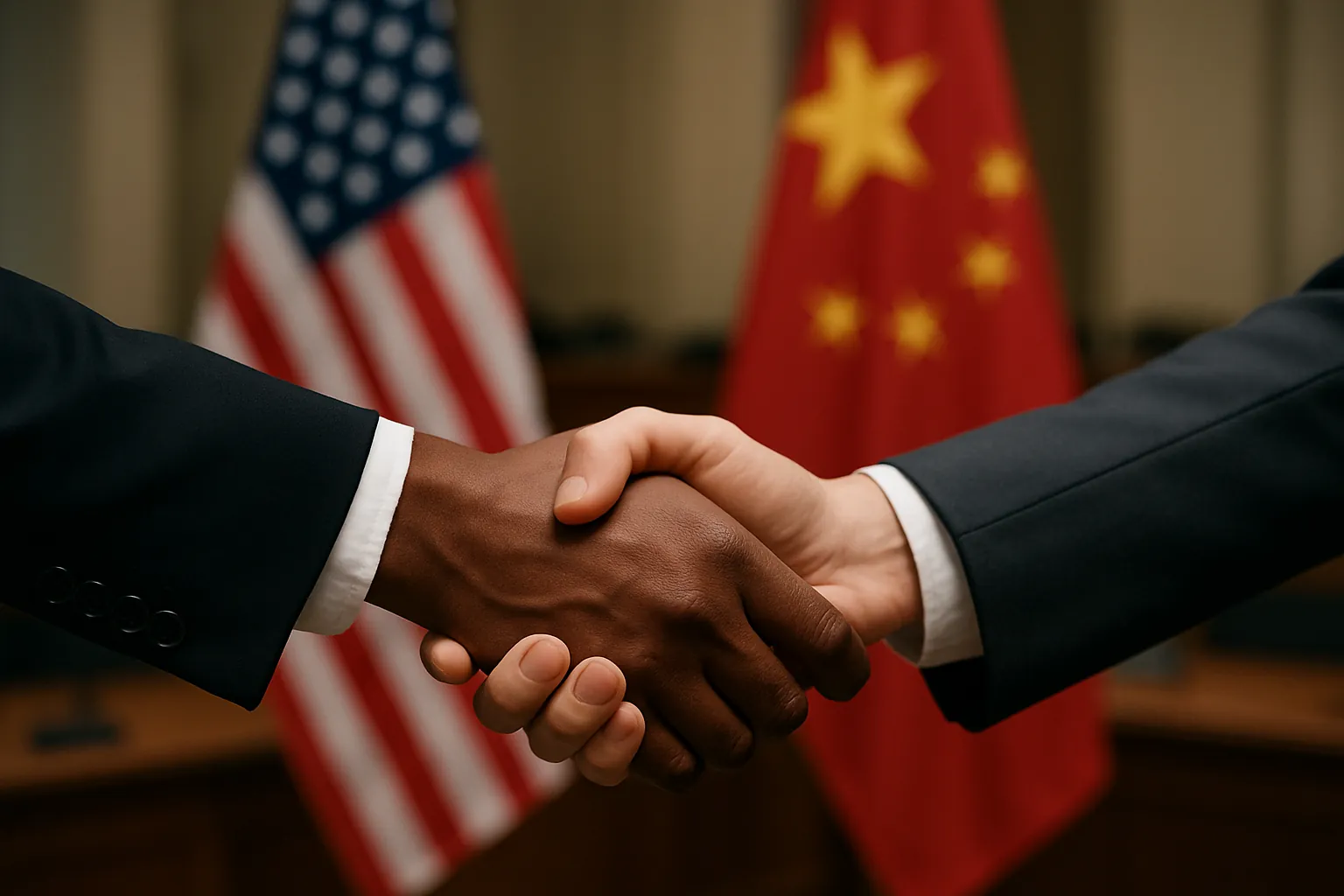
A Rare United Front on Capitol Hill
Acute partisan divides typically dominate Washington’s corridors, but every so often an issue arises that transcends party boundaries — and China’s human rights record is proving to be one. This week, a remarkable alliance of Democratic and Republican senators, including Jeff Merkley (D-Ore.) and Dan Sullivan (R-Alaska), introduced a sweeping set of bills taking aim at China’s systematic repression of minorities, dissidents, and Taiwan, underscoring a profound break from the Trump administration’s trade-first approach toward Beijing.
These legislative proposals were developed against the backdrop of President Donald Trump’s ongoing negotiations with Chinese President Xi Jinping — talks that have largely prioritized tariffs, exports, and U.S. economic interests. While Trump touts his personal rapport with Xi and his dedication to U.S. economic prosperity, lawmakers and human rights advocates alike have grown dismayed by the White House’s near silence on Beijing’s brutal crackdown on Uyghurs, Hong Kong activists, and religious minorities.
Harvard political scientist Samantha Power noted on PBS’s Newshour, “Bipartisanship still has a pulse in Washington — especially when America’s moral obligations are at stake. Neither party is willing to let today’s economic deals come at the expense of tomorrow’s freedoms.”
Targeting Repression: What’s in the Bills?
Three key measures form the backbone of this renewed Congressional vigilance. The first bill, championed by Senator John Cornyn (R-Tex.), would deny visas to current or former Chinese officials complicit in the forced repatriation of Uyghurs, a Muslim ethnic minority targeted with mass detentions in the Xinjiang region. Human rights watchdogs estimate that around one million Uyghurs have been held in sprawling re-education camps — a figure echoing repeatedly in United Nations briefings and Amnesty International reports.
Another piece of senate legislation hones in on Beijing’s “transnational repression” — a term that captures China’s attempt to undermine overseas dissidents, silence journalists abroad, and threaten Chinese diaspora communities worldwide. Co-sponsored by Merkley and Sullivan, this bill leverages sanctions and increased U.S. government monitoring to deter foreign governments, their proxies, and associates from targeting critics sheltering in America or its partner nations. Senator Merkley explained the imperative succinctly: “America must always be a haven for those fleeing tyranny, not a battleground for authoritarian regimes.”
The third bill directly addresses the threat to Taiwan’s democracy as Beijing intensifies its diplomatic and economic pressure campaign against the self-ruled island — a flashpoint with serious global ramifications. Members of the Congressional-Executive Commission on China (CECC), notably Rep. Chris Smith (R-N.J.), have voiced alarm that the White House’s focus on short-term economic wins could embolden China to act with greater aggression toward Taiwan and pro-democracy forces everywhere.
“Tough trade deals shouldn’t come at the price of fundamental freedoms — not for Uyghurs, not for activists, and not for people across the Taiwan Strait.”
What sets these bills apart isn’t just their scope but their rare, cross-party origin. The CECC’s bipartisan participation, with both liberal and conservative lawmakers rallying behind human rights as a central U.S. value, sends a pointed message: Congress will not turn a blind eye to state-sponsored oppression, regardless of presidential preference.
Washington’s Deepening Rift on Values vs. Commerce
Beneath the flurry of legislative activity lies a deeper philosophical conflict inside the American government. Is it possible — or sustainable — for a superpower to prioritize financial transactions over human rights? President Trump’s administration continues to argue that economic engagement with Beijing benefits the American middle class, citing robust exports and improved business access. However, influential voices in Congress insist the U.S. cannot afford to treat values as afterthoughts.
According to a 2023 Pew Research Center survey, more than 70% of Americans believe the U.S. should promote human rights overseas even if it harms economic relations. This groundswell of public opinion is fueling legislative momentum far beyond political calculation — it’s a moral imperative voiced at kitchen tables and town halls nationwide.
History offers a cautionary tale. During the 1930s, Western powers downplayed Nazi Germany’s abuses, opting for commerce and conciliation. The cost was catastrophic. Decades later, bipartisan movements — such as the U.S. Congress’s push to sanction South Africa over apartheid — remind us that principled action, not expediency, carves the path to justice. As diplomat Madeleine Albright famously argued, “America is strongest when it leads with both its interests and its ideals.”
Beyond that, ongoing U.S.-China talks strain under the weight of mounting friction — not just over tariffs but principles. While White House officials assure the administration remains “fully committed to Asia-Pacific security,” skepticism lingers. Members of Congress, emboldened by these bills, appear determined to ensure the fight for human dignity will not be sidelined by any trade pact or executive handshake.
If the past few days are a harbinger, expect Capitol Hill to flex its muscle as a check on executive power, refusing to treat Beijing’s violations as business as usual. Standing up to authoritarian repression isn’t just about defending ethnic minorities or exiled journalists — it’s about defining what kind of global citizen America aspires to be.
