
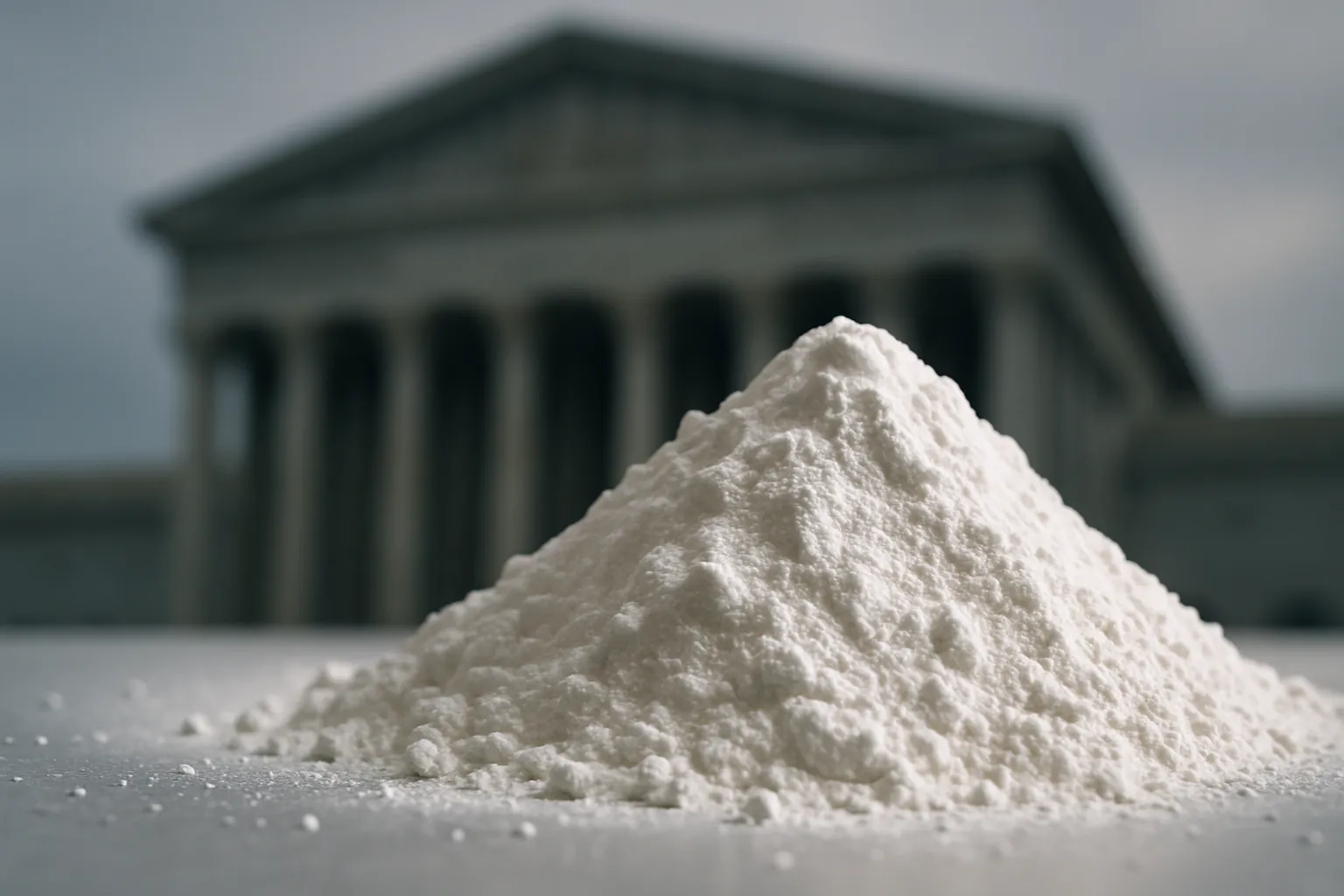
The Verdict That Rocked Johnson & Johnson
Walk down any American pharmacy aisle, and the image of Johnson & Johnson Baby Powder—that iconic white bottle—immediately evokes trust and nostalgia. For decades, parents dusted their children with it, never imagining it could conceal a toxic threat. But this week, a Boston jury shattered that image, awarding $42,609,300 to Paul and Kathryn Lovell after concluding that Johnson & Johnson’s talc-based baby powder caused Paul’s mesothelioma, a rare but deadly cancer linked to asbestos exposure. The verdict stands as the largest mesothelioma award in Massachusetts history, carrying with it implications that ripple far beyond the Lovells themselves.
Paul, a lifelong user of the product, trusted Johnson & Johnson with his and his children’s health. According to courtroom testimony, he never suspected that something so commonplace could carry such risk. During the trial, the Lovells’ attorneys vividly detailed the journey from childhood innocence to heartbreak—blaming the manufacturer for betraying a basic social contract: that products placed on supermarket shelves are safe.
Lead attorney Aaron Chapman placed the outcome into broader context: “This verdict is not just about Paul Lovell. It’s about every consumer who was told these products were safe.” That sentiment powerfully highlights the stakes—corporate accountability, the right to transparent information, and consumer safety. Johnson & Johnson has already announced plans to appeal, doubling down on its position that the science connecting talc to asbestos-related cancers is unreliable.
Deep Roots of Negligence: What J&J Knew and When
What alarms many observers isn’t merely the outcome of one trial, but the disturbing pattern revealed over years of litigation and investigation. A closer look reveals mounting evidence presented in court: Johnson & Johnson allegedly knew, since at least the 1970s, that trace amounts of asbestos—a potent carcinogen—were being found in their talc mines and finished products. Yet according to expert testimony and internal documents unearthed for trial, the company invested heavily in shaping scientific narratives and deflecting regulatory scrutiny, all while marketing their products as “pure” and “safe for the whole family.” Judge, jury, and public were left to contemplate: if corporate giants can so easily manipulate safety assurances, what does that mean for ordinary consumers?
Not everyone agrees on what should come next. Johnson & Johnson’s Global Vice President of Litigation, Erik Haas, wasted no time branding the jury’s decision as “junk science,” announcing an immediate appeal. Pointing to large verdicts—$45 million in Illinois, $260 million (later overturned) in Oregon, $15 million in New Jersey, and others—the company insists none are supported by the scientific consensus. But Harvard public health professor David Rosner, co-author of “Deceit and Denial,” suggests otherwise: “There’s a long and troubling history of companies downplaying risks that end up haunting generations.” The question for many Americans isn’t so much whether J&J will ultimately pay up, but how long accountability will be delayed by appeals and legal maneuvering.
“It is hard to overstate the breach of trust when a company prioritizes profit over the health and safety of millions. When the science is contested, the burden should fall on the manufacturer to prove safety, not on patients to prove harm.”
Johnson & Johnson’s response so far has included ceasing U.S. sales of its talc-based powder in 2020, quietly shifting to a cornstarch formula that sidesteps the controversy. Critics argue this move was too little, too late. According to a recent investigative piece by Reuters, executives debated disclosure of potential asbestos contamination for decades, often erring on the side of silence or minimization.
The Stakes: Consumer Rights, Corporate Power, and Public Health
The Lovell verdict resonates beyond a single courtroom because it speaks to the vulnerability of everyday citizens in the face of powerful corporate interests. Over 63,000 plaintiffs nationwide have filed claims alleging serious health consequences from Johnson & Johnson’s talc products. Their stories echo a familiar refrain: consumers bought into the brand’s wholesome image and paid an unimaginable price.
How did we reach this point? The answer, many advocates say, lies in a regulatory system that too often puts business interests ahead of public safety. FDA testing standards for cosmetics remain outdated; oversight is weak; and loopholes abound. “We lack a robust, independent mechanism for thoroughly vetting health risks in consumer products,” argues Dr. Susan Mayne, Director of the FDA’s Center for Food Safety and Applied Nutrition. Limited governmental power to recall or ban products outside of food and drugs leaves a giant regulatory gap on which companies like Johnson & Johnson have historically capitalized.
This isn’t the first time that a beloved household product has concealed hidden dangers—think of Big Tobacco’s decades of deception, or the lead paint crisis. Each offered hard-earned lessons: transparency, accountability, and independent oversight must be at the core of any system that values public health over corporate secrecy. Legal actions like the Lovells’ lawsuit can serve as catalysts for change, but rarely do they move fast enough for suffering families.
Conservatives who reflexively dismiss these verdicts as trial lawyer opportunism or regulatory “overreach” miss the deeper crisis. Without aggressive checks on corporate power, the American consumer is little more than a beta tester for unvetted products. As this and similar cases demonstrate, the cost of neglecting consumer safety is measured not just in financial settlements, but in the suffering of real people—parents, children, and neighbors—who trusted in the promises emblazoned on store shelves.
Where Do We Go From Here?
The Boston verdict shines a harsh light on the tensions at the intersection of business, law, and ethics. Calls for meaningful reform are growing louder: toughening regulatory standards, demanding greater data transparency from manufacturers, and expediting justice for victims who shouldn’t have to wait through years of appeals. For progressives, this is a clarion call to put people before profits—to insist that safety and honesty are non-negotiable when the stakes are so high.
Those questions land squarely in your lap: What should corporations owe to the public? How willing are we, as a country, to hold them to account when the truth hurts their bottom line? Paul and Kathryn Lovell’s day in court may not end Johnson & Johnson’s legal saga, but it does reaffirm the principle that unchecked power demands fearless scrutiny—and, when necessary, the hammer of justice.
